
A robot that learns from you, who observes how you clean and then replicates your movements to do the job on your own. This is how the TR1 is presented, Xlean’s first model, a startup formed by experienced professionals with backgrounds in DJI and Roborock. This device combines two functions in a single body: it is both an autonomous vacuum and a hand vacuum cleaner, capable of transforming from one to the other. According to Yanko Design, the company wants the TR1 to be much more than just another appliance; it envisions it as a step toward domestic robots capable of adapting to individual homes.
The launch of the TR1 arrives at a time of excitement for domestic robotics. During the IFA 2025 fair, we saw offerings like the Dreame Cyber X, which features Quadtrack technology to navigate stairs, and LG’s “invisible” robot designed to hide under the sink while keeping the mop ready. In light of these innovations, Xlean aims to carve a unique niche in the market. Founded in 2022 and backed by the Robotics Institute of Hong Kong University, the startup aims to usher in a transformative era in the sector with its bold vision.
Dynamic Device with Instant Transformation and Adaptive Intelligence
The key feature of the TR1 lies in its ability to transition from an autonomous robot to a hand-held vacuum cleaner in an instant. This transformation is achieved through an electrical locking system that releases the main module with a single gesture , designed for quick action in unexpected situations. According to Xlean, this design is not merely practical; it also serves as an entry point to their learning system. In manual mode, the device collects data on how users clean and then transforms those records into patterns that guide its autonomous functions.
The manual TR1 mode forms the foundation of what Xlean refers to as “self-evolving intelligence.” Utilizing an RGB-D camera, a green laser sensor, and motor encoders, the device meticulously documents how users clean. The company asserts that this information is anonymized before transmission to the cloud and that data collection is done with explicit consent, although this privacy measure remains a promise to be scrutinized.
Contrary to how it may seem, learning is not immediate or isolated to individual units. According to Xlean, the data collected is employed to train advanced artificial intelligence models that, theoretically, benefit the entire user community. Improvements would then be incorporated into newer software versions through OTA (Over-The-Air) updates, meaning it remains unclear when and how users will experience actual enhancements. To ease privacy concerns, the device includes a physical shutter that blocks the camera, providing a visual cue that recording isn’t in progress.
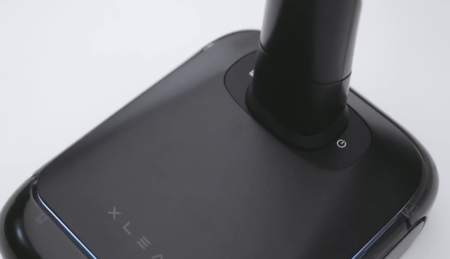
For the TR1’s design to be effective, it requires robust cleaning capabilities, especially in manual mode, where users tackle substantial spills. Xlean has developed a mechanism called Dual-Motor Directsuction, which combines high-pressure suction with rollers operating at 800 RPM to effectively vacuum both solids and liquids simultaneously. The company asserts that this innovative design prevents debris from spreading and has been refined after three years of extensive testing and 40 prototypes. While these claims are ambitious, their real-world effectiveness remains to be seen.
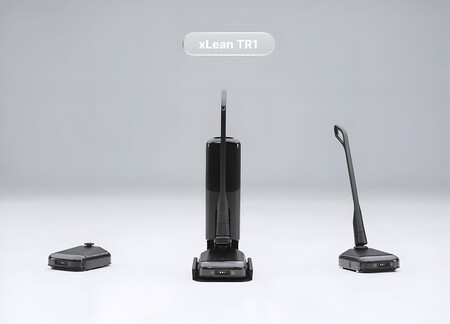
The TR1 also excels in navigation. Its square design allows for cleaning corners with an accuracy of up to 6 mm, a common shortcoming of traditional circular robots. The device is reportedly capable of mapping a 150-square-meter area in just three minutes and recognizing over 400 types of obstacles by utilizing a combination of vision and Lidar technology. Xlean claims that this performance is the result of millions of simulated scenarios and that its reinforcement learning software is designed to navigate without getting stuck. Although these assertions require real-world validation, they suggest a significant advancement in robotic cleaning technology.
Additionally, Xlean has designed the Omni Station as a pivotal complement to the TR1. This base station features an emptying system that manages both liquid and solid waste, a rarity in the market. According to the company, the station conducts a complete cleaning with hot water at 60 °C and automatic drying, keeping the device ready for use. It also offers the option of direct connection to the water supply and drainage, eliminating the need for manual waste disposal. Moreover, the ecosystem supports integration with Matter and HomeKit and features a modular design for future upgrades.

Although the TR1 has just been unveiled at IFA 2025, its future is not guaranteed. Xlean plans to launch a Kickstarter campaign soon to bring it to the global market—an approach commonly used by startups seeking both funding and validation before large-scale production. While the promises are ambitious, numerous uncertainties loom, ranging from actual battery life to the cost of consumables and the reliability of software updates. The success of this venture will depend on how the public reacts to this initial show of interest. As of now, the company has yet to disclose the price of the TR1.
Images | Xlean
In Xataka | One in two vacuum robots is Chinese. It is the cleanest invasion in history.