
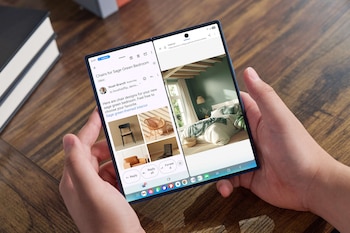
Samsung: From Dried Fish to Smartphones
The journey of Samsung, the leading smartphone manufacturer in the world, began humbly in 1938 as an exporter of dried fish, vegetables, and fruits. Over the decades, the company evolved, gradually incorporating electronics. In a landmark moment, it surpassed the nearly extinct Nokia 23 years ago to become the largest cell phone retailer globally. Since then, it has been a powerhouse in the technology sector, becoming synonymous with innovation and mobility.
As the competition intensifies, Samsung finds itself in a month-by-month battle for supremacy against Apple. Remarkably, in the first quarter of this year, Samsung achieved a market share of 20.1%, slightly eclipsing Apple’s 19.5%, according to recent data from IDC. The competitive landscape is even more favorable in the region, where Samsung boasts a commanding 35% of the market share, followed by brands like Motorola and Xiaomi. Domestically, Samsung reigns supreme with a whopping 55% total market share, commanding over 80% of the market for devices priced above USD 1,000.
Innovative Foldables: The Future of Smartphones
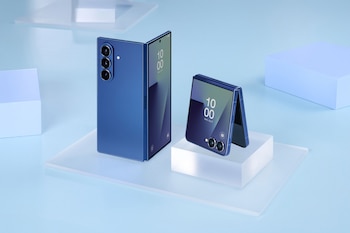
Recently, Samsung showcased its newest line of foldable devices in New York, entering a premium segment that is rapidly growing. As traditional smartphone formats become increasingly similar—regardless of brand—Samsung’s innovative foldables stand out as leaders in market differentiation. The latest releases, Galaxy Z Flip7 and Galaxy Z Fold7, exhibit significant enhancements in design and performance, promising a more intuitive user experience. Consumers can expect these models to be available in Argentina from August 8, with prices projected between 3 and 4 million pesos and approximately $2 million for the Z Flip7 FE.
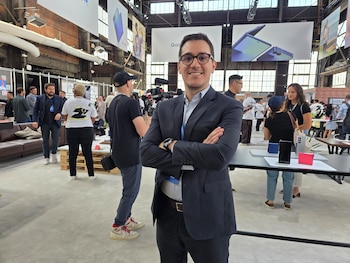
Infobae attended the Galaxy Unpacked 2025 event in Brooklyn, where the new models were revealed amid an exciting atmosphere, graced by celebrities such as ex-football star Thierry Henry and the Smith siblings, Jaden and Willow. In conversation with Paulo Cotrim, Samsung’s Product Mobile Director for the region, insights were shared on market recovery, manufacturing strategies, and the notable impact of artificial intelligence (AI) in the smartphone sector.
“Many brands that have recently entered the region focus primarily on pricing rather than delivering an exceptional user experience.”
Cotrim emphasized the stability and growth within the premium segment of the smartphone market in the region, particularly for foldable devices, which have surged by 30-40% in sales since they were introduced in 2019. This growth is indicative of shifting consumer preferences and an increasing appetite for innovative technology.
The Local Market Dynamics and Competition
In Argentina, Cotrim observed a positive shift in consumer behavior, attributed to improved economic conditions. Samsung maintains a dominant position not just in smartphones but across various consumer electronics categories. While Brazil holds the largest market, Argentina remains a key player, closely following Central America and Mexico.
When discussing the future of manufacturing in the region, Cotrim noted the importance of competitive pricing and user experience. Currently, Samsung’s production set-up in Tierra del Fuego thrives, supported by a strong partnership with Mirgor. Although the landscape has changed, Samsung adapts to provide optimal experiences for customers.
While the entrance of Chinese brands into the market has raised expectations, Cotrim believes this competition is beneficial. Many newcomers focus on competitive pricing rather than delivering quality user experiences. Despite increased competition from these brands, Samsung continues to lead, particularly in the foldable segment.
Cotrim’s insights also touched on the rising significance of AI in consumer purchasing decisions. The integration of AI into smartphones is not limited to premium models; even budget-friendly options, such as the Galaxy A series, incorporate essential AI features, greatly enhancing user experience.
Humbly, Samsung acknowledges the changing landscape of smartphone consumption, where the value derived from an ecosystem of interconnected devices is paramount. With smartwatches, NAS devices, and more, it becomes clear that the smartphone market is not just about hardware but about the immersive experiences enabled by connectivity and AI.
Samsung is poised to lead this charge, emphasizing the importance of AI in shaping the future of technology. Their commitment to providing free access to tools like Galaxy AI signifies an aim to maintain a user-friendly and accessible ecosystem amidst evolving market dynamics. The forthcoming years promise innovative advances, particularly in creating a more immersive and multimodal experience that combines health tracking, connectivity, and AI capabilities to enhance everyday life.