

The Future of Road Safety: What You Need to Know About the V16 Beacon
As we approach the end of 2023, drivers must prepare for a new regulation that mandates carrying a V16 beacon in all vehicles by January 1, 2026. This device is not just a signaling tool; it also has the essential feature of connectivity, raising many questions about its utility and potential applications. Understanding how the V16 beacon works can be crucial for every motorist, especially with two months to go before the deadline for compliance.
Understanding the V16 Beacon
The V16 beacon is designed to be easily visible in case of accidents or breakdowns. More importantly, it features an integrated SIM card that ensures connectivity for a minimum of 12 years without any additional monthly fees. This offers a unique perspective: how can we utilize this technology beyond road safety?
Free Connectivity Explained
The DGT (Dirección General de Tráfico) has set clear requirements for these beacons. Once activated, the device shares your location with the DGT, which aids in notifying oncoming drivers about accidents or obstacles on the road. This real-time communication can potentially save lives by reducing the likelihood of additional accidents.
The ability to transmit your position could change the landscape of road safety dramatically. Drivers will have a safeguard that alerts not just them, but also nearby cars. The beacon’s functionality serves as a direct line of communication in critical situations.
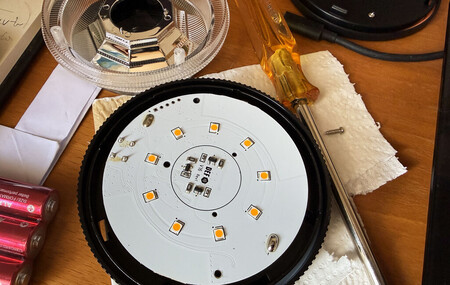
The dismantled beacon. Image: Iván Linares, Xataka Móvil
However, your plans of utilizing this technology for personal mobile devices may be wishful thinking. The SIM card embedded within the beacon is not intended for personal use. It is soldered to the device’s motherboard , making it incompatible with smartphones.
Exploring Limitations of the V16 Beacon
The Complexity of the Network
Where the beacon connects is another crucial aspect. The network operates on an NB-IoT (Narrowband Internet of Things) framework, which is tailored for emergency applications. This specialized infrastructure is intended for sporadic connections and cannot support continuous data transfer. Hence, any attempt to misuse the SIM would result in automatic shutdown, ultimately nullifying the twelve years of so-called “free” connectivity.
The V16 beacon isn’t merely a convenience but a vital tool for enhancing road safety. Its construction, regulations, and operational parameters render it unsuitable for personal or alternate usage. As we near the compliance deadline, understanding these nuances could be essential in adapting to innovative road safety measures.
Implementing the V16 beacon symbolizes a progressive step toward improving road safety standards across the board. As consumers, it’s imperative to stay informed and prepared for such developments. By doing so, we not only comply with the law but also contribute to a safer driving environment for everyone.