
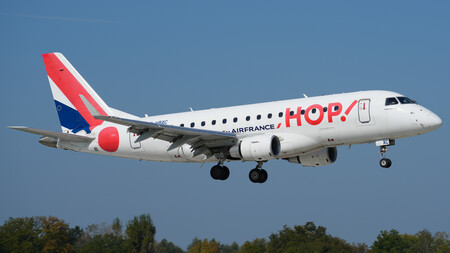
If you live in Europe, flying on an Embraer is not the most common experience. However, these Brazilian planes are more present than they may appear. At airports like London City, where only specific models can operate, these jets dominate the runway. Their significance is also noticeable in Spain; for instance, Air Europa featured several E195 models in its regional fleet until the beginning of 2023.
Embraer is no minor player in the world of aviation. It is one of the largest aircraft manufacturers globally, particularly known for its regional jets, especially the E175, which accounts for a significant portion of regional traffic in the United States. Major airlines like American, Skywest, and other regional United Express operators have increasingly opted for these aircraft. In a landscape where Boeing faces challenges, Embraer is emerging as a competitive contender among the elite aircraft manufacturers.
A Tariff Triggers Uncertainty
However, the horizon is becoming increasingly clouded. President Donald Trump has recently threatened to impose a 50% tariff on Brazilian products, effective August 1. This unprecedented action is straining relations between the two countries. In response, Brazil has signaled its intention to retaliate, citing a recent reciprocity law, though it’s yet unclear which sectors will be exempt.
Given that a large portion of Embraer’s orders are directed towards the U.S. market—95% of the firm orders for the E175 are from U.S. airlines—the proposed tariffs threaten to substantially increase the price of their aircraft. Not only would the final costs of the jets be impacted, but the cost of essential imported components from the United States used in manufacturing could also escalate if Brazil enacts similar tariffs.
Among those components are CF34 engines manufactured by General Electric, the Honeywell Primus Epic aircraft system, as well as landing gear and actuators mainly supplied by Collins Aerospace (USA) and Liebherr (Europe). Any increase in these essential components would not only elevate the overall production costs for aircraft destined for US airlines but also for other international markets.
The consequences of this dual effect could be significant. Airlines might be compelled to reassess their purchasing strategies if the price increases lead to elevated operational costs. Additionally, if manufacturing expenditures rise, Embraer’s global competitiveness could be jeopardized, even in regions where it currently maintains a strong foothold.
As reported by Flightglobal, Embraer is actively evaluating the potential impacts of these tariffs on its operations. The company is also engaged in discussions with authorities to seek restoration of the import tax exemption historically advantageous to the Brazilian aerospace sector. Nevertheless, uncertainty looms large.
This impending tariff is part of a broader communication strategy by Trump, affecting leaders of over twenty countries. He has indicated that tariffs may be adjusted according to the diplomatic climate. This lack of clear regulation puts manufacturers like Embraer, along with their suppliers, airlines, and passengers, in a challenging position to anticipate future developments.
Images | Dave Montiverdi | Marcelx42 (CC by-SA 4.0) | Samuel Costa Melo
In conclusion, the potential imposition of tariffs on Embraer’s aircraft could have far-reaching implications for the company and the broader aviation industry. The interplay of political and economic factors continues to shape the landscape of regional aviation, and stakeholders are watching closely as developments unfold.