
US Sanctions Hit Iran’s Oil Network Hard
In a significant move, the Trump administration announced its most extensive set of sanctions against Iran in seven years. This action targets more than a hundred individuals, entities, and ships , believed to be part of a network generating tens of billions of dollars by transporting oil from Iran and Russia to various global buyers.
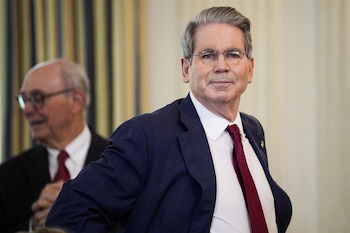
Treasury Secretary Scott Bessent emphasized, “The more than 115 sanctions issued today are the largest to date since the Trump administration implemented our maximum pressure campaign against Iran. These actions prioritize the United States by attacking the elites of the regime that benefit while Tehran threatens the safety of the United States.”
These sanctions revolve around a substantial shipping operation managed by Mohamad Hosein Shamjani , the son of Ali Shamjani , a senior political advisor to Iran’s Supreme Leader, Ayatollah Ali Khamenei . The U.S. Treasury indicates that approximately fifty ships are part of Shamjani’s extensive shipping empire, exploiting his father’s political connections to establish an influential fleet of tankers and cargo vessels.
Bessent stated, “The Shamjani Family Empire illustrates how the elites within the Iranian regime exploit their positions to amass tremendous wealth, effectively funding the regime’s perilous activities.” This extensive network is reported to “ control a significant portion of Iran’s crude oil exports” while benefiting from the illicit wealth funneling into privileges unaccessible to typical Iranians. Such luxuries include exclusive global real estate and foreign passports acquired through hefty financial investments.
In an additional layer of these sanctions, the U.S. State Department has designated around twenty entities and pinpointed dozens of vessels as blocked assets due to their involvement in the illegal trade and transport of Iranian oil and petrochemical products. The agency, led by Marco Rubio , has identified operators based in China along with companies in India, the United Arab Emirates (UAE), Turkey , and Indonesia as significant players in this convoluted network.
These sanctions not only tighten the economic squeeze on Iran but also aim at portraying a unified front against illicit oil trafficking, which undermines international laws and standards. The U.S. government continues to maintain that these actions are vital for ensuring regional stability and deterring malign activities emanating from Tehran.
The broader implications of these sanctions remain significant. Experts believe that by disrupting Iran’s oil supply chain, the U.S. is sending a clear message to global markets and financial institutions to rethink their interactions with Tehran. Authorities are concerned that ostensible alliances between Iran and Russia in energy trading can exacerbate existing geopolitical tensions, particularly in light of the ongoing conflict involving U.S. interests and various adversarial actors in the region.
This action indicates a pivotal shift in U.S.-Iran relations against a backdrop of faltering diplomatic negotiations. As Washington intensifies pressure on Tehran, the dynamics of energy trade will likely face significant disruption, impacting countries reliant on Iranian oil imports.
While the implementation of these sanctions may provide short-term benefits in curtailing Iran’s oil exports, long-term effects on regional diplomacy and energy prices will require careful monitoring. The developments underscore a critical aspect of U.S. foreign policy, wherein economic sanctions are leveraged as a primary tool to navigate complex global challenges.
As the world watches these events unfold, the effectiveness of the sanctions will be closely scrutinized. Stakeholders now face the crucial challenge of adapting their strategies to align with changing geopolitical landscapes while maintaining economic stability amid the uncertainty this new round of sanctions invites.
The success of these sanctions may ultimately hinge on the global response, making it essential for U.S. allies and partners to remain steadfast in their commitment to uphold international laws and curtail illicit activities linked to Iran.