
The New Military Landscape: U.S. Response to China’s Growing Threat
When China unveiled its latest military parade, it was a spectacle that demonstrated not only the country’s military might but also served as a strategic message to the world. Just a few days later, this demonstration elicited a prompt response from the United States, which relocated its new missile platform to Japan. It became evident that over 3,500 missiles were poised, targeting the same direction. This marked the beginning of a frantic sprint by the U.S. to double its missile production, a move driven by the looming possibility of conflict with China.
The Strategic Awakening
The urgency of the situation was highlighted in an exclusive report by The Wall Street Journal. The Pentagon is now sounding alarm bells, realizing that its current missile arsenal may not be sufficient for a prolonged conflict with China. The ongoing conflict in Ukraine has further exposed weaknesses in the U.S. military’s logistical capabilities. The U.S. has found itself depleting its missile stockpiles, spurring what some experts call a strategic awakening.
Recent military engagements highlighted how quickly resources can vanish; for instance, the U.S. has provided hundreds of high-tech missiles to support allies such as Israel, which has contributed to the depletion of U.S. stockpiles. The consensus within the Pentagon is clear: the existing arsenal will struggle to defend Taiwan or maintain allied bases in the Pacific if tensions with Beijing escalate further.
<img alt="High skyscrapers in China" width="375" height="142" src="https://i.blogs.es/917a40/ps---plantilla-portadas-xtk-504/375_142.jpeg"/>The New Creation
To mitigate these threats, the United States Department of Defense has formed an extraordinary body, the Munitions Acceleration Council, headed by Deputy Secretary Steve Feinberg. This council meets weekly with major industry executives, pushing for immediate increases in production capabilities. The goal is to double, or even quadruple, the output of critical missiles like the Patriot interceptors and Long Range Anti-Ship Missiles.
Key figures in the Pentagon, including Secretary of Defense Pete Hegesh and Chief of Staff General Dan Caine, have convened meetings with industry giants like Lockheed Martin and Raytheon, as well as emerging companies such as Anduril Industries. This collaboration aims to revitalize the production infrastructure necessary for a potential high-intensity conflict.
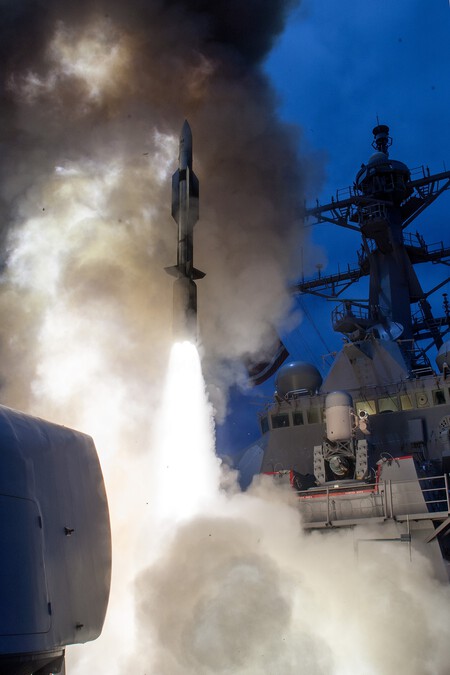
<span>The destroyer USS John Paul Jones (DDG-53) launches a RIM-174 Standard Eram (Standard Missile-6, SM-6).</span>The Industrial Bottleneck
Despite the urgency, the task at hand is monumental. Completing the manufacture of a single missile can take up to two years. The existing production lines have been stagnant, and many secondary suppliers have exited the market, creating bottlenecks for critical components, such as rocket engines. Expanding production facilities and hiring specialized personnel will require billions in investment and committed contracts from the Pentagon.
As experts note, companies will not resume production without contracts, emphasizing the need for guarantees that funding will not be withdrawn mid-effort. Companies like Northrop Grumman have already begun investing significantly to expand production capacity, betting on rising global demand.
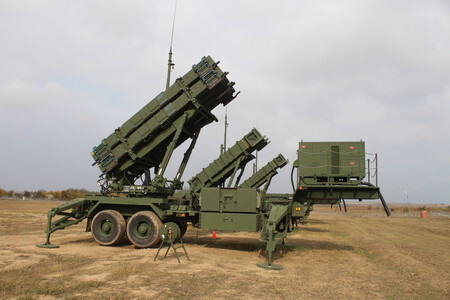
<span>Patriot Missile Battery in Romania.</span>Priority: Patriot
Among the immediate needs is the Patriot PAC-3, which has seen a surge in demand. Recently, the U.S. Army awarded Lockheed Martin a contract amounting to nearly $10 billion for 2,000 missiles over three years, with the Pentagon aiming to achieve this production level annually going forward.
Boeing has also committed to expanding its manufacturing footprint to accommodate the production of more rocket engines, while Lockheed is actively exploring further investments in its assembly lines. However, all manufacturers are requesting more substantial funding and long-term commitments to justify the necessary scale of production.
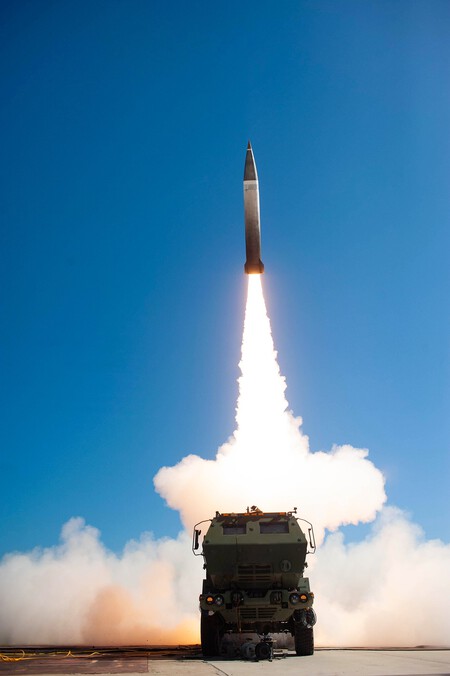
<span>Precision Strike Missile.</span>New Acquisition Model
The mounting pressure has led the Army to announce significant overhauls in its weapon procurement processes. Approaches such as technology licensing and attracting private capital are under exploration, along with programs that ensure visibility into contract demands for the entire supply chain.
The previous administration allocated around $25 billion over five years through the ‘Big, Beautiful Bill,’ but experts agree that to meet production objectives, the figures will need to be multiplied. This effort ties into a larger conversation surrounding how to maintain an industrial base capable of addressing high-intensity military conflicts, particularly as conflict zones exhaust stockpiles at an alarming rate.
Background: China
The ultimate impetus for this acceleration stems from the looming prospect of a potential war in the Pacific. A military confrontation over Taiwan would simultaneously affect both U.S. and Allied bases, challenging maritime routes while facing an increasingly sophisticated Chinese Navy.
American military superiority will depend not just on cutting-edge technologies but on the ability to replace them swiftly during prolonged conflicts. The Pentagon is acutely aware of the risks of underestimating manufacturing needs, emphasizing a race against time to transform the industrial base into a robust arsenal.
<img alt="South Korea's advanced radar" width="375" height="142" src="https://i.blogs.es/e45439/corea-aew-portada/375_142.jpeg"/>The Risk of the Gap
The urgency surrounding the U.S.’s military production reveals a critical contradiction: while sophisticated weaponry becomes increasingly advanced, production capabilities lag behind due to the slow pace of manufacturing. Observing the situation in Ukraine highlights that even significant financial resources can be rapidly exhausted, complicating efforts to replenish depleted supplies.
To retain its deterrent power against China, the U.S. must prove it can sustain not just technological advancements but also ensure mass production capabilities, as these elements are vital for maintaining its global network of alliances.