
The USA has given a green light to continue selling engines for the C919, the aircraft that China aims to challenge against the Airbus-Boeing duopoly. However, this decision contains an inherent paradox: it has provided Beijing with another impetus to pursue its own autonomy . The question looms: what guarantees are there that another restriction won’t be imposed in a few months? How will the situation unfold when this aircraft begins to cross international borders?
China has been working towards this goal for several years. The C919 is not a mere prototype; it’s a narrow-body aircraft designed to accommodate up to 192 passengers with a range varying between 4,075 and 5,555 kilometers. Currently, there are 18 units in operation, yet the demand continues to surge as orders multiply.
China’s Aerial Dream Flies with Western Help (for the Moment)
This ambitious endeavor largely relies on foreign engineering . Key components such as the flight control system, brakes, airframe, and the auxiliary power unit come from American or European companies . At the heart of this aircraft is the engine—a formidable LEAP-1C, developed by CFM International, a collaboration between American company GE Aerospace and French company Safran.
The U.S. Department of Commerce has reinstated export licenses for these engines, presenting a temporary reprieve for China, allowing it to meet anticipated delivery schedules. However, this move sends a subtle signal. As Hugh Ritchie, the CEO of Aviation Analyst International in Australia, points out:
“Without access to that technology, in essence, the U.S. would control the pieces of Chinese airplanes.”
China has adeptly learned to interpret these nuances. Each commercial restriction and veto has served as a lesson. When the Trump administration banned Huawei, the impact was palpable; the company’s market position plummeted, seemingly leaving it out of the game. Instead of conceding defeat, Huawei doubled down on its technological ambitions . By 2025, it has regained a prominent market position, launching smartphones equipped with proprietary chips like the Kirin 9010 and reinvigorating its prowess in artificial intelligence with the new Ascend 910C.
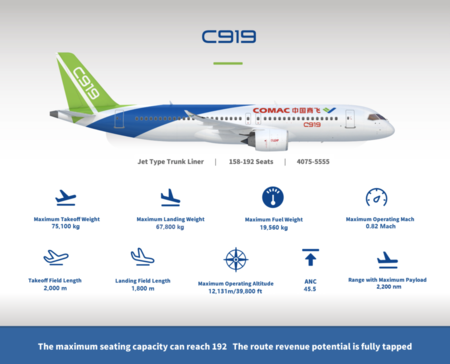
The automotive sector paints a similar narrative. For years, Chinese manufacturers faced skepticism within international markets. However, brands such as BYD and MG now compete against traditional manufacturers in aspects like price, design, and range . This evolution wasn’t merely serendipity but the outcome of a deliberate strategy.
Therefore, the C919 is not an isolated phenomenon; it fits into a larger trend. Evidence shows it is only a matter of time before China ceases dependence on Western engines . The CJ-1000A is an engine currently under development by the Aero Engine Corporation of China (AECC) intended as a national substitute for the LEAP-1C. Although it isn’t finished, certified, nor approved for mass production, advancements are quietly progressing.
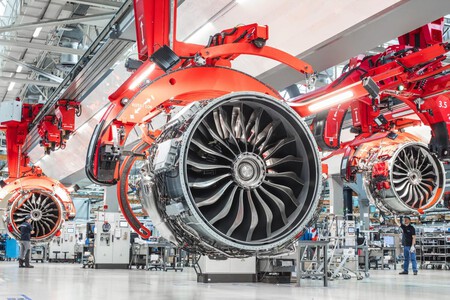
LEAP -1C, the Western engine used by Chinese mate
The plan has been in progress for years. The prototype has completed several tests since 2018. According to Airinsight, the objective is that the CJ-1000A will be ready to replace the LEAP-1C in future versions of the C919 over this decade. The most optimistic estimates suggest that this Chinese engine may gain certification for commercial flights by around 2030, although a timeline extending to 2035 cannot be overlooked.
China has substantial reasons for pursuing this direction. The Chinese aviation market ranks among the largest globally and grows at a speed few can match . Predictions from Boeing’s Market Outlook 2024–2043 indicate that China will require approximately 8,600 new commercial airplanes in the next twenty years. Comac aims to capture a share of that demand, and if successful, it will thrive domestically without needing to rely on foreign entities.

This context helps explain why the C919 may operate exclusively within China as it works towards international certification. Moreover, the development of indigenous engines—while still in progress—offers a promising pathway. A domestic market of this magnitude presents an opportunity for scale that few economies can match.
<pSimultaneously, Comac does not shy away from its ambitions on the international front. The European regulator (EASA) estimates that the C919 certification could take between three to six years from 2025, positioning potential approval between 2028 and 2031. If achieved, Comac will finally make its mark beyond its borders.
In sum, the journey of the C919 reflects a broader strategy aiming to replace foreign dependency in significant sectors. As the domestic market continues to flourish, China is laying the groundwork to claim its place on the global aviation stage.