
The Symbolism of Green in Disney Movies
In the enchanting world of Disney animation, the color green stands out as a significant visual cue, often foreshadowing malice or ominous events. This isn’t merely a coincidence; Disney has effectively used this color to build a narrative around danger and villainy across its iconic films.
The Recurring Presence of Green
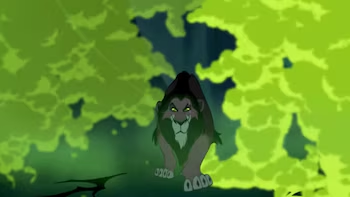
From perilous encounters to the unveiling of antagonists, green appears whenever trouble is brewing. A classic example can be seen in The Lion King, where Scar dominates his followers, enveloped in a wash of foreboding green during his menacing number, “Get Ready.” This thematic color also plays a critical role in Snow White, where the creation of a sinister potion is bathed in an unsettling lime green hue.
In Sleeping Beauty, the spinning wheel’s proximity to danger becomes palpable as green colors the scene. Similarly, Ursula’s granting of Ariel’s wish in The Little Mermaid is underscored with this eerie shade, emphasizing the ominous undertones of her covetous intentions. Even the River of Souls in Hercules mirrors this haunting palette.
The Effectiveness of Green as a Visual Code
As noted by Sensacine, every classic Disney villain scene prominently features a distinctive lime green. This deliberate choice fosters a feeling of strangeness and unease, creating an atmosphere that alerts viewers to impending danger. Green, in this context, serves as a visual shorthand that signals villainy and chaos, effectively alerting audiences that malice is at hand.
Continuation into Modern Disney Productions
This association continues in recent releases such as Wish, where the antagonist is also enveloped in a striking shade of green. The tradition has proven influential enough that it has permeated outside Disney, shaping the color schemes of formidable comic book villains like Lex Luthor, the Joker, and Green Goblin.
Green: The New Black of Villainy
Interestingly, green has eclipsed black as the predominant symbol of threat and evil. According to some analysts, “There is something about that color that seems strange to the eye and represents villainy better than black.” For years, Disney maintained the consistency of this visual resource, cultivating its association with malevolence in our collective psyche.
A shift marked the release of Tangled, where Rapunzel possesses green eyes, breaking the mold somewhat by presenting a kind-hearted character associated with the color. Yet, even in this case, green once again finds itself linked to darker themes throughout the story.
Ambiguity and Moral Conflict
Green’s role extends beyond straightforward villainy; characters such as Emerald in The Hunchback of Notre Dame exhibit this nuance. Here, perceptions of good and evil fluctuate, depending on the context of the antagonist’s perspective, such as Frollo’s view of her as a temptress, which adds layers of moral complexity.
Conclusion: A Signal to Beware
Disney’s unwavering reliance on green as a code for villainy reflects a tried-and-true formula. As discussed in Sensacine, “If it works, don’t change it.” Therefore, as green continues to serve as a harbinger of danger, one could consider this color a signal. If viewers ever find themselves in a Disney movie and glimpse green shining on the horizon, it may very well be time to seek an exit.