
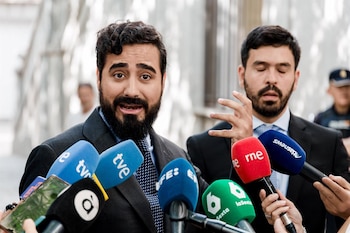
The Legal Storm Surrounding Alvise Pérez and Álvaro Romillo
In recent developments, the Supreme Court of Spain has summoned notable figures, including party leader Luis ‘Alvise’ Pérez and businessman Álvaro Romillo, also known as ‘Cryptospain’, amid allegations of illegal financing related to Pérez’s political party, Salf. This investigation has sparked considerable public interest, especially as it comes in the wake of significant financial scrutiny of political parties in Spain.
Background of the Case
The allegations are centered around a sum of €100,000 that Romillo reportedly provided to Pérez for the upcoming European elections scheduled for June 9, 2024. The case was elevated to the Supreme Court following a referral from judge José Luis Calama of the National Court. It appears that the court considers Pérez’s actions heavily indicative of a breach of electoral financing laws.
The Supreme Court has summoned both Pérez and Romillo to appear before it this coming Friday. Pérez is expected at 10:30 AM, followed by Romillo at 11:30 AM. Legal representation is mandatory for both parties during this critical inquiry that could reshape their political futures.
Previous Encounters with the Law
Interestingly, this is not the first time Alvise Pérez has been embroiled in legal troubles. He has already faced the court on two previous occasions, primarily for unrelated allegations including the circulation of a false PCR report about the then-Minister of Health, Salvador Illa, and accusations regarding the harassment of Susana Gisbert, the Delegate Prosecutor for Hate Crimes.
In recent interviews, Pérez seemed to dismiss the gravity of the allegations, referring to the €100,000 as a meager sum for what he describes as “half an hour of talk.” This dismissive attitude is alarming in the context of the serious implications illegal financing can have on political integrity.
Legal Framework and Implications
The Supreme Court’s inquiry falls under Article 149 of the Organic Law of General Electoral Regime (Loreg), which outlines punishments for falsifying political accounts. This law imposes penalties ranging from 1 to 4 years of imprisonment and fines of 12 to 24 months for any party official found guilty of misrepresenting contributions or expenditures.
The stakes are notably high for both Pérez and Romillo. The implications of this case could extend beyond mere fines or prison time; it could pose a significant threat to their political careers and the integrity of their party.
Multiple Charges and Possible Outcomes
The Criminal Chamber of the Supreme Court, having initiated this investigation, highlighted that the facts surrounding the case might lead to multiple allegations against Pérez, including scam crimes, undue appropriation, money laundering, and documentary falsehood.
The court has recognized that both Pérez and Romillo could be held accountable under these laws. Pérez, in particular, has been framed as the electoral administrator of the party, while Romillo is characterized as a donor responsible for exceeding permissible limits and contributing to potential electoral misconduct.
The court’s decision to accept the PSOE party as a popular accuser opens the door for political opponents to scrutinize this case further, making it fraught with political ramifications.
The Bigger Picture
This case is emblematic of a broader discourse surrounding transparency in political financing in Spain. Concerns over the integrity of political processes and accountability in party funding have gained traction, particularly in light of past scandals.
As public trust in political institutions continues to wane, implications of financial misconduct could further erode the confidence that citizens place in their leaders.
Pérez’s upcoming hearing is poised to unravel not just the specifics of this case but may also invoke questions about the ethical standards governing political conduct in Spain. While the legal proceedings unfold, citizens and political analysts alike will be vigilant observers, as the outcome could shape the future trajectory of not only Pérez and Romillo but also the broader political landscape in Spain.
With the court appearances imminent, the eyes of the nation are fixed on the Supreme Court, waiting to see how this saga will unfold and what it means for the future of political integrity in the country.