
The world of submarine cables is intricate and vital to our daily digital lives. These cables, which transport 95% of global data traffic across continents, are responsible for handling an astonishing $10 billion in financial transactions each day, as noted by Telegeography. They support everything from video streaming to complex artificial intelligence networks. However, the landscape of ownership and control over these critical infrastructures has shifted dramatically in recent years, moving away from traditional telecommunication companies to the hands of prominent technology giants like Google, Meta, Microsoft , and Amazon . This transformation prompts discussions around digital sovereignty , dependence, and resilience amidst geopolitical challenges.
Historically, submarine cables were constructed through public operator consortiums and major telecommunication firms. The cost of installing these cables typically reached hundreds of millions of dollars, requiring various stakeholders to distribute the financial risk involved in their creation, as documented by Capacity Media. The recent 2Africa cable , laid by a consortium including Meta, indicates that while traditional models still exist, the balance of power has shifted considerably in just a decade.
Currently, the situation is striking: Google, Meta, Microsoft, and Amazon together manage approximately half of the world’s underwater bandwidth . Between 2019 and 2023 , these tech giants financed nearly 25% of the newly operational cable systems, as reported by the Carnegie Endowment. Predictions indicate that around 60 new submarine cables are expected to be built globally by 2027, as highlighted in the latest Telegeography map, emphasizing a substantial shift in control over key internet infrastructure.
How Technology Took Over the Underwater Routes
The qualitative shift isn’t just in participation; it also involves outright ownership. Companies like Google own cables such as Curie (USA-Chile), Dunant (USA-France), Grace Hopper (USA-Spain), and Equiano (Portugal-Nigeria-South Africa). Meta aims to establish its own cable, named Waterworth , exceeding 40,000 km in length to connect the USA to vital markets in the Southern Hemisphere, strategically bypassing high-risk waters like the Red Sea.
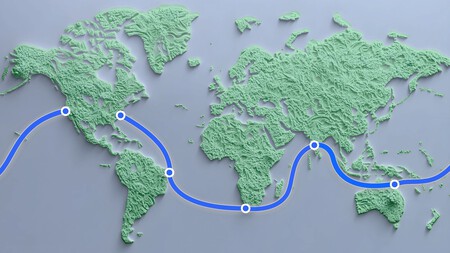
The 2Africa project, while still organized under a consortium model, underscores this evolution, as Meta plays a significant role in shaping the partnership dynamics with several operators. In fact, Europe, according to the Carnegie Endowment, maintains the highest concentration of submarine cables globally, with two-thirds of its external connectivity reliant on these cables. This illustrates Europe’s strategic vulnerability , particularly as much of its data traffic is stored within US-based data centers, amplifying its technological dependence.
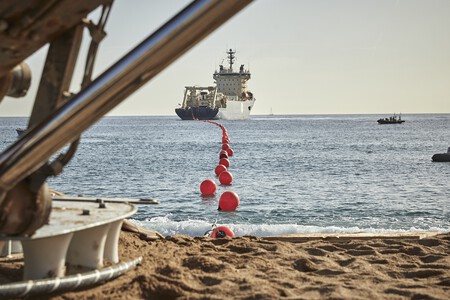
In light of these developments, Europe possesses strategic assets such as Alcatel Submarine Networks (ASN) , recognized as the world leader in kilometers of deployed cable between 2020 and 2024 . However, nations like France and Italy are taking proactive steps to protect these assets as “sovereign industrial champions,” recognizing the need to ensure robust control over essential infrastructure.
Unfortunately, the stability of the cables is increasingly threatened by more than just natural wear and tear. With Russia ramping up underwater patrols and China unveiling an advanced ship capable of severing cables at depths of up to 4,000 meters , the geopolitical stakes are rising. The limited capabilities for cable repair and installation further complicate matters; there are only about 80 ships worldwide dedicated to this essential function, with Europe ill-equipped to handle operations in Arctic regions or harsh marine ice conditions.
The fragmented legal landscape poses additional challenges. Notably, many European nations have yet to ratify the 1884 Convention , hindering the prosecution of acts aimed at sabotaging these critical infrastructures. Furthermore, the time required to obtain installation and repair permits in Europe has doubled in the last decade, hampering timely responses to incidents.
Towards a More Fragmented and Dependent Internet
The increasing dominance of major tech companies in submarine cable infrastructure exemplifies a systematic approach to control the physical layer of the Internet. This vertical integration allows them to reduce costs, improve service efficiency, and circumvent disruptions. On the flip side, traditional telecommunications companies find themselves at a crossroads: adapt or risk obsolescence.
While some operators still hold significant roles, they must navigate an ecosystem largely dictated by tech giants. Looking ahead, the demand for intercontinental traffic is expected to double every two years due to the influence of 5G , cloud technology, and AI developments. New avenues such as polar corridors are being explored to enhance efficiency in transcontinental communication.
The looming concern of a splinternet—a fragmented internet controlled by distinct political alignments—poses significant risks. Europe finds itself balancing its historical openness with the pressing need to safeguard its strategic interests in the ever-evolving digital landscape, an aspect underscored by analysts from Oxford University .
As we transition to a future dominated by tech giants and fragile geopolitical tensions, the pressing challenge remains clear: ensuring the next generation of the Internet is not solely reliant on foreign entities. The journey towards not just expanding cable networks, but securing autonomy over digital infrastructure is now more crucial than ever.