
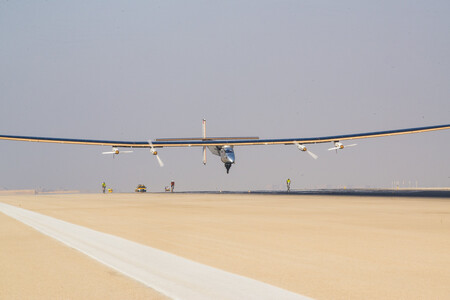
There was a time when the Solar Impulse 2 appeared as a response to a fundamental question: how far can a plane go without conventional fuel? The answer manifested not in a commercial product but in an experimental aircraft, powered by solar energy and batteries, that flew around the globe. This aircraft, which symbolized a transformative vision for aviation, has crashed in the Gulf of Mexico during an autonomous test flight.
The incident occurred on May 4. As reported by the Aviation Safety Network, the Solar Impulse 2 was carrying out an autonomous test when it lost power and ultimately crashed into the water. Fortunately, no injuries or fatalities were reported, as the plane had been operating without a pilot during this phase. However, the crash represents a poignant reminder: an aircraft that once embodied a significant technological promise is now merely the debris from an accident.
At the heart of this innovative project was Bertrand Piccard, a scion of a family of explorers. His grandfather, Auguste Piccard, was an oceanic pioneer, while his father, Jacques Piccard, famously journeyed to the depths of the Mariana Trench. Piccard envisioned a solar-powered aircraft as early as 2003, aiming to spotlight the significance of sustainable energy. This vision culminated in the first Solar Impulse aircraft, which took its maiden flight in 2009, leading to the ambitious Solar Impulse 2.
The Plane That Converted the Sun into Flight Energy
What distinguishes this endeavor is that it was not based on traditional aircraft design. The Solar Impulse 2 featured a remarkable wingspan, measuring about 71 meters—greater than that of a Boeing 747—while weighing merely 2.3 tons, thanks to its lightweight carbon fiber structure. The aircraft harnessed energy from 17,248 photovoltaic cells positioned throughout its wings, yielding a maximum output of 66 kW to power its four electric motors and recharge its four lithium-ion batteries.
The peak of its achievement arrived in 2016 when Solar Impulse 2 successfully completed the first around-the-world journey of a fixed-wing airplane entirely powered by solar energy—a journey that spanned over 15 months. Throughout the expedition, Bertrand Piccard and co-founder André Borschberg took turns piloting the aircraft, which traveled at speeds ranging from 31 to 62 miles per hour, often slowing down during nighttime.
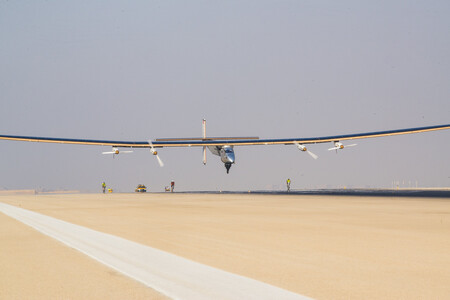
Following this notable achievement, the narrative shifted. In 2019, the Solar Impulse Foundation sold the aircraft to Skydweller Aero for an undisclosed sum. This Spanish-American firm perceived the aircraft differently; their focus lay in transforming the Solar Impulse 2 into a platform for surveillance and communications, significantly diverging from its original mission aimed at promoting energy awareness.
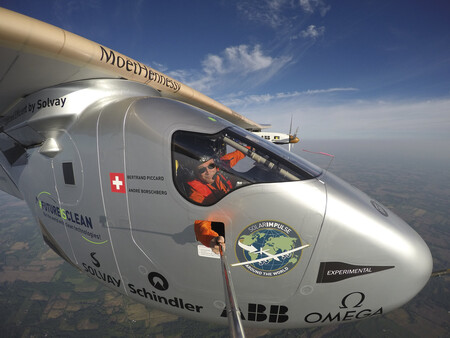
With Skydweller, the plane underwent significant technical modifications. After implementing changes, it completed its first autonomous flight in Spain in 2023, followed by a fully unmanned operation at Stennis International Airport in Bay St. Louis, Mississippi.

Skydweller’s vision aimed at deploying a fleet of solar aircraft capable of non-stop flights between Miami and Rio de Janeiro, effectively serving military and commercial needs more economically than satellite alternatives. This grand ambition, however, has now sunk beneath the waves.
Images | Solar Impulse (1, 2, 3, 4)
In Xataka | While we all look at Iran, something is moving in the Arctic Circle: Russia is sending bombers with missiles.