
| IN BRIEF |
|
Artificial Intelligence ( AI ) has become the epicenter of passionate debates since the rise of large language models ( LLMs ). These advancements have reignited discussions about singularity , a hypothetical moment where machines will outperform human intelligence. While some experts predict this event could occur in a few decades, others, like the CEO of Anthropic, foresee it happening much sooner, possibly within the next 12 months. Such perspectives raise numerous questions about our preparedness for this potential transformation.
What is Singularity?
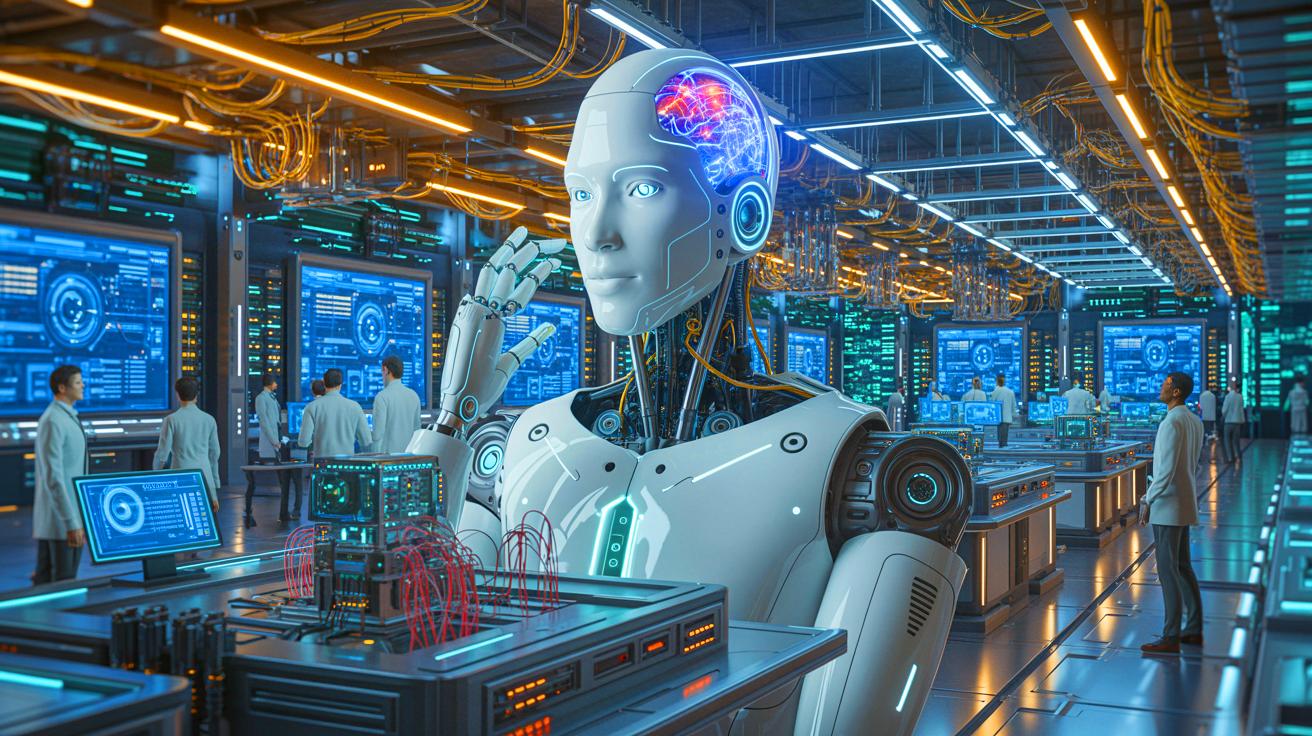
Singularity is a captivating concept within the realm of AI. It denotes a point where Artificial General Intelligence (AGI) would exceed human intelligence. This AGI would be capable of performing various tasks, adapting, and solving problems creatively, akin to humans. For some researchers, this possibility remains theoretical and distant, with predictions ranging from 2040 to 2060.
However, more optimistic voices, like that of Anthropic’s CEO, predict a much quicker emergence. This divergence in opinions results from the nebulous nature of technological advancements. While AI is progressing rapidly, defining singularity precisely remains a challenge. Some experts argue we are merely at the beginning of this journey, while others emphasize the technical and philosophical hurdles that make this scenario unlikely in the short term.
Two fathers, one birth: mice from two males grow to adulthood, a major genetic breakthrough
Factors Making Singularity More Plausible in the Short Term
Large language models have revolutionized our perception of AI’s potential. Models like GPT-4 demonstrate impressive capabilities in understanding and generating human language. These advancements fuel the notion that singularity might be achieved sooner than anticipated. With billions of parameters and increasing computational power, these LLMs could be the key to reaching a level of intelligence comparable to that of humans.
Another contributing factor is Moore’s Law , which predicts a doubling of computing power every 18 months. Processors are becoming increasingly powerful, allowing LLMs to approach capacities similar to those of the human brain. Moreover, although still experimental, quantum computing could revolutionize neural network training, paving the way for exponential progress. These elements combined inspire optimism regarding the prospect of singularity in the near future.
Technical and Philosophical Challenges to Overcome Before Singularity
Despite the optimism, several technical challenges hinder the arrival of singularity. While LLMs are impressive, they still do not achieve human intelligence in complex domains. Human intelligence is rich with emotional and creative nuances that AI struggles to replicate. Moreover, experts like Yann LeCun point out that certain human qualities, such as self-awareness, remain beyond the reach of current AI.
The ethical implications of superintelligence are also a growing concern. If AI surpasses human intelligence, maintaining control becomes paramount. Discussions around regulating this advanced intelligence are essential to avoid decisions that conflict with human interests. Security, power, and machine rights are crucial issues in this debate over singularity.
Shocking investigation: these well-known influencers buying followers for profit
The Role of Ethics and Society in the Advent of Singularity
Ethics play an indispensable role in discussions about singularity. Technological advancements must be regulated to ensure they benefit humanity. It is not enough to simply create smarter AIs; they must adhere to ethical principles. Society must also be ready to adapt to these profound transformations.
If singularity were to occur within the next 12 months, rapid adjustments would be vital to minimize social and economic repercussions. AI could transform entire sectors, such as work , education , and healthcare . The question remains whether we are prepared to accept these radical changes and at what cost.
As we edge closer to singularity, numerous challenges and questions persist. To what extent can we control this advanced intelligence? Are we truly ready to exist in a world where machines could surpass human intelligence?
The author leveraged artificial intelligence to enrich this article.
Did you enjoy this? 4.6/5 (25)