
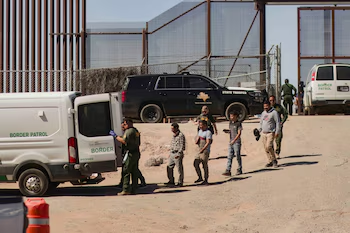
The SB 4 Ruling: A Turning Point for Migrant Laws in Texas
The entry into force of SB 4 in Texas is on the horizon following a critical decision by the Fifth Circuit Court of Appeals. This ruling has significant implications for the state’s handling of immigration enforcement and migrant rights, introducing a new era of uncertainty for both migrants and Texas authorities.
The Court’s Decision
In a closely contested 10-7 vote, the Fifth Circuit revoked a prior order that halted the application of SB 4, which permits state authorities to arrest individuals suspected of illegal entry. Notably, the court’s ruling centered solely on procedural grounds, stating that the plaintiffs—including organizations like Las Americas Immigrant Advocacy Center and the county of El Paso—lacked the standing to challenge the law’s validity. The court did not address the substantive legal arguments surrounding the law’s constitutionality.
Understanding Senate Bill 4 (SB 4)
Senate Bill 4 classifies unauthorized entry from Mexico into Texas as a misdemeanor. It empowers state police to make arrests and compels state judges to expedite deportations to Mexico rather than follow traditional criminal processes. Initially proposed during a spike in border crossings, SB 4 has garnered support despite a subsequent decrease in unauthorized entries, reflecting persistent concerns about perceived threats at the southern border.
Reactions to the Ruling
Ken Paxton, Texas Attorney General, hailed the Fifth Circuit’s decision as a “great victory for public safety and law and order.” He argues that the state’s ability to arrest unauthorized immigrants is a fundamental right that aligns with public safety interests. Conversely, migrant advocacy organizations view this ruling as a serious setback for migrant rights. Nicolas Palazzo, director of legal services at Las Americas, criticized the court for sidestepping a legal evaluation of the law, arguing it perpetuates a culture of fear and selective profiling against migrants.
The Broader Implications of SB 4
This legal development raises vital questions about the balance of power between state and federal immigration authorities. Traditionally, immigration enforcement has been a federal prerogative. SB 4 represents a challenge to this established norm, causing concern among civil rights advocates and legal experts. The court indicated that new challenges could arise from future plaintiffs with standing, keeping the door open for ongoing litigation.
The ruling also highlights a shift in the federal government’s involvement, with previous attempts to challenge SB 4 under the Biden administration having been withdrawn under the current Trump administration, thereby leaving local organizations to navigate the legal complexities virtually alone.
Future Prospects
As SB 4 moves closer to implementation, the timeline remains uncertain. The court’s ruling suggests that although the existing plaintiffs cannot proceed, the situation may evolve as new challengers emerge. The ongoing legal battles surrounding SB 4 suggest that the discourse regarding the law—and its consequences—will continue to evolve, impacting both migrants and Texas’s legal landscape for years to come.
In conclusion, the effective application of SB 4 will heavily rely on pending judicial reviews and the capacity of migrant defense groups to mount new challenges that could reshape the interpretation and enforcement of immigration laws in Texas. The debate over the law’s legitimacy and practical implications remains active, signaling significant changes in the state’s approach to immigration enforcement in the foreseeable future.