
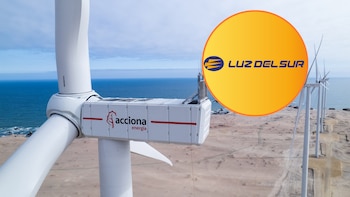
The Peruvian Energy Company South Luz reached an agreement with Acting Energy for the acquisition of the San Juan de Marona Wind Park located in the Ica region, for a value of 253 million dollars. This deal highlights the increasing momentum for renewable energy investments in the region.
The agreement entails standard cash adjustments typical in this kind of transactions, with plans to finalize the deal by year-end, contingent upon fulfilling contractual terms and obtaining necessary regulatory approvals, including those from the National Institute for the Defense of Competition and the Protection of Intellectual Property (INDECOPI).
The acquisition marks a significant milestone in Peru’s renewable energy sector. This transaction serves to bolster the expansion and diversification strategy of South Luz, aiming to solidify its foothold in the clean energy domain. The San Juan de Marona wind farm, which is expected to commence commercial operations at the end of 2023, boasts a capacity of 135.7 megawatts (MW) and stands as one of the country’s most pivotal projects in renewable energy generation.

Situated along the south coast of Peru, the San Juan de Marona wind farm has emerged as a strategic project due to its capacity and impact on the renewable energy sector. This asset not only excels in scale but also operates without financial drawbacks, making it increasingly attractive to potential investors.
Enhancing the company’s portfolio diversification in the region, South Luz pursues a selective asset rotation strategy that facilitates value creation and maintains a robust credit profile. This rotation process has become a cornerstone of its business model, allowing for optimized resource allocation.
The acquisition represents a critical advancement for Luz del Sur as it diversifies its energy generation sources and fortifies its business framework. It also enhances competitiveness in the energy market amid the growing demand for cleaner and more efficient energy solutions. This strategy aligns with global objectives for emission reduction and the transition towards renewable sources.
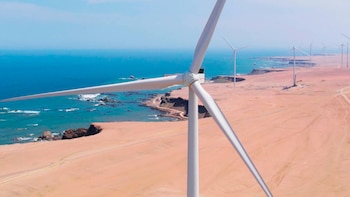
Wind energy functions as a renewable source that effectively transforms the kinetic energy of wind into electricity using wind turbines. These turbines work similarly to modern mills, capturing wind currents generated by atmospheric temperature and pressure differences, converting this natural force into one of the cleanest and most sustainable forms of energy generation.
The advantages of wind energy are plentiful:
- Renewable and sustainable: The wind is an inexhaustible source of energy.
- Reduction of fossil fuel dependence: The need to use fossil fuels is mitigated, contributing to the reduction of greenhouse gas emissions.
- Low environmental impact: Compared to other energy sources, it has a significantly reduced environmental footprint, particularly relative to burning fossil fuels.
- Local economic development: The construction and operation of wind farms generate employment and stimulate the economies of surrounding areas.
- Low operating cost: Following installation, wind turbines incur low operating and maintenance costs.
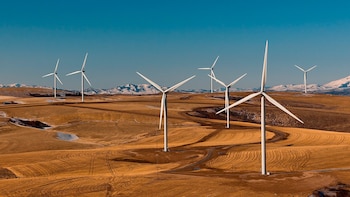
Moreover, wind farms are adept at generating large-scale electricity for entire cities and regions. This volume production capability not only positions wind energy as a sustainable resource but also renders it an effective choice for diversifying energy sources across various regions. Establishing these parks significantly enhances energy security, offering a clean and dependable source of electricity that can withstand fluctuating demand.