
The Rise of Women’s Football in France: A Game Changer
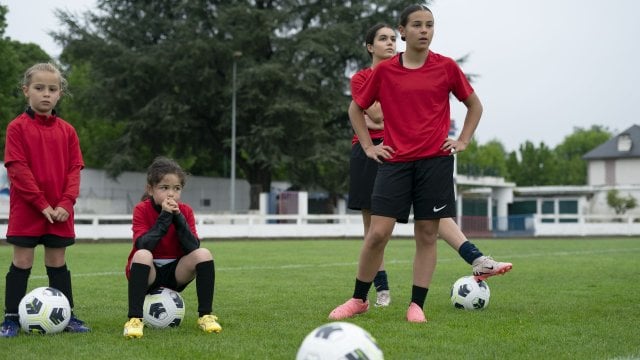
As summer holidays come to an end, school is back in session, bringing along the famous “Associations Forum” . This event allows students and families to explore various sporting activities available in their area. Recently, there has been a noticeable shift in this landscape. While girls previously gravitated towards more traditional female sports like dance and gymnastics , today, an increasing number are turning their attention to football. This trend marks significant progress in France, fueled by various underlying factors.
The French Football Federation (FFF), recognized as the largest sports federation in the country, has invested efforts over the past 15 years to promote women’s football. Philippe Diallo, the FFF president, stated, “The development of female practice at all levels—amateur football, professional football, and the French national team—is a major, essential issue. He must mobilize us tremendously. Collectively, we can win this bet. Today, already, women have never been so many to practice football in France.”
Aiming for 500,000 Licensed Female Football Players by 2028
The French women’s national football team has achieved notable success, with performances such as reaching the quarter-finals of the UEFA Euro 2025, the Paris Olympic Games, and the FIFA World Cup in 2019. These achievements have contributed to a surge in interest in women’s football, with the number of female licenses recording a new high in the 2023-2024 season— 251,369 in total, including 202,282 players, 40,687 managers, 2,412 educators, and 1,448 referees. This figure represents 10.5% of all FFF licenses. Over the last decade, women’s football participation in France has consistently increased by about 10% each year, and the federation has set an ambitious target of 500,000 female licenses by 2028 .
The “All Foot” initiative launched by the FFF in 2022 aims to enhance female participation and strengthen women’s roles within football clubs. Currently, around 4,000 amateur clubs have at least one female team, and 8,000 have female licensees. This evolution signifies a shift in societal attitudes. Playing football is increasingly seen as normal for girls, diminishing earlier stigma associated with the sport. Parents are now more receptive, readily supporting their daughters if they express a desire to participate in football.
Several factors contribute to this momentum: the introduction of school programs that provide fun and inclusive introductions to football for girls, the establishment of dedicated women’s football structures, and the emergence of female football stars in mainstream media. These elements work together to inspire hesitant girls and provide them with the reassurance they need to pursue their passion.
Photo credit @FFF
Challenges Ahead for Women’s Football
While the growth of women’s football is evident, numerous challenges remain. Despite more girls showing interest in the sport, several barriers still exist. Financial and material resources allocated to women’s football are consistently lower than those for men’s football. This discrepancy creates issues in terms of infrastructure; access to quality facilities can be especially challenging in rural areas compared to urban centers. Factors such as local culture, competition levels, and social dynamics can further complicate access to women’s football.
Moreover, many clubs struggle to provide appropriate kits tailored to women’s sizes, often offering the same equipment used by their male counterparts. This lack of basic resources could deter young players from fully engaging in the sport.
Despite these hurdles, significant strides have been made since the 1990s. The number of female practitioners has increased, alongside the feminization of football governance and the establishment of the Professional Arkema Ligue 1 aimed at elevating the profile of women’s football in France. While the FFF is committed to reaching the ambitious target of 500,000 licenses by 2028 , it acknowledges that many challenges lie ahead. Nevertheless, enthusiasm for women’s football is palpable and supported by equipment manufacturers, governing bodies, and above all, the budding stars of the future.