
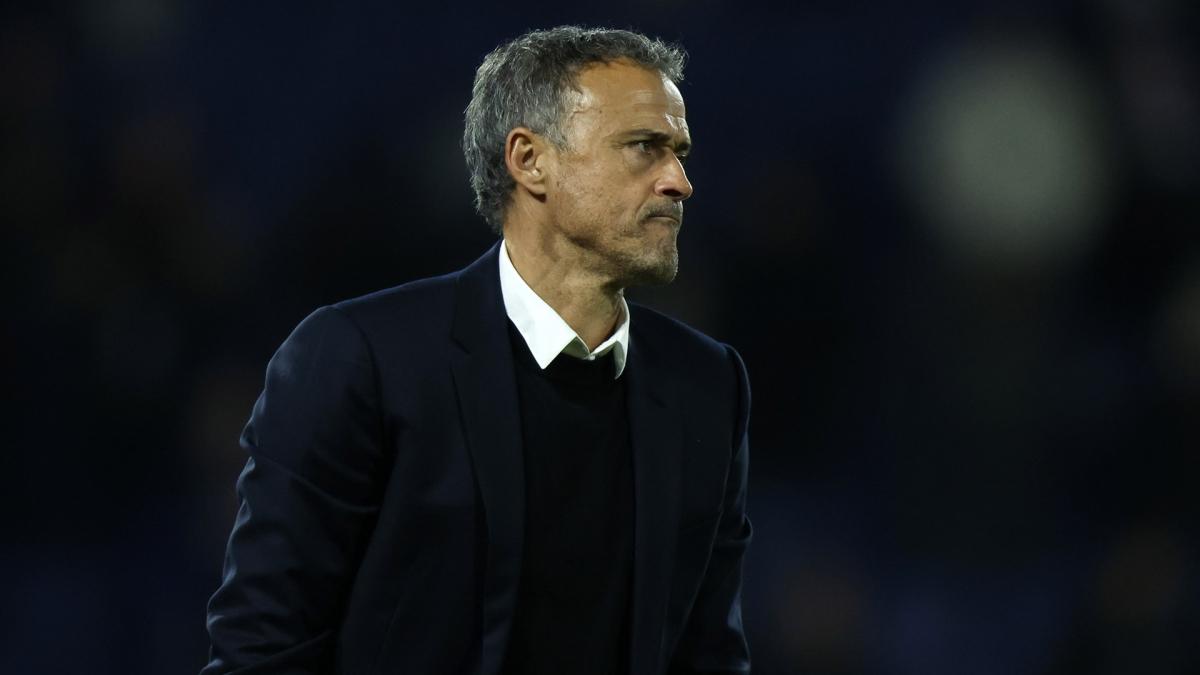
PSG’s Season Begins Amid Internal Turmoil
As Paris Saint-Germain (PSG) gears up for the European Super Cup against Tottenham in Udine, they face their first major challenge of the season under a cloud of internal tensions. Following a historic quadruple win and a performance that took them to the finals of the Club World Cup, the momentum at PSG appears to be fragile, despite the positive vibes previously established among manager Luis Enrique, sporting advisor Luis Campos, and the club’s management. With a blend of ambition and potential fractures within the squad, this season promises to be anything but ordinary.
The club is in a delicate phase, having to make some tough decisions that, while strategically sound, could destabilize team cohesion. Several issues are threatening to overshadow their success, such as coach Enrique’s controversial decision regarding goalkeeper Gianluigi Donnarumma, the ego of defender Achraf Hakimi, and a tension stemming from the presence of players from conflicting national backgrounds.
The Donnarumma Dilemma
The situation surrounding Gianluigi Donnarumma is particularly telling of the internal strife at PSG. Recently benched in favor of Lucas Chevalier, a new signing, Donnarumma’s discontent is palpable. The Italian international finds himself in a precarious spot as his future remains shrouded in uncertainty. PSG is wary of losing a player of Donnarumma’s caliber without financial compensation, a sentiment stemming from their experience with Kylian Mbappé. In an effort to adhere to a revised wage structure, management appears ready to alienate one of their star players.
This sidelining has raised eyebrows among teammates, many of whom worry about the implications of such a measure. If a high-profile player like Donnarumma can be marginalized, who is safe from the chopping block? Despite these concerns, the larger group seems to maintain a calm demeanor, recognizing the need for the club to strategize for what lies ahead. The camaraderie within the locker room remains relatively strong, a testament to the solid foundation built during previous seasons.
A Test of Individual Ambitions
Achraf Hakimi’s comments have added another layer of complexity to the locker room dynamics. The Moroccan star, speaking to Canal+, expressed aspirations of winning the Ballon d’Or 2025, igniting discussions around personal ambitions within the squad. Although Hakimi’s performances in last season’s Champions League were noteworthy, his desire for individual accolades comes at a time when the club is keen to spotlight Ousmane Dembélé. This strategic shift aims to alleviate the shadow cast by Mbappé’s exit and ensure that Dembélé is perceived as the club’s sensitive and charismatic face.
Reports indicate that PSG attempted to mitigate Hakimi’s sentiments prior to his public airing, but they failed to silence his remarks. This discord raises concerns about competing ego factions, particularly when nine PSG players vie for the prestigious Ballon d’Or. The uneven treatment of key players within the squad can sow seeds of jealousy and frustration, which could complicate team unity.
Nevertheless, the overall atmosphere within the team has been predominantly positive, with Hakimi remaining a well-respected member of the squad. His comments, while notable, have not yet escalated to a crisis point.
New Arrivals and Extra-Sporting Issues
Adding to the mix is the transfer of Illia Zabarnyi, a Ukrainian defender acquired from Bournemouth, intended to bolster the team’s defensive capabilities. His arrival, however, brings an extra-sporting dimension that cannot be ignored. Zabarnyi’s integration coincides with that of Matvey Safonov, a goalkeeper from Russia. Given the ongoing crisis stemming from the Russian invasion of Ukraine, their cohabitation raises eyebrows, making in-house relationships particularly sensitive.
Zabarnyi has openly supported his home country, contributing to humanitarian efforts amid the conflict. These social dynamics will likely place scrutiny on their interactions, with media and public opinions potentially viewing gestures between the two as contentious. Past examples exist of athletes facing backlash for similar associations, emphasizing the need for careful management of such relationships within the club. PSG, historically adaptive to integrating diverse cultures, remains optimistic that these complexities won’t derail the promising unity they’ve built over the last decade.
As PSG approaches the European Super Cup, they are embarking on a season filled with possibility, ambition, and challenges. The players and management must navigate both the sporting and interpersonal landscapes to achieve their goals. With a seemingly cohesive locker room and a strong desire to succeed, PSG is prepared to tackle the hurdles ahead, underlining their determination to remain at the pinnacle of football.