
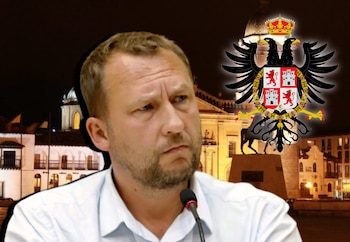
The Disqualification of Tunja’s Mayor: What Happened?
In a significant development in Colombian politics, the Attorney General’s Office has dismissed and imposed a 14-year disqualification on the mayor of Tunja, Mikhail Krasnov. This decision comes in light of findings that reveal Krasnov’s registration as a candidate for the mayoralty, as well as his subsequent inauguration, occurred during a period during which he was disallowed from running for election. The elections took place on October 29, 2023, with Krasnov assuming office on January 1, 2024.
Krasnov, popularly referred to as “the Russian” because of his national origins, faces serious allegations regarding a service contract he signed with the Pedagogical and Technological University of Colombia (UPTC) within the prohibited timeframe. This situation mirrors a past incident in which businessman Tulio Gómez, a key figure in the America conglomerate, was also barred from running for office due to similar circumstances.
The Nature of the Allegations
The allegations against Krasnov center around a contract worth 8,129,040 COP (Colombian pesos) that he signed with UPTC to provide training for high school students associated with the Soecom Research Group at the CENES Research and Extension Center. This contract was executed between December 6 and 30, 2022, aimed at delivering professional services related to document review and writing scientific articles in English and German.
The Attorney General’s Office concluded that Krasnov, as a public contractor, violated Colombia’s electoral regulations by engaging in this contractual association less than a year before the election. According to these regulations, anyone in a public contract position is ineligible to run for popular elections within the same jurisdiction.
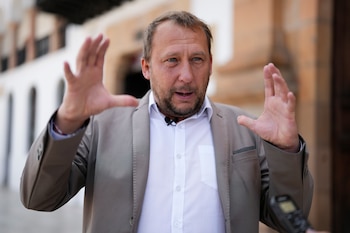
Political Implications and Next Steps
The Attorney General has categorized Krasnov’s actions as a “very serious disciplinary fault.” This classification is significant as it underscores the potential ramifications of his misconduct. While Krasnov has defended himself, claiming that the prosecution against him is politically motivated and unsupported by evidence of corruption, the legal consequences could reshape both his political career and the governance of Tunja.
As the case unfolds, Krasnov is permitted to file an appeal against the Attorney General’s decision. This appeal will be evaluated by the Disciplinary Chamber of Judgment of Popular Election Servants, which will assess his argumentation. Notably, the sanction is not yet final and will remain in abeyance while the appeal is heard.
Additionally, a separate nullity proceeding is also underway in Colombia’s State Council, aiming to invalidate Krasnov’s election victory. This dual process of appeal and nullification may create a prolonged period of legal uncertainty for both Krasnov and the residents of Tunja, as they await a resolution to this contentious matter.
As events continue to develop, the ongoing discussions around electoral integrity and political accountability in Colombia will remain at the forefront of public discourse.
With these proceedings in mind, it is critical to analyze the ramifications of this case not only for the immediate future of Mayor Krasnov but also for the political landscape in Colombia. How will these developments influence future elections and the public’s trust in the electoral system? Only time will tell.