
The iPhone did not completely kill Motorola, but it left it very touched. In 2007, Motorola phones were among the hottest items on the market. Their iconic RAZR models were not only popular for their innovative designs; they were also part of the cultural zeitgeist, often seen in the hands of celebrities like Paris Hilton and David Beckham. However, the arrival of the iPhone in 2007 marked a seismic shift in the mobile phone market, adversely affecting manufacturers such as Motorola, Nokia, and Blackberry, which saw their sales decline steeply. In response to these challenges, Motorola made the pivotal decision in 2008 to split into two distinct companies.
The Evolution of Motorola
One of the offshoots, Motorola Mobility, was acquired by Google in 2012 before being sold to Lenovo in 2014. Lenovo kept the brand alive with a refreshed mobile catalog, including the new mid-range foldable Razr, aimed at enthusiasts of compact smartphones. Nonetheless, despite attempts to recapture its former glory, Motorola Mobility has never regained its dominant market position.
Interestingly, this year, Paris Hilton made headlines again with the unveiling of the Motorola Razr Plus Paris Hilton Edition, blending nostalgia with modern technology, although it hasn’t entirely replicated the success of its predecessors.
Motorola Solutions: The Real Success Story
In stark contrast, Motorola Solutions Inc., often regarded as the “boring” offshoot of the original company, has experienced significant growth. The company has successfully honed in on critical communication systems, establishing strong sales among law enforcement and emergency services across the globe, including regions like the United Kingdom and Brazil.
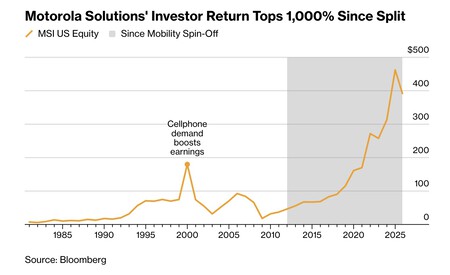
Since its separation from Motorola Mobility, Motorola Solutions has shown remarkable performance with a reported 1,000% return for investors, significantly outpacing other tech giants like Nokia and Ericsson. Its diversified product offerings now include body cameras, drones, and communication equipment essential for first responders.
Transformative Leadership
Under the leadership of CEO Greg Brown, Motorola Solutions has transformed into a $60 billion giant. Through acquisitions and a renewed focus on its traditional strengths, the company has emerged from financial challenges that once forced it to downsize and exit the mobile phone market. Brown described this period as tumultuous, involving pension freezes, massive layoffs, and drastic operational changes to secure the company’s future.
Looking Ahead: Integration of AI
As Motorola Solutions approaches its 100th anniversary in 2028, the company is embracing modern technology by integrating AI into its products. This year, they launched the SVX body camera, which utilizes AI to generate audio transcripts and analyze surveillance footage. This innovative approach underscores that while Motorola may have pivoted away from consumer mobile phones, its commitment to enhancing critical communication technologies remains steadfast and rightly positioned for future growth.
The trajectory of Motorola Solutions serves as a poignant reminder that adaptability is key in the tech industry. While other companies succumbed to market disruption, Motorola’s reinvention focused on its traditional roots, highlighting the significance of critical communication in our evolving technological landscape.