
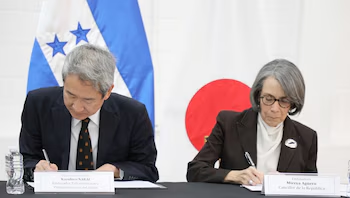
Transforming Water Supply in Honduras: A Historic Agreement with Japan
Overview of the Cooperation Agreement
Honduras and Japan recently signed a landmark cooperation agreement valued at USD 85 million, aimed at modernizing the water supply system in Tegucigalpa and Comayagüela. This initiative, set to kick off in 2027, is projected to benefit over 1.3 million people and provide a robust solution to the persistent water crisis plaguing the Honduran capital for decades. The project seeks not only to enhance the quality of life but also to address health risks and inequality stemming from inadequate access to drinking water.
Current Challenges in Water Supply
The water supply system in Honduras faces a severe deficit, translating into rationing during dry seasons. More than 50% of neighborhoods in Tegucigalpa and Comayagüela lack regular access to clean drinking water. This water scarcity has not just adversely affected the quality of life but has also inflated costs for households and businesses, exacerbating poverty levels and leading to the closure of small enterprises that struggle with the escalating prices of water.
Modernization Plans and Infrastructure Development
The investment will be channeled through the Japan International Cooperation Agency (JICA) in collaboration with the Municipal Drinking Water and Sanitation Unit (UMAPS) in Tegucigalpa. Among the key infrastructure developments planned are the installation of new transmission and distribution pipelines from Los Laureles Dam, renovation of pumping stations at Las Concepción, and the acquisition of modern metering devices. Additionally, the project will involve the demolition and reconstruction of four distribution tanks across the network.
Enhancing Supply Reliability and Public Health
This comprehensive intervention aims to improve the continuity and reliability of drinking water supply while minimizing losses in the distribution network. Authorities stress that this initiative will directly impact residents’ daily lives. A stable water supply will significantly enhance public health and reduce the city’s vulnerability during droughts, fostering resilience against urban expansion and climate change.
Targeted Neighborhoods for Improved Access
The water solutions will specifically target neighborhoods historically affected by shortages. Areas such as Olimpo, La Sosa, La Travesía, and Los Filtros, among others, will benefit from these improvements. The collaborative effort is poised to ensure that all segments of the population have adequate access to safe drinking water.
Acknowledging Long-standing Bilateral Relations
The Government of Honduras, through the Ministry of Foreign Affairs and International Cooperation, has expressed sincere appreciation to Japan for its long-standing development support, which spans over 91 years of diplomatic relations. This project encapsulates both nations’ commitment to deepen their ties through friendship, cooperation, and sustainable development.
Conclusion
The partnership between Honduras and Japan represents a significant step forward in addressing the critical water supply challenges facing Tegucigalpa and Comayagüela. With a focus on modernization and sustainable growth, this project exemplifies the essential collaboration needed to secure a better future for millions of residents, showcasing the power of international cooperation in tackling pressing global issues.