
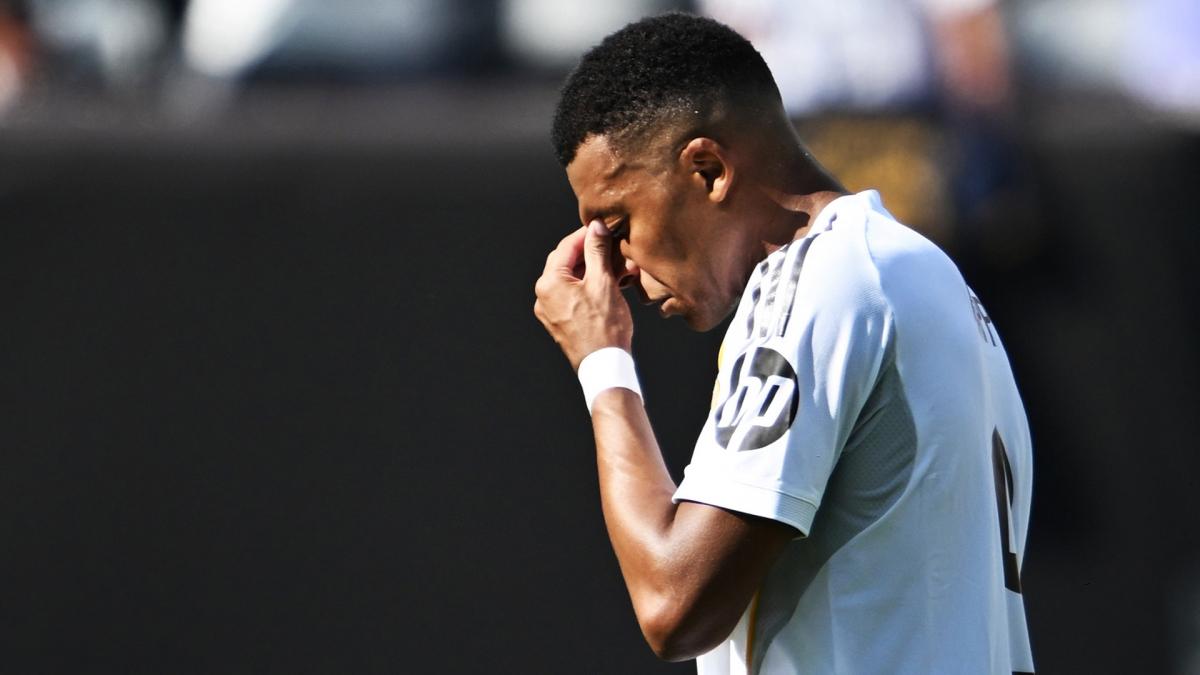
Unraveling the Kylian Mbappé Donation Controversy
The recent revelations surrounding football superstar Kylian Mbappé have sent shockwaves through both the sporting community and the French police. The General Inspectorate of the National Police (IGPN) has opened an internal investigation into a series of donations made by Mbappé to members of the CRS responsible for the protection of the French national team in 2023. This episode raises questions about ethics, probity, and the blurred lines between public service and private favor.
According to documents leaked to financial media, four chief brigadiers received checks amounting to 30,000 euros each. Their superior, a commander, reportedly received an astonishing 60,300 euros. All these funds were donated by the PSG attacker, further complicating his rapport with law enforcement. While Mbappé consulted with his tax advisor—who assured him that these “donations of use” would not be subject to taxation—the implications of his actions have started to unravel.
Critics are particularly unsettled by the role of the police commander, believed to have engaged in private missions with Mbappé. One of the pivotal incidents under scrutiny occurred during a trip to Cameroon. Such private engagements, especially involving a high-profile celebrity and law enforcement, raise ethical questions. They challenge the foundational principles of impartiality and objectivity within the police force, prompting discussions on the potential abuse of power.
The Investigation Deepens
In light of the developments, the Paris prosecutor’s office has initiated a separate investigation. This measures stem from a Tracfin report—a report geared towards combating money laundering and the financing of terrorism—highlighting unusual financial transactions benefiting five police officers and three private security agents linked to the case. According to the public prosecutor’s statement to the AFP, the ongoing judicial inquiry delves into potential offenses pertaining to hidden work and money laundering related to tax fraud.
The complexity of these investigations cannot be overstated. Financial transactions involving multiple parties can create intricate webs of accounts, making it difficult to trace and ascertain potential wrongdoing. The National Division of Investigations and General Inspectorate of the National Police (DNE) has been tasked with this delicate inquiry. Their objective is clear: to determine whether criminal activities have taken place and identify any individuals responsible.
Another layer to this emerging scandal involves the media’s coverage, which has amplified scrutiny on both Mbappé and the police. As a public figure, Mbappé’s every action comes under a microscope. However, does this attention detract from larger systemic issues endemic to the policing and sport industries? It’s a question worth pondering amid discussions of integrity, transparency, and public trust.
Public Reaction and Implications
The public response to this unfolding drama has been mixed, with fans of Mbappé vocal in their support, while others express outrage at the perceived ties between celebrities and law enforcement. In an era where transparency is demanded from all public figures, controversies like this risk damaging reputations—potentially irreparably.
Additionally, the implications for the police force are profound. Trust in law enforcement can easily wane when allegations of corruption or favoritism surface. Such public distrust can impair the effectiveness of police work, creating a rift that can take years to mend.
Furthermore, Mbappé’s ties to the police, established through these donations, may limit his ability to voice criticisms of the law enforcement system in the future. If proven that he used his status to curry favor, it could create a double-edged sword, where advocacy for social issues becomes increasingly complicated.
A Call for Accountability
As investigations continue, the emphasis must remain on accountability. High-profile figures like Mbappé, despite their celebrity status, must be held to the same ethical standards as everyone else. The same applies to those in positions of authority within the police force. Transparency must prevail if either party is to regain public trust. Additionally, successful resolutions to these investigations could serve as benchmarks for future encounters involving public figures, enabling systems of checks and balances.
This developing story not only impacts those directly involved but also resonates with societal issues involving power dynamics. The intersections between celebrity culture and law enforcement practices necessitate a serious examination of ethics, privilege, and responsibility in contemporary society.
The implications of this controversy could extend far beyond mere financial missteps. As investigations unfold, the hope is that a clearer picture of accountability and ethics emerges, benefitting all stakeholders involved and reinforcing societal standards of integrity. In a world where public figures are often idolized, rooting out unethical practices is essential to maintain a just societal framework.