
The Obscure Trail of Renunciations to European Funds: €1.4 Billion Returned Amid Bureaucratic Hurdles
The challenge of poorly designed or complicated execution processes of the Next Generation EU funds has been a recurring theme since the Recovery Plan’s launch in 2021. While there have been sporadic reports of companies renouncing or returning European funds, official figures from the government are notably absent.
Investigative Insights: A Partial Picture
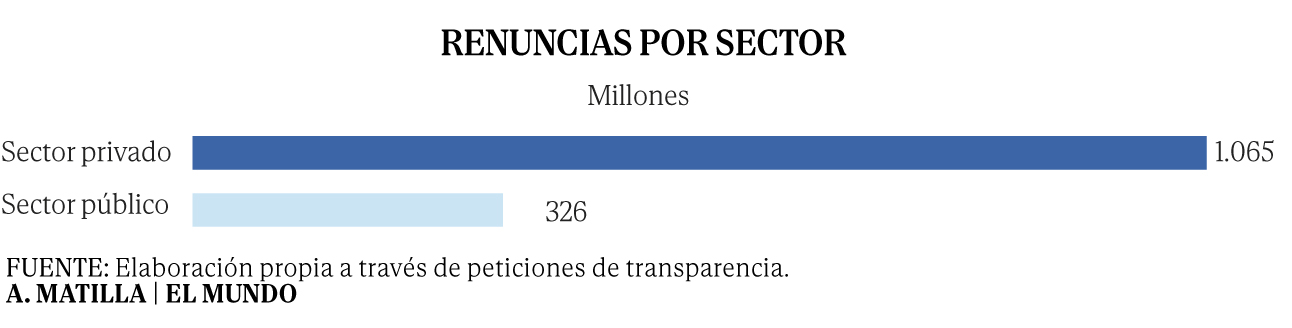
An investigative report by EL MUNDO has revealed that €1.4 billion has been renounced by private companies and public entities, amounting to 3.5% of the funds spent by the government, according to the latest execution report by Funcas. However, this figure is likely an underrepresentation since several ministries have refrained from disclosing comprehensive data on renunciations, particularly those that had to rework large programs due to low participation, such as the Ministry of Industry and the Ministry of Ecological Transition.
Understanding the Scale of Renunciations
The Ministry of Science has processed 1,114 renunciations, receiving 360 reimbursements from programs that were not fully executed or were deemed non-viable. Many of these returned funds were from public institutions and universities, indicating significant roles in the withdrawal of financial aid, particularly for investments related to scientific equipment, talent attraction, and enhancements in healthcare technology.
More specifically, the Ministry of Transformation has returned the largest sum, €1.054 billion, representing three-quarters of the total renunciations. Notably, a staggering €800 million in renunciations were linked to the Digital Kit program, with significant returns concentrated between 2023 and 2024 as the program’s execution parameters were streamlined.
Impact of Major Companies and Programs
Among the private sector, Lyntia Networks stands out as the largest single renunciation, returning €142 million when it realized it would not secure enough customers for its fiber optic connectivity plans in rural areas across Spain. This program has faced substantial criticism due to its design, which was influenced by Brussels, and has since been adjusted to provide direct aid to major operators instead.
In a broader scope, other significant returns include the Naviera Altube and Axpo, which renounced grants for sustainable transport exceeding €14 million, as well as the Barcelona Supercomputing Centre, which returned €7 million tied to a chip development program.
Reasons Behind Renunciations
The predominant reason for these renunciations is the inability to meet deadlines. Other causes include budget adjustments that render projects financially unfeasible or strategic business decisions to abandon certain initiatives. Particularly in the public sector, many universities also withdrew from initiatives aimed at improving digital skills and sustainability in transport sectors.
Regional Discrepancies in Fund Returns
Regions like Baleares, Canarias, and Extremadura are the highest contributors in terms of fund returns to the state, with returns of €16 million, €15 million, and €13 million, respectively. A significant portion of the funds returned were earmarked for enhancing connectivity and other digital initiatives.
Transparency and Accountability Issues
Data from these renunciations have primarily been derived from transparency requests directed at various ministries. Responses have not been uniform; while ministries like Agriculture and Science have provided data, others such as Economy and Ecological Transition have either denied requests or claimed the information was available online, which it is not.
As multiple ministries grapple with the complexities surrounding these funds, the need for improved transparency and streamlined processes becomes increasingly evident. The return of these funds presents an opportunity for reinvestment in more effectively designed programs.
This article elucidates the opaque situation regarding the renunciations to European funds in Spain, shedding light on the bureaucratic challenges and the significant sums returned, which could otherwise be reinvested for national recovery and growth.