
Rising Absenteeism: The Impact of Illness on Spain’s Workforce
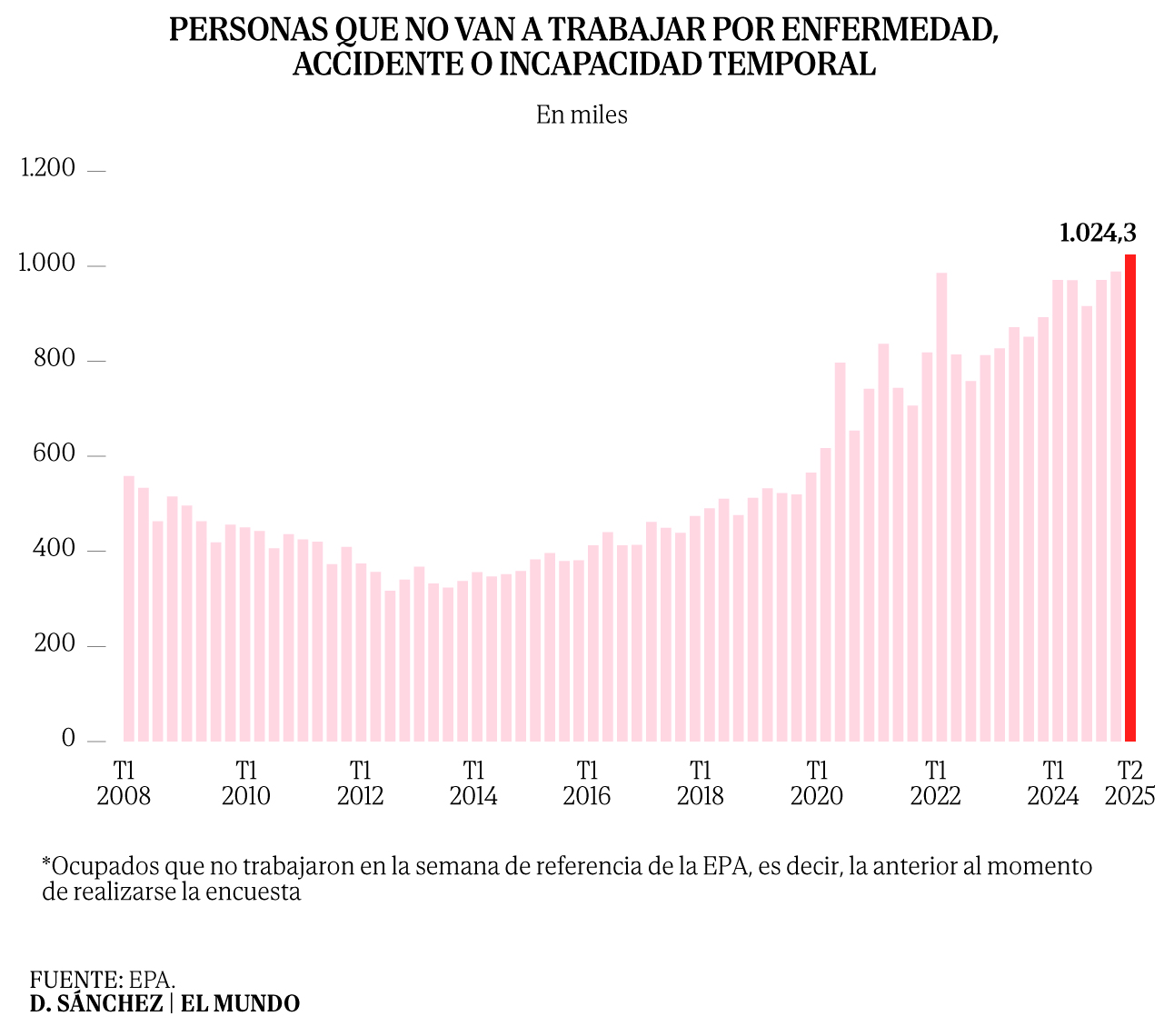
Did you work last week? This is among the initial questions posed by workers of the National Institute of Statistics (INE) or subcontracted interviewers who prepare the Active Population Survey. This survey serves as the principal source of information to understand the current state of the labor market in Spain, and it recently updated its data for the second quarter of the year. For the first time, more than one million workers reported that they did not go to work due to illness, accidents, or temporary incapacity.
Specifically, 1,024,300 individuals—some on sick leave and others not—were absent from their jobs during the reference week of the survey. This figure represents a 3.6% increase from the previous quarter, a 5.6% increase from the same period last year, and an astonishing 158.5% increase compared to a decade ago, when the number was just 396,000.
These statistics highlight the significant growth in absenteeism due to illness in Spain, especially post-pandemic. This ongoing issue severely impacts productivity and economic growth, with institutions like global central banks closely monitoring it.
In a country where 99% of the productive fabric comprises small and medium-sized enterprises, the problem becomes substantially more critical. For companies with few employees, every absence can create operational challenges. The Spanish Employers’ Association (Cepyme) recently emphasized “increasing absenteeism” as one of the “serious problems” currently facing the job market in their evaluation of the data.
There are various reasons contributing to this upward trend. Experts cite the economic cycle: when the economy struggles and employment declines, workers often hesitate to take time off for fear of losing their jobs, a concern that is likely not as prevalent now. Increased awareness regarding health, particularly after the pandemic, plays a significant role, especially concerning mental health issues. Additionally, the aging workforce is notable, with 43% of Spain’s population aged 50 or older compared to 37.5% in 2015, which often leads to higher rates of trauma-related conditions. Furthermore, recent legal rulings have provided more protection for employees on sick leave, making it less risky for them to take time off.
Beyond the million employees absent due to health issues, there are approximately 1.7 million inactive individuals who do not work or seek employment because they feel unfit for the labor market. This group also includes a record-breaking 68,200 individuals working part-time due to these limitations. If their health were improved, many of them would likely pursue full-time opportunities.
The fact that this demographic is working fewer hours than desired, alongside nearly two million people who forego employment for health reasons, contributes to Spain’s lower employment rates, particularly among certain age cohorts, compared to other countries. With fewer individuals in the workforce, the nation faces reduced growth potential.
According to estimates from the Association of Occupational Accident Mutuals (AMAT), the costs associated with absenteeism due to common contingencies are expected to rise roughly by 10% by 2025, surpassing 32 billion euros. This figure accounts for both direct costs incurred by companies and expenses for Social Security, largely driven by an anticipated 6% growth in the number of sick leave cases (about 9.2 million).
This situation significantly affects public finances. The Independent Authority for Fiscal Responsibility (AIReF) recently reported a 0.1% increase in Social Security’s public deficit, raising it to 0.5% of GDP, attributing this to the over 12% year-on-year increase in costs associated with Temporary Incapacity benefits from medical leave or workplace accidents.
As Spain grapples with rising absenteeism, addressing the underlying causes becomes imperative. Not only does it have implications for individual livelihoods, but it also poses a consequential challenge for the overall economic health of the nation.