
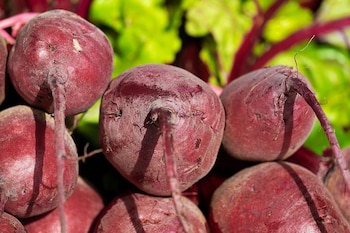
Revolutionizing Animal Feed: The Case of Forage Beet
In the Buenos Aires region of Carmen de Patagones, a pioneering producer has introduced a forage crop that is transforming traditional meat production parameters. Alejandro Pérez Iturbe has developed a system centered around forage beet, specifically the variety Beta vulgaris, inspired by a technical trip to New Zealand and Australia in 2017.
During his visit, PérezIturbe observed the intensive use of this plant in animal fattening systems and decided to replicate the model on his farm, Don Antuco. The initial planting covered seven hectares and tests were also conducted in the nearby area of Choele Choel. The results were promising from the outset and prompted a rapid expansion of the system.
High-Performance Metrics
The forage beet has shown remarkable productivity, yielding between 2,300 and 3,500 kilograms of meat per hectare in just six months, at a competitive cost of $0.50 per kilogram of meat. These figures align with dry matter yields ranging from 25,000 to 36,000 kilograms per hectare, daily weight gains of 750 to 900 grams per animal, and the capacity to support up to 26 animals per hectare.
For instance, on certain plots where animals weighing 250 kilograms were introduced and later weighed 412 kilograms, the system achieved an impressive 3,300 kilograms of meat per hectare in half a year. In a notable example, a 14.2-hectare plot of forage beet supported 300 animals in continuous fattening.
Energy and Nutritional Benefits
The plant boasts a high energy content, measuring 3 megacalories per kilogram of dry matter, comparable to corn. Furthermore, its foliage provides a high protein content, resulting in a balanced nutrition profile that combines energy from the roots with protein from the leaves.
Implementing this innovative system necessitated an initial 20-day adaptation phase for the cattle due to shifts in microbial flora. To facilitate this transition, the animals were also fed one kilogram of fiber, typically sourced from corn. The overall productivity reached 45 tons of dry matter per hectare.
The Compensatory Power of Forage Beet
According to Pérez Iturbe, the forage beet exhibited superior compensatory ability. The planting density was approximately 80,000 plants per hectare, with an average weight of 3 kilograms per plant, resulting in 240,000 kilograms of green material, of which 15 to 16% consisted of dry matter. Remarkably, some roots achieved extraordinary weights of up to 18 kilograms, a phenomenon attributed to reduced competition among plants.
To avoid excessive growth in individual plants, uniform seed distribution was essential, achieving roughly 100,000 seeds per hectare.
Irrigation and Regional Adaptability
The system employed gravity irrigation, similar to practices in the Rio Negro Valley, although it also proved suitable for pivot irrigation. In more humid areas, the forage beet was cultivated without irrigation, with annual precipitation figures between 700 and 800 mm. Notably, on dryland farms in the Coronel Suárez region, yields were about half those obtained with irrigation.
The initial investment cost was around $1,700 per hectare. Although other operational costs emerged during the process, the average gross margin reached $800 per hectare, especially in southern regions where meat prices were approximately 15% higher than those north of the Colorado River.
A Groundbreaking Alternative for Small and Medium Producers
The forage beet system not only tripled or quadrupled productivity compared to traditional extensive models but also improved winter efficiency, particularly when green forages were scarce. This advantage stemmed from the cultivation cycle, which was sown between August and October, requiring about 900 mm of water during its developmental phase, and was ready for cattle by March.
As a result, the system provided a valuable solution for regional economies. According to Pérez Iturbe, just four hectares could handle the fattening of 100 animals, offering a viable option for small and medium producers with limited land.
Initially, many producers met this innovation with skepticism. However, witnessing Charolais calves weighing 500 kilograms thriving on forage beet led to a change in perception.
The strategy involved using animal-appropriate varieties of beet, eliminating previous risks associated with toxins found in unadapted beets. This endeavor received support from seed companies that participated in the early stages of the initiative.
The most comparable precedent in the country was sugar beet cultivation in the north, which did not achieve significant development due to competition with sugarcane. The forage strategy proposed an intensive and sustainable model that operated even in winter, adapting a nutritionally valuable crop for a new productive use.
A Promising Future Ahead
By achieving yields of 30,000 kilograms of dry matter per hectare, the system consistently supported 21 animals per hectare, producing daily weight gains of 900 grams. These results demonstrated marked growth in meat production, showcasing the system’s economic efficiency and technical reproducibility.
Pérez Iturbe emphasized that the forage beet could adapt to various regions across the country, and its success hinged on factors like irrigation type, soil management, and planting schemes. Although the development demanded adjustments, it has established itself as a viable option for enhancing productivity on less productive lands.