
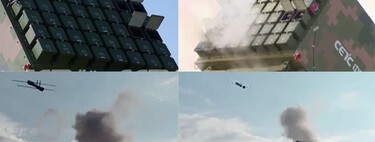
## The Changing Nature of US Military Bases
The US military’s historical reliance on large, fixed installations in the Middle East has faced critical challenges in recent years. Originally designed to accommodate thousands of soldiers and support continuous operations, these bases have become increasingly vulnerable due to advancements in drone and missile technologies. Where air dominance previously minimized direct threats, the landscape has shifted, necessitating a reevaluation of US military strategies and deployments.
### Iran’s Impact on US Bases
Recent aggressions by Iran have significantly altered the operational landscape. Many key US bases in Kuwait, Qatar, Bahrain, and Saudi Arabia now suffer from extensive damage, rendering them nearly unusable. Essential infrastructures such as radars, runways, and command centers have been compromised, forcing military personnel to evacuate or scale back operations dramatically. What was once a robust network for military projection now resembles a collection of precarious positions, exposed to threats from precision weapons that can strike with alarming accuracy.
### Relocation: A Shift to Civilian Environments
The consequences of these vulnerabilities are stark and unprecedented. Reports indicate that US troops have been relocated to hotels and improvised office spaces, resulting in a “remote” warfare model. This newfound operating environment means that American soldiers are often dispersed among civilian structures, straying far from traditional military bases designed to sustain complex operations. Such fragmentation not only diminishes military efficiency but alters the very fabric of engagement in active conflict zones.
### The Risks of Dispersal
Dispersing troops to evade concentrated attacks is a calculated response to the risks posed by Iran’s capabilities. However, this strategy has its drawbacks. Operational coordination is hindered, limiting the utilization of specialized teams and equipment, consequentially diminishing overall operational readiness. The Pentagon’s pivot toward a more decentralized approach illustrates a desperate adaptation to a rapidly changing battlefield reality.
### Rethinking Security Concepts
Unlike previous conflicts, the current security assumptions regarding US bases have become obsolete. The threats posed by Iran’s ballistic missiles and drones undermine the long-held belief that the surrounding territory could be controlled. Every fixed installation now represents a potential target, compelling military planners to reassess not only how they wage war, but also where and under what conditions they can effectively maintain a military presence.
### The Civilian Paradox
The relocation of troops into civilian areas complicates the ethical landscape further. This blurring of military and civilian lines prompts accusations that the US is using the local population as a human shield. Iran has been quick to exploit this situation, calling for citizens to assist in identifying troop placements, heightening risks for both military personnel and civilians alike. The need for invisibility to protect troops ironically increases the vulnerability of nearby civilians.
### Conclusion: The Future of US Military Bases
As military operations in the region evolve, the ability to maintain a strategic presence is increasingly fraught with complications. Operating from improvised locations impedes standard military capabilities, such as heavy equipment and advanced command systems. Although the US military retains some measure of operational capacity, the complexity and inefficiency of these deployments present obstacles that must be carefully navigated.
The changing nature of modern conflict calls for a robust reevaluation of military strategies. As fixed military installations turn into viable targets, the imperative to rethink how and where the US can assert its influence becomes undeniable.