
The Spanish Navy’s Battle Against Piracy in the Red Sea and Indian Ocean
Overview of Piracy Threats
The Red Sea remains a hotspot for pirate activity, posing significant risks to maritime traffic. Specifically, the coast of Somalia, near the Gulf of Aden, has become infamous for piracy, targeting merchant vessels traversing these vital shipping lanes. This persistent threat affects not only international trade but also the lives and safety of countless seafarers. In response, the Spanish Navy has established a continuous surveillance operation to safeguard these waters.
Operation Atalanta: A Long-Standing Mission
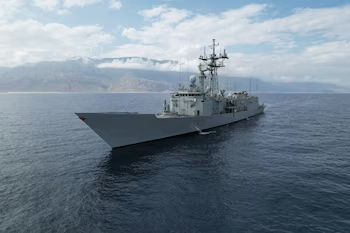
Currently, the Spanish Navy is engaged in Operation Atalanta, which focuses on maritime security in the Indian Ocean. Led by Frigate Captain Jorge Fernández de Navarrete Bedoya aboard the frigate Victoria, this operation seeks to combat piracy effectively. Recently, the Navy gained significant recognition for its quick response to an attack on the Greek tanker Hellas Aphrodite, illustrating the strategic importance of their readiness to act.
Technology and Tactics in Counter-Piracy
When responding to piracy incidents, the Spanish Navy employs a mix of ships, aircraft, and advanced drone technology. Commander Fernández de Navarrete emphasized the value of these technological assets, specifically highlighting the ScanEagle drone, which aids in gathering crucial intelligence about pirate activities. In addition to drones, the frigate and specialized patrol planes, such as Delta Four, enhance situational awareness and operational effectiveness.
Response Protocols
The operational challenges are significant, particularly due to the vast distances involved. In the case of the Hellas Aphrodite, the Navy was stationed approximately 400 miles away, necessitating a two-day journey to reach the site of the incident. Upon arrival, the team utilized reconnaissance capabilities to track pirate movements and ascertain their armed status, highlighting the importance of timely intelligence and operational planning.
Successful Rescues and Humanitarian Efforts
One of the notable achievements of the Navy’s recent deployment was the successful rescue of the Hellas Aphrodite‘s crew. The commander noted that their intervention not only freed the crew but also prevented the pirates from converting the tanker into a mother ship for future attacks. With supplies limited for only 24 hours, the Navy’s swift response was crucial.
In another significant operation, the Spanish Navy located and rescued a missing Yemeni ship. Commander Fernández de Navarrete described the difficulty of finding a small vessel in the expansive Indian Ocean, likening it to “finding a needle in a haystack.” The emotions surrounding the rescue were profound, as the crew witnessed the joy of the families reunited with their loved ones.
Conclusion: Ensuring Maritime Security
The Spanish Navy’s ongoing commitment to combating piracy underscores the complexities of maritime security in international waters. Their combination of technology, strategic planning, and quick response capabilities reflects a robust approach to saving lives and ensuring the free flow of commerce. Through operations such as Atalanta, they maintain a vigilant presence in one of the world’s most perilous maritime environments, ensuring that the seas remain safe for all.