
AI’s Rising Influence in Music
The integration of Artificial Intelligence (AI) into everyday life is no longer a surprise. The Consumer Electronics Show (CES) in 2026 showcased the extent of AI’s presence, with music being no exception. Platforms like Spotify have had to cut over 75 million songs, while AI-generated hits continue to make waves on renowned charts like Billboard.
Gen Z’s Engagement with AI Music
Three Hours a Week. Despite the ongoing debate over AI’s role in creative fields, a recent Audio Habits Survey by Morgan Stanley has revealed that young individuals listen to AI-generated music for an average of three hours weekly. This suggests that Gen Z, particularly those ages 18 to 29, not only accepts but actively embraces AI-produced content.
Why This Matters
The response from younger audiences towards AI-generated music is significant. While content creators and media companies are still grappling with the implications of AI, it’s clear that the audience has made their preferences known. This shift could potentially drive changes in how the music industry operates.
Spotify’s Adaptation to AI
According to analyst Benjamin Swinburne, AI is poised to become a major driver for Spotify moving forward. In his analysis, he highlights that AI could play a critical role in enhancing Spotify’s personalization capabilities. The partnership between Warner Music Group and Suno to monetize AI-created music points toward a future where AI-generated content isn’t merely tolerated but actively encouraged.
Demographics of AI Music Listeners
In Figures. The recent survey indicates that 36% of respondents listen to AI-generated music for approximately 1.7 hours weekly. Within the younger demographic (ages 18 to 29), the number skyrockets to 60% with a listening time averaging three hours. Millennials are not far behind, with 55% tuning into AI music for around 2.5 hours per week. This data underscores a generational preference that is reshaping the music landscape.
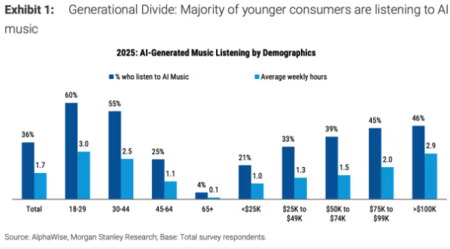
The generational division of those who listen to music made in AI. Via: Sherwood News
Source Platforms: TikTok and YouTube
In Detail. The survey also noted that the primary sources of AI-generated music are platforms like TikTok and YouTube, both of which have become central to Gen Z’s audio experiences. TikTok encourages creative AI use while maintaining strict policies on labeling, whereas YouTube sees AI as a collaborator with some limitations on monetization. In contrast, Spotify focuses on maintaining high quality and protecting its existing catalog while allowing AI music, but it remains vigilant about lower-quality submissions.
Conclusion
The growing acceptance and consumption of AI music among Generation Z signal a transformative period in the music industry. As platforms continue to adjust their strategies in response to this trend, it’s evident that AI is not just a fleeting innovation but a key player in defining the future soundscapes we will engage with.