
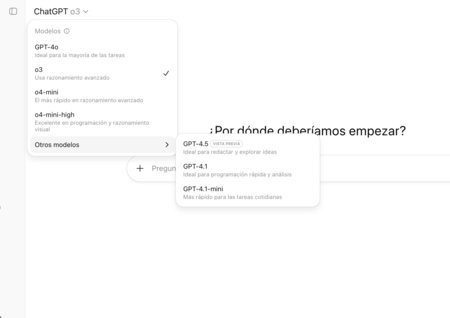
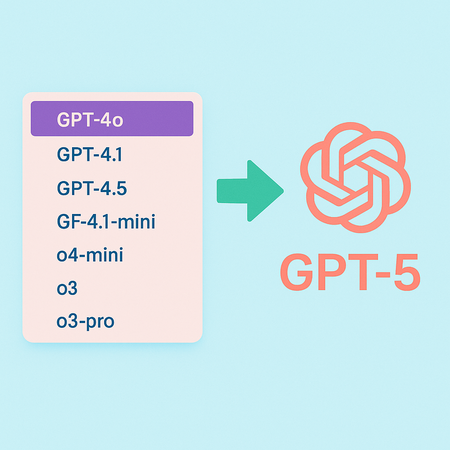
GPT-4.1, GPT-4.5, GPT-4.1-mini, O4-mini, O3, O3-Pro.
If these names do not sound at all, you are not alone. Despite its popularity , a significant number of ChatGPT users have never touched the model selector. Some are aware of its existence but have only skimmed through its brief descriptions without truly understanding the utility of each model. Yet, they continue to use it daily.
Most likely, you’ve relied on the default GPT-4 model for months, which OpenAI describes as “ideal for most tasks.” However, many users never explore alternative options. If anyone has ventured to try a different model, they may have concluded that the differences in results were minimal or not aligned with their needs. Consequently, the model selector remained the playground of advanced users familiar with optimizing their queries for better outcomes.
The Model Selector Was a Wall for Many
For an extended period, utilizing ChatGPT necessitated a decision that many users found daunting. What model should I choose? Which is better for programming, writing, or analyzing data? OpenAI provided a list with vague suggestions, lacking comprehensiveness and real guidance. The only way to truly discern the nuances was through experimentation—changing models, trying different options, and comparing results. This process often demanded both time and an understanding that overwhelmed many users.
In a world where we increasingly demand immediate results , this invisible barrier led the majority to remain where they started. Strikingly, even those who paid for subscription plans often never utilized the options available to them.
However, with the advent of GPT-5 , the model selector has been eliminated for free users and has also diminished in relevance among paid users. OpenAI designed a system that operates more autonomously. This new model discerns when to engage in complex reasoning and when a quicker response is sufficient. If a task requires intricate thinking, GPT-5 dedicates the needed time; if it’s simple, it responds almost instantly.
The old ChatGPT model selector, now out of the picture
This innovation changes the rules of engagement. Not only does it save users from unnecessary decisions, but it also positions intelligence where it belongs—from the very start. It operates in service of the user without requiring them to understand the complex mechanics involved.
GPT-5 behaves in a manner more akin to human logic. While it certainly lacks awareness, it can start making real-time decisions about the cognitive demands of tasks. Just as humans instinctively gauge the complexity of a question to determine the effort involved in answering, this model does the same.
When faced with a straightforward question, we respond quickly. When confronted with a more intricate task, we take additional time to think. GPT-5 mimics this logic: if a task demands effort, it invests it; otherwise, it prioritizes speed.
GPT-5 behaves more similarly to us.
Ultimately, this aligns with our expectations of advanced artificial intelligence. It understands user needs without requiring strict technical instructions. It anticipates and chooses how to assist us most effectively.
Though the model may operate autonomously, we haven’t relinquished complete control. Paid users can still dictate the type of response they desire. They can activate reasoning modes via button features or instruct the AI with simple commands like, “Think about it,” “Do it quickly,” or “Give me a light answer.” The system intuitively adjusts its performance based on these inputs.
This evolution represents a subtle yet significant shift. Although GPT-5 operates more independently, intervention remains possible. Users who seek depth can continue to ask for it, while those desiring immediacy can easily adjust accordingly.
For those who utilize ChatGPT extensively—whether for work, study, or complex tasks—this transition holds major implications. Previously, users could be paying for a tool whose full capabilities eluded their understanding, utilizing only a fraction of its potential. Now, even those without the time to experiment will benefit from GPT-5, as it handles optimization on behalf of the user.
The gap between those who knew how to leverage multiple models and those who remained on the surface has begun to shrink. Experience quality will now hinge far more on how we phrase our requests—irrespective of our knowledge about the models available.
This is undoubtedly good news for users who have never engaged with the selector. They will receive more tailored, effective answers while continuing to interact in familiar ways, with no additional effort. GPT-5 uplifts these users to an advanced experience without requiring them to adjust their interaction style.
In essence, GPT-5 doesn’t introduce a brand new function; rather, it corrects an existing inconsistency. Previously, the most powerful capabilities were obscured behind technical barriers that few users were equipped to navigate.
Images | Xataka with Gemini 2.5 Flash | Xataka screen capture