
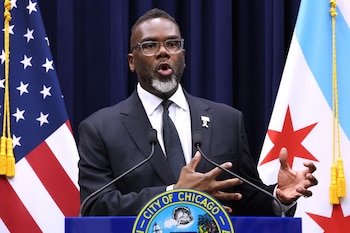
The mayor of Chicago , Brandon Johnson, made headlines on Saturday by signing an executive order that prohibits various departments of the city administration from collaborating with federal forces, should they be deployed in Chicago. This includes a wide range of services, from legal assistance to police operations.
Response to Federal Interventions
Johnson’s decision stems from concerns regarding potential federal measures, particularly after recent actions taken in Washington D.C. where the National Guard was deployed in response to crime. Following that operation, which resulted in over 700 arrests , President Donald Trump expressed intentions to replicate such measures in other cities, specifically naming Chicago, which he described as a “disaster.”
In light of this situation, Johnson declared, “The reason why this executive order is so crucial is because we know that this president is behaving outside the limits of the Constitution.” With this statement, he emphasized his commitment to resist any form of militarization in the city.
Establishing Independence
The executive order aims to ensure the independence of the Chicago Police Department, explicitly prohibiting collaboration with the National Guard during its operations. Johnson stated, “This executive order is emphatically clear that this president will not intervene and delegate our police department.” This refusal signifies a significant stance against federal encroachment into local law enforcement duties.
Additionally, city legal departments are tasked with protecting the community from unwanted federal interference, especially concerning immigration operations. The mayor urged for transparency from the federal government, stating, “If any immigration control action in our city is being carried out, we must be aware.” This call for transparency was amplified by a prior incident on June 4, when a federal operation occurred without any prior notification to city officials. Johnson remarked, “It is about discovering the truth,” indicating a need for accountability in federal actions.
Community Safety Concerns
Johnson’s objections are fueled by the belief that the proposed national intervention is not justified. He asserted that Chicago has witnessed a decrease in violence over recent years, disputing Trump’s claims of urgency. “There’s no emergency that justifies that the president of the United States… deployed the National Guard from other states or sends military in active duty within our own borders,” concurred JB Pritzker , the Democratic Governor of Illinois, further validating Johnson’s position.
Continued Political Tension
The political climate surrounding this issue has created tension between local and federal authorities. Johnson framed the intervention as a direct attack on Chicago’s autonomy , alleging that Trump’s motivations are rooted in political posturing rather than genuine concern for public safety. He accused the White House of “provoking” violence to justify its own failures, reflecting frustration from not just city officials but also many residents who prefer local control over public safety efforts.
The executive order’s implications are profound, as it reaffirms the commitment to local governance and public safety without federal interference. As cities across the nation grapple with issues of crime and federal responses, Chicago finds itself at the forefront of a greater debate regarding the balance of power between local and federal entities.
General News – 2