
Understanding Tap Water Quality in Spain
Water management in Spain encompasses various challenges. Among these, the quality of tap water stands out due to concerns about its safety, particularly the presence of nitrates. While the water is treated and deemed suitable for consumption, agricultural practices—especially in industrial farming—have led to significant nitrate pollution. This not only degrades ecosystems but also risks the integrity of public water supply systems.
Interactive Mapping for Public Awareness
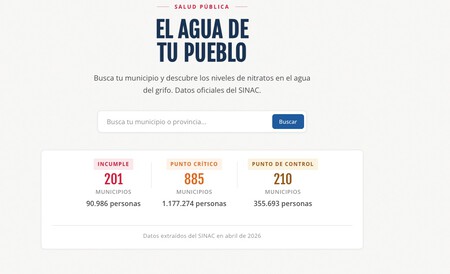
Access to information regarding the quality of tap water is a fundamental right. The National Consumer Water Information System (SINAC) provides this data; however, it can often be too technical for the average citizen. That’s where a new tool comes into play: the interactive map titled “What’s the water like in your town?“. This user-friendly platform allows users to easily assess the quality of their local tap water regarding nitrate levels without requiring extensive technical knowledge.
How the Map Works
Developed by DATADISTA, this interactive map utilizes official data from SINAC to offer an easily navigable overview of Spain’s drinking water quality. While the latest data is from April 2026, it is important to note that readings can vary significantly from one locality to another. Municipalities that distribute more than 10 cubic meters of water daily are mandated to report; however, smaller towns may lack data.
The map uses a color-coded system, where red indicates non-compliance with health regulations, and green signifies compliance. Various shades represent different levels of concern, making it straightforward for users to identify their municipality’s status.
The Nitrate Challenge
Across Spain, nitrates from fertilizers and livestock manure pose a significant risk. They infiltrate groundwater supplies, leading to potential health problems. The European regulations set a parametric limit of 50 mg/L for nitrates in drinking water; violating this threshold signifies non-compliance. Alarmingly, there are 201 municipalities within this non-compliant range, affecting nearly 91,000 people.
Health Implications
Research underscores that the nitrate issue is more severe than previously thought. Studies have linked nitrate levels to health risks beyond the legal limits, advocating for stricter regulations. For instance, findings suggest elevated risks of colorectal cancer at levels as low as 3.87 mg/L.
In summary, while Spain’s tap water generally meets treatment standards, the nitrate problem remains a pressing issue. Resources like the interactive map can empower residents to stay informed and demand better water quality standards in their municipalities.
For more information, visit the interactive map at Infowater.