
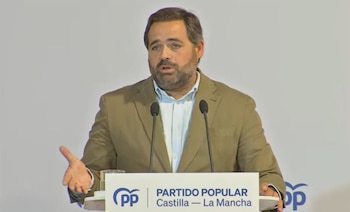
The Regional Executive Committee of the People’s Party (PP) in Castilla-La Mancha convened to address pivotal issues impacting the region. This meeting, held on a recent Saturday, culminated in a unanimous resolution to reject the Catalan “quota” system. The president of the regional PP, Paco Núñez , has urged the head of the Autonomous Executive, Emiliano García-Page , to support this rejection.
In his remarks, Núñez referenced a prior statement made by García-Page, who lamented that Carles Puigdemont had effective control over the legislature. “Emiliano, you are mistaken; the remote control of the legislature lies with you,” he declared. He urged García-Page to act—highlighting the perceived power he holds in the Assembly—with the ability to respond whenever necessary.
Núñez also revealed that he had sent a letter to García-Page advocating for a joint meeting between the regional PP and PSOE executives. The goal? To develop a unified stance against the separatist quota and assert the need for fair financing for the region. “I proposed that our executives gather this July and finalize a resolution focused on defense of equitable financing ,” Núñez said, emphasizing the urgency of the situation.
With great pride , Núñez announced that the regional PP had unanimously approved a resolution dedicated to defending Castilla-La Mancha , Spain, and categorically rejecting the separatist agenda associated with the “quota.” This strong stance signals a firm commitment from the party to stand against what they see as detrimental policies.
Núñez didn’t shy away from criticizing the management of the Castilla-La Mancha government. He pointed out a “manifest lack of management” under García-Page, particularly lamenting that policies concerning water have become increasingly skewed toward social agendas, with farmers and agriculture suffering the most. “Under this government, water supply has decreased due to more socialism, hurting our farmers,” he noted.
He also criticized the García-Page administration’s inability to complete a water audit or create a needs map despite having a regional pact signed by 41 entities. “No government has ever signed such an agreement and yet we see inaction,” he emphasized.
The infrastructure situation is equally alarming according to Núñez, who lamented that in the past decade, there have been “zero kilometers” of new highways constructed. He underscored that a recent report indicated that Castilla-La Mancha has the worst preserved roads in the country. Health care also seems to be a significant issue as Núñez addressed the lengthy waiting lists in the region’s healthcare system, remarking on the failure to reinstate the professional health career over the last ten years.
Issues of fiscal policy have further heightened concerns, with Núñez pointing out that Castilla-La Mancha has one of the highest tax pressures in Spain. This includes a continuation of succession and donation taxes, outpacing many other regions. He called for immediate attention to these issues, stating, “We must continue striving for change, as we cannot allow this region to have the highest rents in its history or witness 5,000 young people fleeing our land annually.”
The sentiments were echoed by Miguel Tellado , the General Secretary of the PP, who criticized the PSOE for voting in lockstep with the national party led by Pedro Sánchez . “These deputies display a lack of independence; they are merely mouthpieces for their party,” Tellado stated, unequivocally calling it a form of cynicism and hypocrisy .
The dynamics within the political landscape of Castilla-La Mancha continue to evolve as party leaders rally their bases against perceived attacks on regional identity and autonomy. The resolve shown by Núñez and the PP demonstrates an unwavering commitment to advocate for local constituents and voice opposition to what they believe are unfair practices dictated by Catalan policy.