
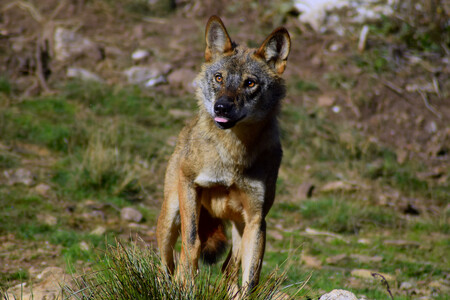
The Erosion of Legal Protections for Wolves in Spain
The debate surrounding the wolf has become a highly contentious political issue in Spain, eclipsing even topics of housing and corruption. Since 2022, European and Spanish institutions have been embroiled in discussions regarding the legal protection of the Canis lupus—specifically, whether these majestic creatures should be hunted or remain under vulnerable status. Unfortunately, this ongoing tug-of-war has gradually eroded the legal protections that once safeguarded the species.
New Developments in Wolf Management
Recently, there has been a significant setback in Spain regarding the legal status of wolves. A majority of autonomous communities have expressed support for allowing wolf hunting, further complicating the protective measures. This situation underscores how political disputes overshadow factual ecological considerations.
What Was Discussed?
During a recent meeting involving various communities and the Ministry of Ecological Transition (Miteco), the key topic was a sexennial report on the current status of wolves in Spain. This document assesses whether the conservation status of the species could be classified as “favorable,” influencing whether hunting is permissible.
The report is not only critical domestically; it is mandated by the European Commission and is already a year overdue. Spain was supposed to submit the findings by July 31, 2025, but conflicting opinions have delayed its completion.
Conflicting Perspectives
The ongoing dispute between various political entities is stark. On one side, Miteco advocates for recognizing the species as ‘unfavorable,’ thereby necessitating heightened protections. Conversely, a majority of the autonomous communities argue that years of protection have led to a recovery in wolf populations, thus classifying them as ‘favorable.’
During the meeting, conflicting reports were presented. One, from Miteco, insisted on maintaining protective measures, while another, from the Xunta de Galicia, claimed that wolf populations have recovered sufficiently since 2019.
Government and Community Responses
The meeting revealed a pronounced divide in opinions. Most autonomous regions—including Galicia, Cantabria, and Andalusia—supported the report suggesting that the wolf status has improved. In contrast, Miteco and a few regions, like Catalonia, pushed back against this stance, arguing for prolonged protection based on scientific advice.
Minister of Ecological Transition, Sara Aagesen, emphasized the importance of “technical and scientific rigor” in determining conservation strategies, while others criticized the opposing report for lacking scientific merit.
Implications for Livestock
A crucial aspect of this debate is the impact of wolves on agricultural communities. Advocates for allowing hunting argue that ranchers regularly suffer attacks from wolves, leading to significant economic losses. For instance, in Castilla y León, over 4,000 livestock attacks were reported last year, resulting in substantial compensation claims due to livestock deaths.
The argument centers on balancing wolf protection with the realities faced by farming communities, raising questions about sustainable coexistence.
Conclusion
The debate around the wolf in Spain highlights a complex interplay between ecological science and political maneuvering. As the legal protections for these magnificent animals continue to erode, finding a middle ground becomes increasingly critical. Communities must address both the welfare of the wolf and the rights of agricultural stakeholders. Only through collaboration can Spain hope to establish a policy that honors both its natural heritage and its livelihoods.
Images | Arturo de Frias Marques (Wikipedia)