
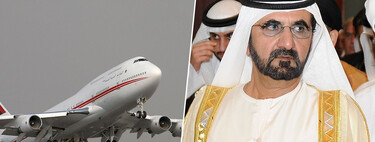
95,192,160 passengers. This is the number of travelers who registered at Dubai International Airport (DXB) in 2025, according to data from Airports Council International (ACI). A figure that elevated it to second place in the world for passenger traffic, only behind Hartsfield-Jackson Atlanta International Airport in the United States. This last location has been repeating for three years as The busiest airport in the world and last year it moved 10 million more passengers than Dubai, breaking the barrier of 106 million passengers in a single year.
A figure that, year after year, Dubai wants to reduce to become the airport with the highest passenger traffic in the world. And it has a $35 billion plan to achieve it.
An Airport Like No One Ever Conceived
Dubai has historically remained below 100 million passengers per year, but ambitions are high. Paul Griffiths, CEO of Dubai Airports, assured Time Out that they aspire to break this ceiling soon and reach 113 million passengers by 2031.
These figures would likely make them the busiest airport in the world; however, the current Dubai International Airport (DXB) requires extensive and expensive renovations, leading stakeholders to favor constructing a new airport instead. This is the sentiment echoed by Emirate officials.
The ambitious expansion revolves around Al Maktoum International Airport, established in 2010. Initially operating at half-capacity, it is set to transform into the largest airport globally, with plans to handle 260 million passengers annually—equivalent to the combined capacity of the three current busiest airports worldwide, including Tokyo’s Haneda.
Proponents of the project argue that the existing airport is so vast that upkeep costs are exorbitant; thus, building a gigantic expansion of Al Maktoum is more cost-effective than renovating DXB.
The investment plan entails allocating $35 billion to convert Al Maktoum into Dubai World Central (DWC), a monumental mobility hub envisioned as a megacity featuring residential areas, hotels, and golf courses—alongside the world’s largest airport.
The projected renovation cost of approximately $34.85 billion aims to multiply DXB’s dimensions by five. Key features include five 4.5-kilometer runways spaced 800 meters apart, four main concourses, and over 400 departure gates.
Dubai expects the new airport to perform optimally by the decade’s end, intending to transition all operations from DXB by 2032. By then, it aims to manage 150 million annual passengers—44 million more than Atlanta currently handles, solidifying its position as a global leader.
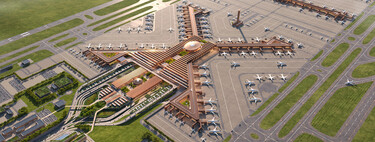
The new passengers’ distribution will involve three terminals, with one exclusively for the Emirates Group operations, another for international flights, and a third for low-cost carriers. Plans also include a dedicated parking area for up to 100,000 employees.
A high-speed rail connection is envisioned between the two airports, though the surrounding services and facilities are projected to be completed by 2050. By that time, Dubai aims to accommodate up to 260 million passengers annually, essentially managing half the population of the EU in a year.

To solidify this monumental shift, Dubai Airport is already implementing advanced biometric recognition and AI-driven baggage management systems as a precursor to smoother airline operations. The goal is to scale operations effectively to manage potential challenges.
Becoming the largest mobility hub worldwide extends beyond just commercial travel. Dubai aims to be the leading destination for Airbus A380 operations, providing the best maintenance and repair facilities. Moreover, it seeks to position itself as a pivotal point for cargo transport, while also designating exclusive areas for private flights, enhanced with luxury services such as hotels and shopping malls.
In Xataka | European airlines are taking advantage of the Iran crisis to accelerate something old: making your trip even more complicated.