
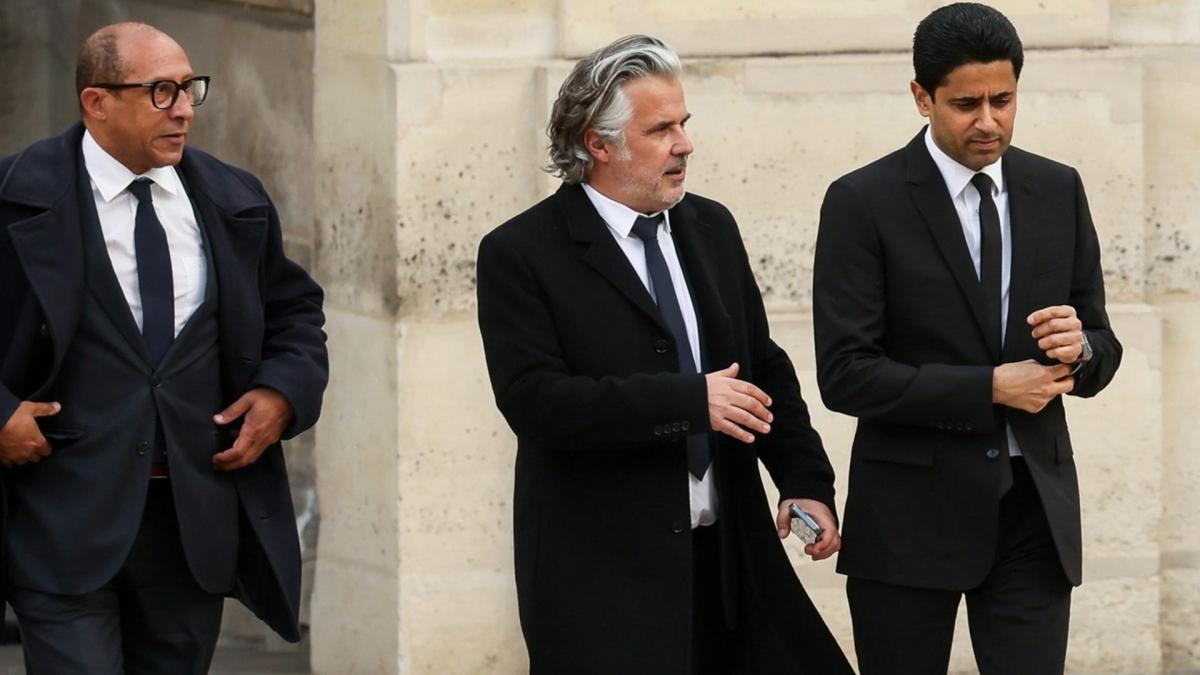
The political landscape of French football is undergoing significant changes as discontent rises among club presidents regarding the governance of the French Professional Football League (LFP) and its handling of TV rights. Recent discussions have revealed a dividing line among club leaders, highlighting a clash of interests exemplified by key figures such as Nasser Al-Khelaïfi of Paris Saint-Germain, John Textor, and Joseph Oughourlian, leading to a deepening rift in the relationships among teams.
The 2024 election controversy has reignited tensions, especially among factions surrounding the LFP. On one side, we have the Al-Khelaïfi supporters, who are spearheaded by Vincent Labrune, the current president of the LFP. Opposing them is a coalition of club leaders, including Frank McCourt, the owner of Olympique de Marseille, and Oughourlian, both of whom have voiced significant reservations regarding the management of TV rights.
The Financial Crisis in French Football
In a recent interview published in Le Figaro, McCourt expressed his concerns over the financial state of French football. He pointed out that the league had lost a staggering €1.3 billion last year and questioned how a business could continue with the same leadership after such disastrous results. This pointed critique is not unprecedented; however, the depth of McCourt’s criticism signals an urgent call for structural reform within the LFP.
Labrune’s allies quickly went on the defensive, countering that those speaking against him are still bitter about losing in the elections. They claimed that predictions of imminent collapse in French football had proven unfounded, emphasizing that clubs have not been lacking in funds. In fact, they argue that the start of the season has been positive, marked by a record number of goals and newfound European competitiveness for Ligue 1.
Setting the Record Straight
Defenders of Labrune also pointed out that despite some clubs facing hardships, such as Olympique Lyonnais being on the brink of financial disaster and AC Ajaccio filing for bankruptcy, the majority of clubs are managing to stay afloat. They noted that even during this period of upheaval, clubs like PSG, which boasts the healthiest finances, have faced significant challenges regarding the distribution of TV rights. In a surprising twist, PSG will receive less money this season than Montpellier, who finished at the bottom of Ligue 1 last year.
Critics of the current regime argue that these inconsistencies raise serious questions about the leadership within the LFP. McCourt asserts that the ongoing governance problems cannot be ignored and notes that criticism of the system often takes a one-sided view. He ponders, “How can we hold Labrune accountable when fortunes dip, yet ignore successes when they arise?”
Dissecting the Governance Issues
Labrune’s entourage maintains that various factions are focused solely on sowing discord, rather than seeking constructive solutions. They are particularly frustrated with comments suggesting that Canal+, a major broadcasting network, would return to cover Ligue 1’s domestic rights only if Labrune stepped down. They argue that this failed to materialize, showing that the criticism may be politically motivated rather than rooted in fact.
The scenario is further complicated by Labrune’s salary adjustment. Critics had previously lambasted him for tripling his salary to €1.2 million annually in 2022. In response to public outcry, he has pledged to reduce his earnings by 30%, even as LFP finances worsen.
Moreover, supporters claim that Labrune has also advocated for governance reforms in French football. While he was re-elected for another four-year term in September 2024, the question remains whether he has the mandate to drive meaningful change amidst ongoing divisions among clubs.
Conclusion
As French football continues to grapple with financial instability, the leadership question surrounding Vincent Labrune and the LFP becomes increasingly critical. With stark divisions among club owners and rising dissent over governance, the future of French football hangs in a delicate balance. Decisions made in the coming months could either pave the way for revitalization or lead to further decline. All eyes are now on the league as stakeholders demand greater accountability and transparency in their beloved sport.