
Understanding the La Niña Phenomenon
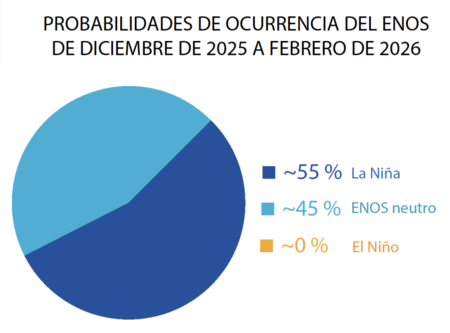
There is a 55% chance that the world will cross the La Niña thresholds in the coming weeks. Although The World Meteorological Organization (WMO) insists that it will probably be a weak and brief episode, that does not mean it won’t cause significant problems.
Why Intensity Isn’t Everything
Many problems can arise from this phenomenon. The first reason is that it will catch us off guard. When world meteorological agencies indicate that La Niña will have low intensity, they inadvertently suggest to authorities that it won’t be that serious. This perception might lead to an inadequate level of preparedness, a socially dangerous misconception.
Global Impact of La Niña
A global event… ENSO, of which La Niña is a phase, is regarded as the primary source of annual climate variability worldwide. While the cold phase typically has a lesser impact than El Niño, the teleconnections of La Niña still carry substantial weight and ramifications.
WMO
The Expected Effects
…with an impact worthy of its size. Under “normal conditions,” with a 55% chance of La Niña arriving this quarter, several countries should begin preparing for its consequences. For instance, the southeast of the American continent may experience warmer temperatures than usual, while colder conditions are anticipated in the Northeast.
Additionally, less rainfall is expected in Ecuador and Peru, while torrential rains are likely in Northeast Brazil. In Mexico, La Niña typically exacerbates drought conditions in the north and center while increasing torrential precipitation in the Pacific, the southern Gulf of Mexico, and the Yucatan Peninsula. Conversely, Spain usually braces for less rain during La Niña events, which is disappointing news.
The Current Climate Landscape
But we are not in “normal conditions.” The precision of WMO messages, while informative, can serve as confusing signals. If administrations fail to prepare adequately, even a mild La Niña could escalate into numerous regional issues.
Climate Change Context
We must also consider the global climate scenario. According to the WMO, La Niña may induce slight global cooling; however, this does not justify reducing efforts against climate change. The accumulation of global warming remains substantial, indicating that temperatures will likely stay above average. Climate change continues unabated, and, unlike previous years, not even La Niña can mitigate its effects.
In conclusion, while La Niña may appear mild, its potential to catch us off guard underscores the importance of vigilance and preparation. Failing to do so could exacerbate an already challenging climate landscape.
Image | Climate Reanalyzer