
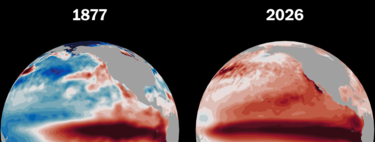
The Rising Temperatures in the El Niño Zone
On June 11, NOAA declared that El Niño was already established. As winter approaches, the probability that this warm phase will escalate to ‘very strong’ sits at 65%. Models consistently suggest that this could be one of the most intense El Niños observed in the past 75 years.
Record-Breaking Temperatures in the Pacific
More alarmingly, we now have incontrovertible evidence that the central and eastern Pacific waters are significantly warmer than the historical averages. The temperature in the El Niño 3.4 region—vital for monitoring this phenomenon—has reached unprecedented levels.
Understanding ENSO and El Niño
The El Niño-Southern Oscillation (ENSO) is a cyclical climate phenomenon with extensive impacts on the global environment. During its warm phase, known as El Niño, a reduction in trade winds allows Pacific surface temperatures to rise dramatically.
Global Weather Disruptions
This dramatic temperature rise disrupts Earth’s weather systems. As described by AEMET, El Niño can lead to drier conditions in some regions while causing increased precipitation in others. Consequently, various countries may face significant droughts or, conversely, torrential rainfall.
What This Record Means
While the current record temperature in the equatorial Pacific is significant, it’s crucial to note that this metric does not solely define the strength of El Niño. Recently, the ENSO index was revised to ensure that climate change—which naturally elevates average water temperatures—doesn’t mislead us into equating “a very hot Pacific” with “a very intense El Niño.”
The Importance of Temperature Anomaly
What truly determines El Niño’s impact is the temperature anomaly between the Niño-3.4 area and its surroundings. Although this anomaly remains low for now, its rapid development aligns with our expectations.
The Future Outlook
The situation is increasingly complex. The 2023-24 El Niño is projected to rank among the five strongest recorded events and may contribute to a historic global temperature increase in 2024. This could occur even under ‘normal’ circumstances.
Historical Impacts of Previous El Niños
Past El Niños, such as those in 1982-83, 1997-98, and 2015-16, have led to serious global impacts, with casualties numbering around 24,000 and economic losses exceeding $30 billion. While we’ve made strides in preparedness, the risks remain substantial.
It’s essential to note that the period from April 2025 to March 2026 is projected to be the warmest twelve months recorded, further complicating our climate landscape.
Image | AMETSE
In Xataka | There are more and more extreme weather events, yet they result in fewer casualties than ever before.