
The Amazing Discoveries of the James Webb Space Telescope
The James Webb Space Telescope (JWST) has taken groundbreaking strides in the field of astronomy. Launched in December 2021, this remarkable instrument continues to reveal the mysteries of the universe that have remained unanswered for centuries. It is an incredibly powerful tool that helps scientists explore the very fabric of space and time.
A New Dawn in Cosmic Exploration
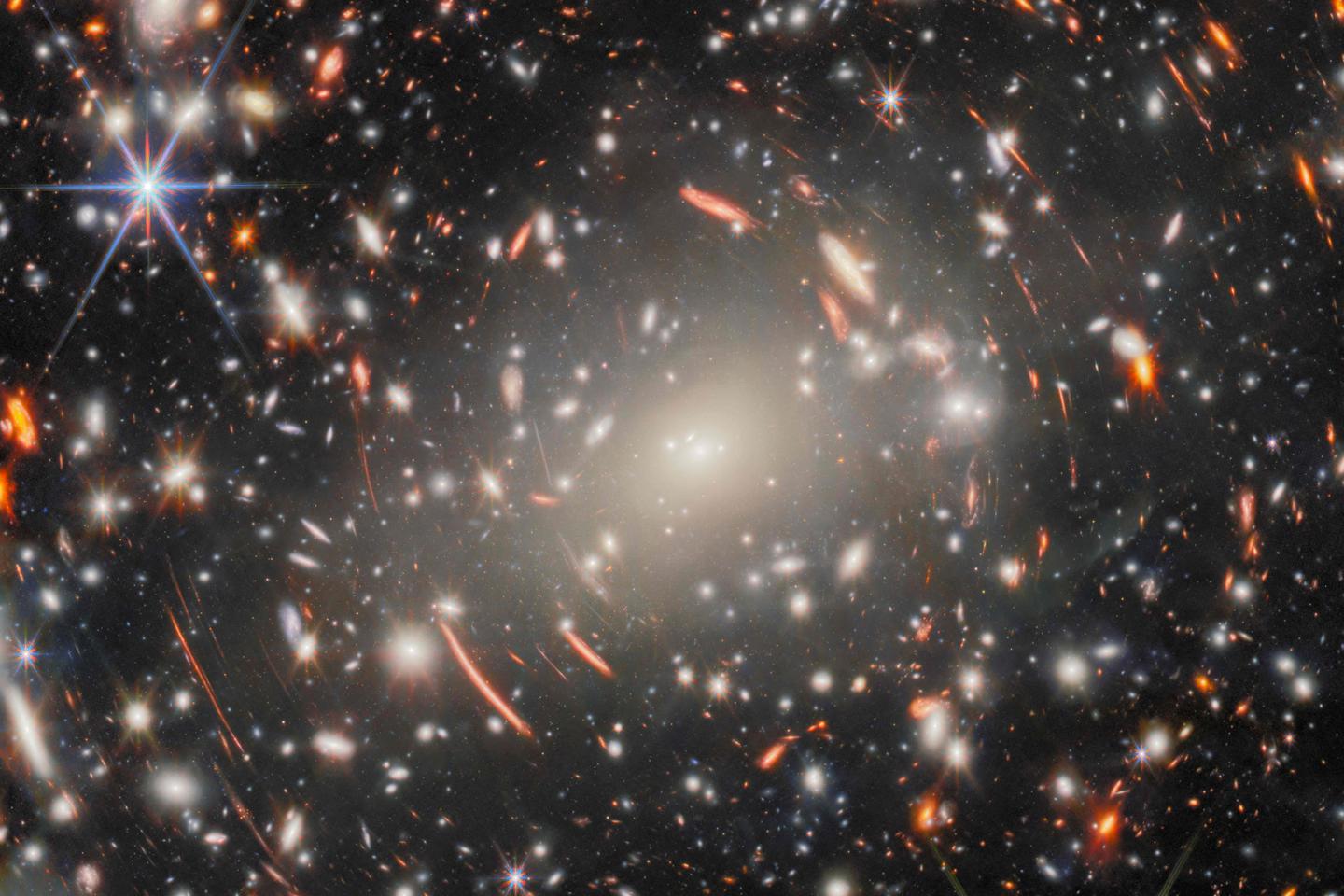
On May 27, 2025, the European Space Agency (ESA) and the French National Centre for Scientific Research (CNRS) revealed one of the deepest images captured by the JWST. This image showcases the galaxy cluster Abell S1063, which is located approximately 4.5 billion light-years away from Earth. The telescope’s observations took over 120 hours, marking the longest single-target observation in its history.
JWST’s exquisite capabilities stem from its ability to collect and analyze infrared light. This characteristic allows it to capture images of distant galaxies that conventional telescopes cannot, unveiling the universe’s past and answering fundamental questions about its evolution.
Understanding Gravitational Lensing
The gravitational lensing effect plays a vital role in amplifying the images of distant celestial objects. Massive structures like Abell S1063 are capable of bending and warping light from galaxies situated behind them, serving as natural cosmic magnifying glasses. The ESA describes the phenomenon as creating “distorted arcs” that provide key insights into the early stages of star formation.
Scientists are particularly interested in these distorted arcs, as they can uncover brand-new galaxies and stars that formed during the first billion years of the universe’s existence. Such findings provide a glimpse into the “cosmic dawn,” a period when the universe was only a few million years old.
The Depth of the Universe’s History
The detailed image obtained by JWST has revealed nine distinct views across various wavelengths in the near-infrared spectrum. Understanding these multiple perspectives is crucial for astronomers who seek to understand how the first galaxies might have formed amid a universe dominated by darkness.
Astronomers describe this image as the “deepest single-target look” at the universe to date. The implications of such findings are immense, as they reshape our understanding of how galaxies evolve and merge over time.
Affect on Current Models of the Universe
Since its launch, the JWST has transformed the landscape of astrophysics. Observations indicate that early galaxies were much larger than scientists previously believed, challenging established theories regarding the formation and evolution of cosmic structures. This new data positions JWST as not only a groundbreaking telescope but also a pillar for the next generation of astronomical surveys.
As researchers analyze the data, they hope to unlock the secrets of dark matter and dark energy, two of the most enigmatic components of the universe. The sophisticated imaging capabilities of JWST allow scientists to gauge the influence of these phenomena on galactic formation and structure.
Future Missions and Expectations
The incredible results garnered from the JWST will help guide future missions targeting specific cosmic phenomena. By providing richer data, JWST sets the stage for more in-depth studies of exoplanets, star formation, and evolution across various epochs of the universe.
Ongoing missions will benefit from JWST’s insights, enhancing our understanding of other cosmic behaviors and phenomena. As we venture further into this new age of discovery, the web of cosmic connections that JWST helps illuminate points towards future revelations in the disciplines of astrophysics and cosmology.
Conclusion
With its ability to look deep into the universe, the James Webb Space Telescope is reshaping our understanding of the cosmos. The images it captures and the data it provides offer a wealth of information that scientists are only beginning to interpret. Just as the universe unfolds, so too does the knowledge we glean from it, fostering excitement and curiosity about what future observations may reveal.
