
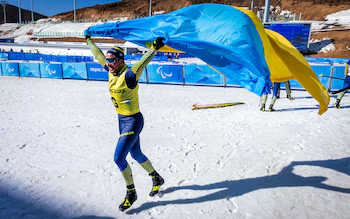
ICC Bans Ukraine from Wearing Uniform at the Paralympic Games: A Political Debate
The decision by the International Paralympic Committee (IPC) to prohibit Ukraine from wearing its national uniform, which includes a map of the country with its recognized borders, has sparked significant controversy. This uniform ban, justified by the IPC as a measure against political expressions, raises questions about the intersection of sports and geopolitical realities.
Ukraine’s Original Uniform: A Symbol of Sovereignty
Valerii Sushkevych, the president of the Ukrainian Paralympic Committee, has voiced strong objections to the IPC’s decision. He noted that the original uniform clearly signified Ukraine’s territorial integrity, encompassing regions like Crimea, which are currently under Russian occupation. The inclusion of the national map was not just a design choice; it represented a profound assertion of Ukraine’s existence and sovereignty.
IPC’s Rationale Behind the Ban
According to the IPC, the ban was implemented to adhere to its regulations that prohibit any political messaging in uniforms. A spokesperson indicated that elements like national anthems, political slogans, and even country maps fall under this definition. The IPC aims to maintain a neutral environment at the Games, distancing its events from nationalistic sentiments.
However, the timing of the decision, announced shortly before the Winter Paralympic Games set to occur in Milan and Cortina d’Ampezzo, put immense pressure on the Ukrainian delegation. They had just 24 hours to design and approve a new uniform, which raises questions about the feasibility of such a rapid response.
Reactions from Ukrainian Athletes
The IPC’s actions have not gone unnoticed among the athletes. Skeleton pilot Vladyslav Heraskevych spoke out, labeling the IPC’s measures as “shameful.” His displeasure reflects a broader sentiment among Ukrainian athletes who feel they must contend not only with the challenges posed by the ongoing conflict with Russia but also with bureaucratic obstacles that undermine their representation.
In a bold stance, the Ukrainian delegation announced its decision to forgo participation in the opening ceremony to protest against the ban on their uniforms and the IPC’s decision to allow Russian and Belarusian athletes to compete under their flags. This move highlights the complexities athletes face as they navigate their identities and loyalties on global sporting stages.
Logistical Challenges and Future Implications
The logistical hurdles presented by the IPC’s last-minute directive cannot be overstated. Designing and producing an entirely new uniform in such a constrained timeframe is not only challenging but raises significant concerns about the fairness and equity in how rules are enforced across different national delegations.
The IPC defends its policy as a necessary means to prevent political and nationalist messages during the competitions. Yet, this situation indicates a gap in understanding the unique challenges faced by nations like Ukraine, which are currently entangled in international conflicts.
Conclusion: The Complexity of Sports and Politics
The controversy surrounding Ukraine’s Paralympic uniforms underscores a pressing issue in the world of sports: the delicate balance between maintaining neutrality in competitions and acknowledging the complex realities of geopolitical tensions. As athletes from Ukraine prepare for the Paralympic Games in Italy, their struggle symbolizes a broader fight for recognition and rights in an increasingly polarized global landscape.
This unfolding situation invites a critical conversation about the role of international sporting bodies and their responsibilities to the athletes they serve, particularly those coming from nations in conflict.