
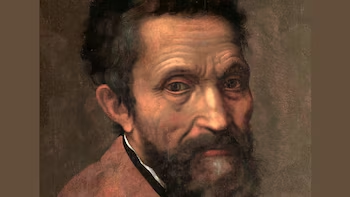
## Early Life and Influences
Michelangelo Buonarroti was born on March 6, 1475, in Caprese, a small town near Florence. His existence unfolded amidst the hub of Renaissance ideas, political shift, and evolving artistic ambition. Tragically, he lost his mother at the tender age of six, experiencing a formative childhood of loss. Raised in Settignano—famous for its marble quarries—he became captivated by the transformation of raw stone into intricate forms. This early exposure cultivated a profound appreciation for marble, which later defined his artistic genius.
## Apprenticeship and Renaissance Growth
At just 13 years old, Michelangelo entered an apprenticeship with Domenico Ghirlandaio, one of the leading painters of the time. This opportunity placed him within the vibrant cultural epicenter of Florence. Here, he honed his drawing and painting skills while immersing himself in intellectual circles that would shape the trajectory of his career. By age 15, he caught the attention of the formidable Medici family, who invited him to join their academy, further enriching his artistic and philosophical understanding.
### The Influence of the Medici
Under the patronage of Lorenzo de’ Medici, Michelangelo gained unprecedented access to invaluable art collections and notable thinkers. This relationship was pivotal not only for his artistic development but also for navigating the complex political landscape that would dominate his life and work.
## Sculptural Milestones
In his formative years in Rome, Michelangelo produced significant works including a statue of Bacchus and the renowned Pietà, completed before he turned 25. Despite having to sign the Pietà to claim authorship due to attempts at misattribution, it elevated his status in the art world. By the end of the 1499, he returned to Florence as a celebrated artist, tasked with the monumental David, a project that pushed the boundaries of sculpture in both scale and detail.
### David: A Symbol of Freedom
Completed in 1504, the statue of David embodied the spirit of freedom and resistance against tyranny, earning a prominent place in Florence’s public square. It also served as a form of political critique against the Medici rule and symbolized the city’s republican aspirations.
## Great Commissions and Artistic Achievements
As Michelangelo’s stature grew, so did his commissions. Pope Julius II called upon him to design a grand tomb, which became a lifelong endeavor lasting over 40 years. During this time, he was also commissioned to paint the ceiling of the Sistine Chapel (1508-1512), a monumental work that encapsulated the artistic genius of the Renaissance through scenes from Genesis. The Last Judgment, painted later between 1536 and 1541, further solidified his reputation as a comprehensive artist of unparalleled skill.
## Final Years and Legacy
In his later years, Michelangelo transitioned to architecture, contributing to St. Peter’s Basilica, one of Christianity’s crowning achievements. He remained artistically active until shortly before his death on February 18, 1564, leaving behind a legacy that transcended generations. Michelangelo’s innovative techniques and compelling themes found in sculpture, painting, and architecture positioned him as a key figure in the transition from the Middle Ages to modernity.
His remains rest in the Basilica of Santa Croce in Florence, alongside other luminaries of Italian history. Though largely solitary, Michelangelo’s emotional expressions through sonnets—particularly those dedicated to Tommaso dei Cavalieri—spark debates about his personal relationships and emotional depths.
## Conclusion
Michelangelo’s legacy continues to inspire awe and admiration, marking him as a universal artistic reference and a pivotal figure in Western culture. His remarkable contributions transformed the art world, encapsulating the creativity and human spirit of the Italian Renaissance. Today, Michelangelo’s works remain enduring symbols of artistic excellence, resonating through the corridors of history and within the hearts of audiences worldwide.