
The Overwhelming Impact of Traffic in Mexico City
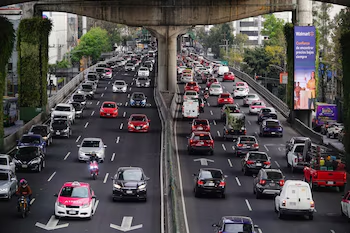
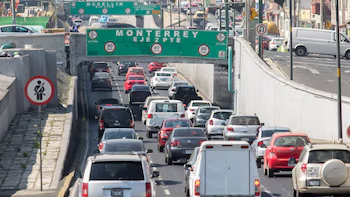
The concerns of urban mobility expert Antonio Suárez Bonilla, coordinator of the Mobility and Green Infrastructure Laboratory (LabMov) at the National Autonomous University of Mexico (UNAM), highlight an alarming reality: the overwhelming presence of asphalt and the number of automobiles deeply affect urban life quality in Mexico City.
With approximately five million cars registered, and 1 to 1.5 million circulating daily, the traffic situation creates a pressing need for infrastructure that can accommodate this automotive density. An example is the Mexico City International Airport (AICM), where a staggering 38 percent of the 693 hectares is allocated solely for car parking.
Rethinking Urban Spaces
Suárez Bonilla emphasizes the urgency of reimagining urban landscapes and reducing the reliance on private vehicles. This rethinking is crucial for improving public life and promoting sustainable practices. The infrastructure must evolve to support diverse modes of transportation, integrating green infrastructure to enhance public spaces, promote biodiversity, and improve water management.
The Cost of Energy Expenditure
A staggering 46 percent of national energy expenditure stems from transportation, with approximately 95.9 percent of that related to automobiles. This heavy reliance on cars not only impacts environmental sustainability but also raises questions about the efficiency of current urban planning practices.
Suárez Bonilla argues that we must explore alternative transportation methods such as electric bicycles, motorcycles, and walking. “If cars create conflicts, we should foster other options,” he asserts, advocating for a transformative change in mobility.
The Future: Micromobility Solutions
At the same seminar, LabMov professor Roberto Trinidad González Torres discussed the exciting potential of micromobility in urban environments. Identifying vehicles like electric scooters, bicycles, and mopeds, he reported that this market could reach $50 billion, serving as effective “first or last mile” alternatives.
Despite the rapid integration of these vehicles, a legal framework is lacking. Some regions impose speed limits, registration requirements, and safety gear mandates, but implementation remains inconsistent.
While battery technology poses challenges, innovations in recycling and exchange systems show promise. Additionally, advancements in lightweight and durable materials are paving the way for more sustainable and manageable transport options.
In conclusion, addressing the invisible costs of traffic in Mexico City requires a holistic approach to urban planning. Transitioning towards green infrastructure and promoting alternative means of transportation can improve urban life quality, reduce energy expenditure, and foster a sustainable future.