

Understanding Physical Aging Through Simple Tests
Aging affects each individual differently. However, specialists in physiotherapy and geriatrics have identified five simple tests that can be conducted at home to evaluate key aspects such as mobility, muscle strength, balance, and cardiovascular health. These assessments help monitor general well-being over time and detect early signs of fragility.
The Importance of Monitoring Physical Changes
As we age, joints and muscles undergo changes that limit mobility and independence. According to Kaila Morin, a physical therapy supervisor, this decline raises the risk of falls and injuries if not managed with a preventive approach. Incorporating adapted exercises promotes autonomy and enhances the quality of life.
A notable feature of these five tests is the absence of specialized equipment. They can be performed both in clinical settings and at home. Although they do not replace a comprehensive clinical evaluation, they serve as effective screening methods to track physical changes over time.
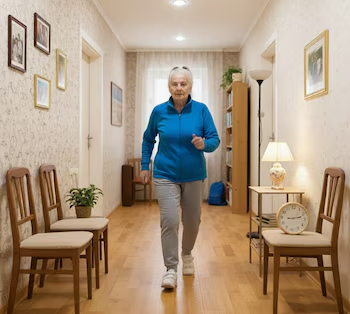
Test 1: Walking Speed
Walking speed, or “gait speed,” is a critical indicator of autonomy in adult life. Robyn Culbertson, a clinical specialist in geriatrics, states that it is closely linked to mortality, cognitive decline, and the ability to maintain independence. This parameter has been dubbed the “sixth vital sign.”
- Set up a 10-meter distance, adding 2 meters at each end for acceleration and deceleration.
- Time your travel across the central 10 meters.
- Calculate your average speed (in meters per second).
For individuals over 60, an ideal walking speed ranges between 0.8 and 1.2 meters per second, while middle-aged adults should strive for at least 1.3 meters per second.
Test 2: Sit-to-Stand
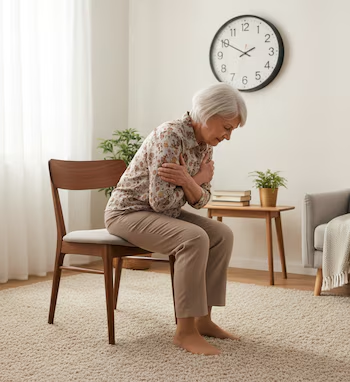
The second test, called the “sit-to-stand” test, assesses leg strength and the ability to perform daily tasks. Culbertson notes that this strength declines after age 30 or 40, which affects one’s ability to rise from a chair without support.
To perform the test, sit on a stable chair with your arms crossed over your shoulders and stand up completely, repeating the movement five times as quickly as possible without using your hands.
Test 3: Hand Grip Strength
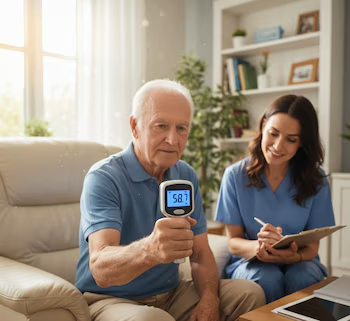
Measuring hand grip strength provides insight into overall body strength and disability risk. A decrease of 5 kilograms in this area can indicate a higher cardiovascular disease risk.
Using a hand dynamometer, values below 26 kilograms in men and 16 kilograms in women are concerning, signaling a risk of disability and hospitalization.
Test 4: Balance
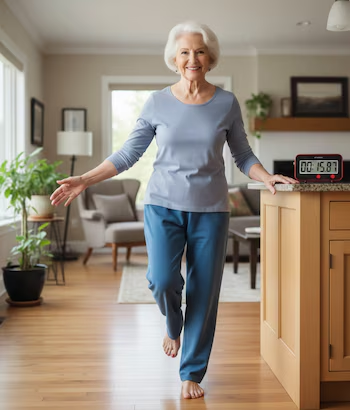
Balance is often underestimated in older adults but is crucial for independence. Balance exercises become more challenging with age, increasing fall risks.
To test your balance, stand near a safe surface and lift one leg for as long as possible without support. Older adults should aim for a minimum of 5 seconds to reduce fall risk.
Test 5: Cardiovascular Capacity
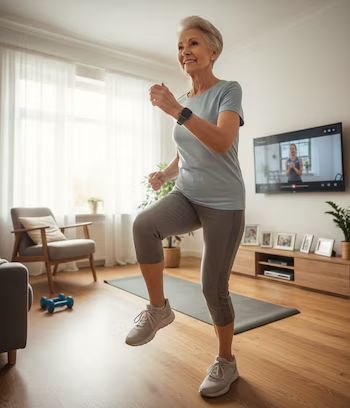
The final test evaluates cardiovascular capacity through VO₂ max, which indicates the maximum oxygen consumed during intense activity. This measurement is vital for understanding cardiorespiratory fitness and risk of cardiovascular diseases.
Although laboratory-based measurements are precise, current wearable technology, such as smartwatches, can provide useful estimations. Monitoring trends over time is essential to gauge fitness levels.
Conclusion
The five tests discussed serve as fundamental tools for assessing physical health and should not replace a full clinical diagnosis. Regular assessments can enable early detection of significant changes, allowing timely interventions. Individuals experiencing persistent signs of physical decline should consult healthcare professionals.
Incorporating frequent aerobic activities like cycling, swimming, and brisk walking can help further enhance cardiovascular capacity and overall vitality as we age.