
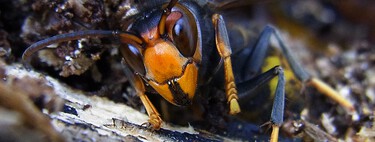
The Emergence of the Asian Hornet in Andalusia
The 7.5-kilo nest , situated 10 meters high in a pine tree in Alhaurín de la Torre, has become *increasingly concerning* as it marks the first detection of an Asian wasp nest in Andalusia. This invasive species has recently made headlines due to its lethal impact; notably, it has been linked to the deaths of three individuals in Galicia within a mere two weeks.
Immediate Action Taken
“We caught it on time,” explained Álvaro Garcia from the pest control company Lucanus. “If we had left it a few more days, hundreds of fertile queens would have emerged, and that would be unstoppable.” While the immediate threat has been mitigated, the underlying anxiety remains: have we merely stumbled upon this nest, or are there more nests hidden throughout the region, waiting to be discovered?
A Chance Discovery
The nest’s discovery was due to the vigilance of Eduardo Sáez , a biologist who owns the farm where the nest was located. While he is not an expert in wasps, he recognized something was amiss and raised the alarm. This raises a crucial question: what if this was merely a stroke of luck ? Could there be dozens of undiscovered Asian wasp nests quietly maturing in Andalusia?
Understanding the Vespa Velutina
The Vespa velutina nigrithorax , native to Southeast Asia, is an invasive species that arrived in Europe in 2004 . While it can be identified with relative ease, it does require careful observation. This species is significantly larger than the common wasp, measuring up to 3.5 cm , with an almost entirely black abdomen.
Since its introduction, it has spread from Cantabria , the Basque Country , and Galicia throughout the northern peninsula, advancing at a staggering rate of 80 kilometers per year . The hornet is known to prey on fruit, bees, and other pollinating animals, contributing to a significant decline in local ecosystems.
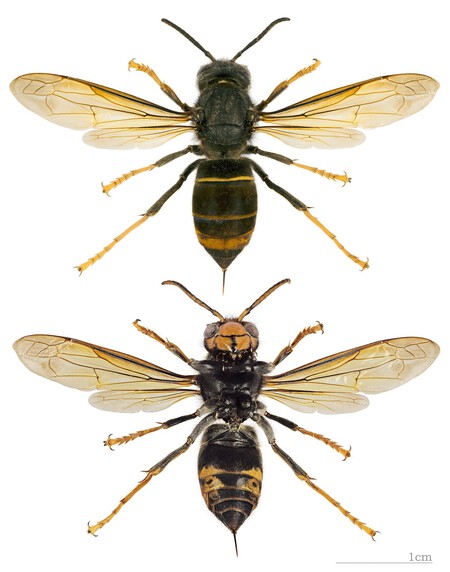
Didier Descouens
Community Response
Faced with this growing threat, the municipality of Malaga has taken urgent measures . Recognizing their inability to search the entire area for other nests, local authorities have requested citizen collaboration . Many neighbors and volunteers have mobilized to comb through the Pinos de Alhaurín area for additional nests.
While community involvement offers a ray of hope, it also comes with risks. Improper identification of nests could lead to unnecessary exposure to other species, putting both volunteers and wildlife at risk. The urgency is understandable, as Malaga has already been battling the Vespa orientalis . Introducing the velutina would pose a dire threat to local beekeeping and a variety of other sectors.
Why the Urgency?
The need for immediate action is underscored by the hornet’s destructive impact in northern Spain. Once the wasps firmly embed themselves in an ecosystem, eradicating them becomes almost impossible. Local councils lack the resources to combat this escalating threat, particularly amid challenges such as climate change and rampant urbanization that facilitate the wasps’ spread.
A Broader Implication
Recent events in Galicia further illustrate the gravity of the situation. In less than two weeks , three men have tragically lost their lives due to severe allergic reactions brought on by stings from the velutina. Despite extensive efforts in Galicia to combat the species over the past 15 years, including programs for mass trapping and nest removal, success has been elusive. Reports indicate an extraordinary increase in hornet populations, underlining their remarkable adaptability.
As the challenge continues to mount, the *need for vigilance* and *community action* has never been clearer. Understanding the various implications of the Asian hornet’s presence is crucial for the safety of the population and the protection of local ecosystems. Efforts to combat this invasive species require not only immediate but sustained action to ensure a safer future for Andalusia and its residents.