
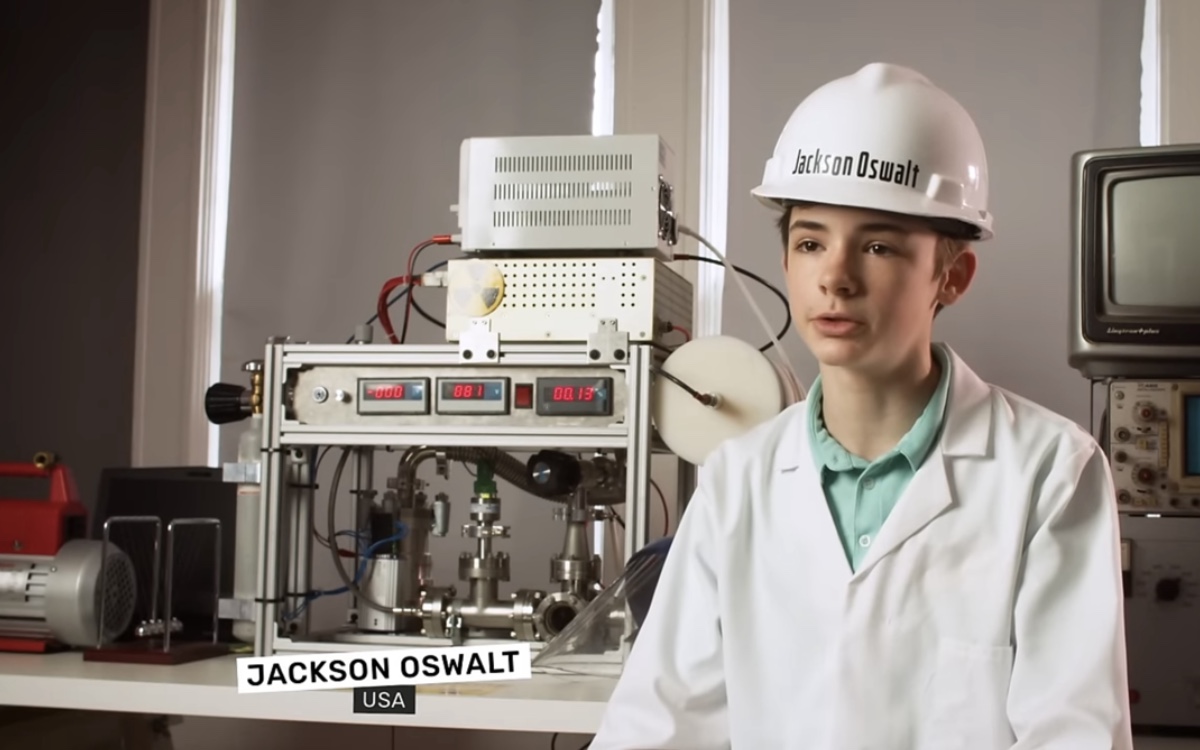
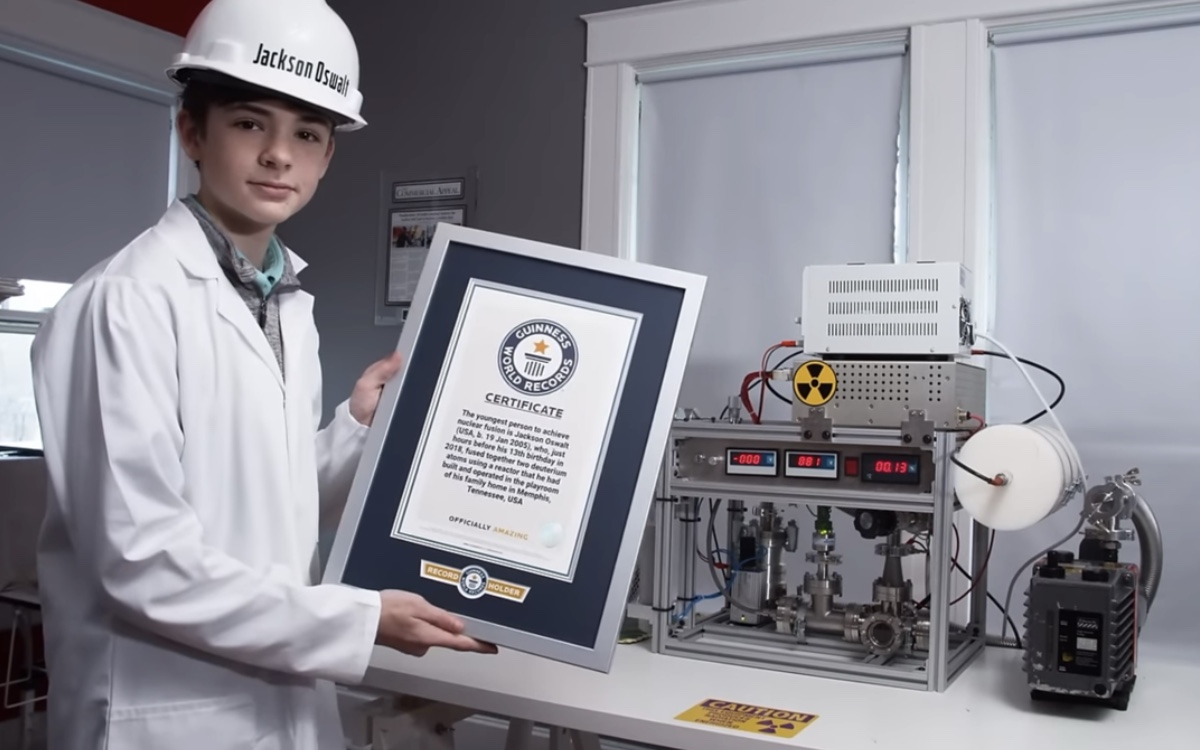
At just 12 years old, Jackson Oswalt is not spending his free time playing video games like most kids his age. Instead, this young American dedicates himself to science. His remarkable achievement in nuclear fusion led to a visit from the FBI and a world record! Here’s the incredible story of Jackson Oswalt.
The history of science is indeed rich with young prodigies. From Kautilya Katariya becoming the youngest programmer at 6 years old to Laurent Simons graduating as an engineer at 9, Jackson Oswalt’s story adds another remarkable name to this list.
From Gamer to Amateur Nuclear Physicist
On January 18, 2018, in Memphis, Tennessee, Jackson Oswalt achieved a scientific feat—making him the youngest individual to accomplish it at just 12 years old.
Before becoming a science prodigy, Jackson was a typical boy, passionate about video games. Until he had a revelation: “I realized I could be the best at any video game, but in the end, it wouldn’t mean much.”
In search of meaning, Jackson turned to the realm closest to video games in real life: science, specifically nuclear fusion. He got inspired by an article about Taylor Wilson, who became the youngest individual to create a fusor at just 14.
It was decided: Jackson would break his record. To grasp the fundamental scientific principles required for his project, he adopted an original approach: watching physics videos instead of indulging in his typical gameplay.
This ambition came with consequences…
Hello, Jackson, this is the FBI
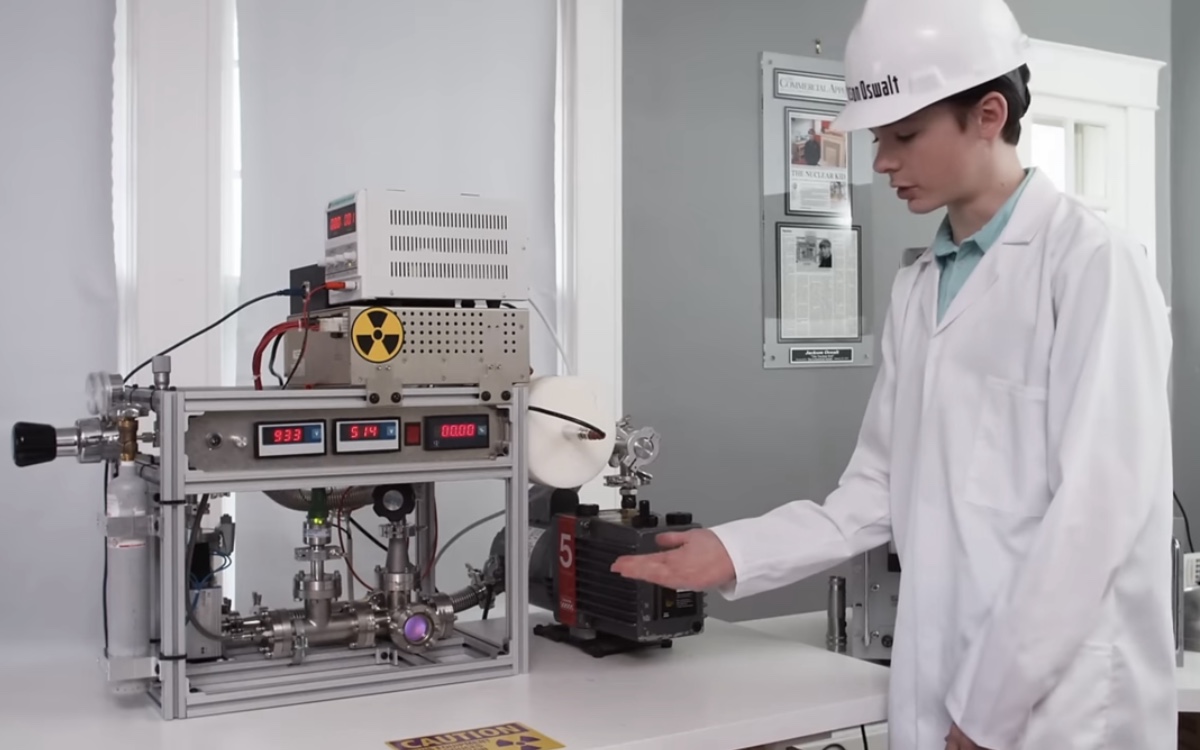
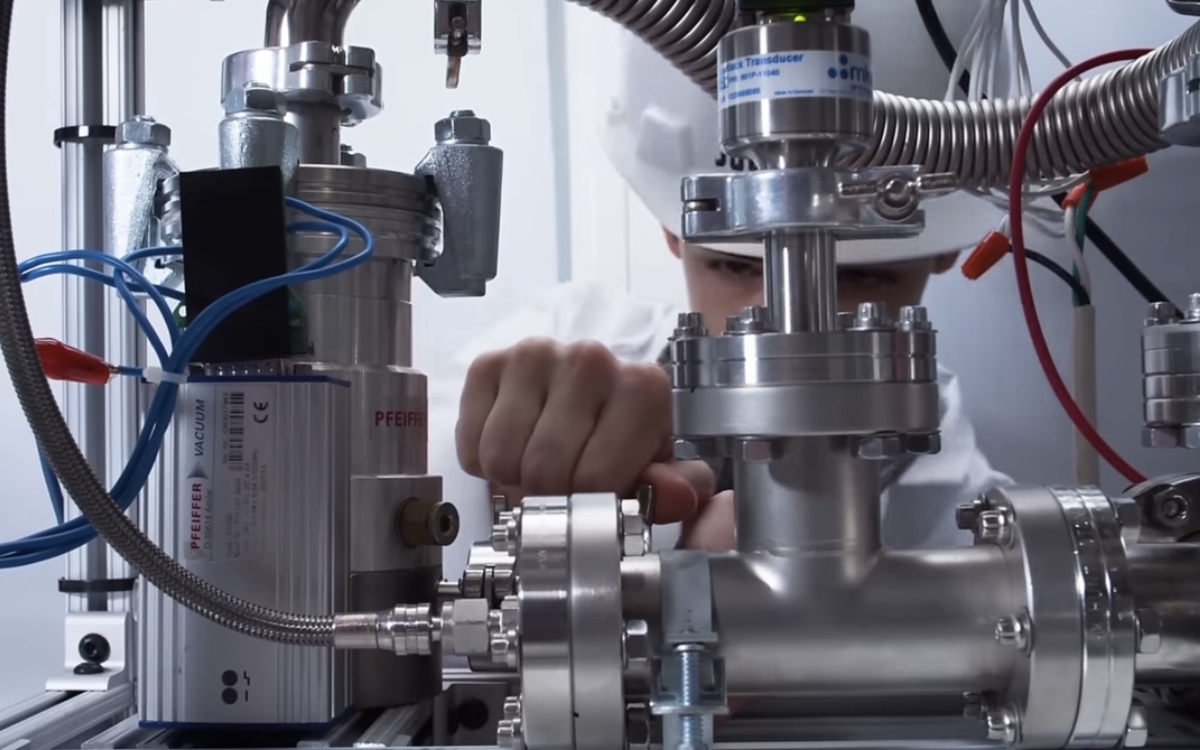
From theory to practice, Jackson built a demonstration fusor, a device that produces plasma without achieving full fusion. He showcased his invention at a school science fair. This pivotal event marked his entry into the world of scientific research.
Jackson’s passion did not go unnoticed. One morning, two FBI agents knocked on the Oswalt’s door. The reason? To check for potential radiation risks related to Jackson’s experiments. Equipped with a Geiger counter to measure radioactivity, they ensured no danger existed for the neighborhood.
Finding no concerning radiation levels, Jackson could continue his research. He later explained, “Building a fusor is a very dangerous process, mainly because of the high voltage used in the reactor. Certain precautions must be taken.”
A Record in the Guinness: Achieving Nuclear Fusion at Just 12 Years Old
Once again, we return to January 18, 2018, in Memphis. Just hours before celebrating his 13th birthday, Jackson fused two deuterium atoms—a hydrogen isotope—using his fusor.
Mission accomplished: he became the youngest individual to achieve this feat, all from home! For those interested in the more “technical” details, Jackson explained: “Essentially, the difference is that fusion combines two elements, while fission splits an atom. I was able to use electricity to accelerate two deuterium atoms so they fused into a helium-3 atom, releasing a neutron. That neutron can then be used to heat water and power a steam turbine, which in turn generates electricity.”
On February 2, 2018, the open-source research consortium Fusor.net verified Jackson’s impressive achievement, confirmed by researcher Richard Hull. Jackson joined a list of amateur scientists who have successfully achieved fusion at home.
On October 6, 2020, the Guinness World Records selected Jackson as one of the stars for its 2021 edition. His story exemplifies the significance of curiosity and perseverance in realizing one’s dreams.
But what about the hopes for nuclear fusion as a sustainable energy source?
Nuclear Fusion: A Promise for the Future?
Homemade fusors are not rare, as evidenced by Richard Hull’s list; thus, it is Jackson’s age that is truly impressive. Notably, this type of fusor consumes a significant amount of energy compared to what it produces.
For nuclear fusion to become a sustainable energy source, it must far exceed the energy required to initiate and maintain fusion. Jackson shared his hopes with Guinness, stating, “I hope nuclear fusion will become a profitable energy source and help us combat climate change.”
Jackson is not alone in holding this hope; the ITER project represents an ambitious initiative to produce energy by fusing two isotopes of hydrogen, deuterium and tritium. Success in this project would represent the promise of decarbonized energy.
As for Jackson, he is now utilizing his passion for science at Midjourney, an independent research lab specializing in artificial intelligence. This new life enables him to develop his skills and engage in current technological innovations.
Having secured a spot in the Guinness World Records, will Jackson Oswalt one day be celebrated among the great scientists of our time?
General News – 2