
The Enigmatic Shipwreck of San José: A Treasure Lost and Found
Around the world, it is estimated that there are nearly three million shipwrecks, vessels that once sailed the seas and now lie on the ocean floor, transformed into thriving ecosystems. This list includes everything from transatlantic liners like the Titanic to World War II destroyers, abandoned boats, and colonial caravels. However, few have captured the public’s imagination quite like the San José, an 18th-century galleon that sank in 1708 off the coast of Colombia, laden with treasure estimated to be worth almost $20 billion.
The precise location of the San José remained a mystery for centuries. Recently, Colombian archaeologists reported that they have found it without a doubt, thanks to a clue that attests to the opulence of its treasure: the gold coins it carried.
A Multi-Billion Dollar Treasure
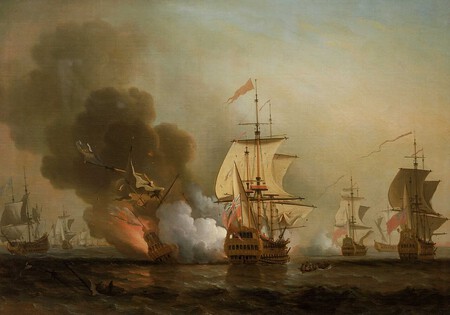
Originally, the San José was an impressive galleon, measuring 40 meters in length and equipped with three masts and 64 cannons. Built in Guipúzcoa on the orders of King Charles II, its mission was to serve in the Fleet of India. Despite its formidable design, the history of the San José was tragically short. The ship sank off the Colombian coast in June 1708, just years after its launch, following an attack by British privateers during the Battle of Barú in the midst of the War of the Spanish Succession.
Interestingly, the legend of the San José began at the moment of its sinking. Apart from its crew of hundreds, the galleon was transporting gold, silver, and gemstones among its cargo. Historical accounts suggest a treasure worth an estimated 200 tons, today valued in the billions. Estimates vary widely, with some citing $17 billion and others exceeding $20 billion, but all agree it is an immense and irresistible treasure.
Where is the San José?
For centuries, the question loomed large: where exactly was the wreck? It was known to be in the Caribbean Sea, but what were its precise coordinates? In 1981, a company announced that it had discovered the galleon, supposedly reporting information to the government in exchange for a share of the treasure. However, complications arose soon thereafter. By 2015, Colombian authorities claimed to have located the remains of the Spanish vessel in a different area, intensifying disputes over the rights to the treasure.
The Crucial Clue: The Coins
Historical discoveries often hinge on minor details, and underwater archaeology is no exception. While experts were long convinced that the remnants submerged off the Colombian coast belonged to the San José, a new investigation published in the journal Antiquity has further confirmed this identification. The evidence comes from an analysis of gold coins found at the underwater site, approximately 600 meters deep.
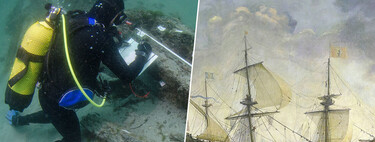
From 2022 to 2024, a Colombian team embarked on several expeditions focused on the wreckage. They utilized a Remotely Operated Vehicle (ROV), which allowed experts to obtain high-resolution photos of the coins at the site. Using techniques like photogrammetry, they created three-dimensional reconstructions of the wreck and various digital models of the environment.
What They Discovered
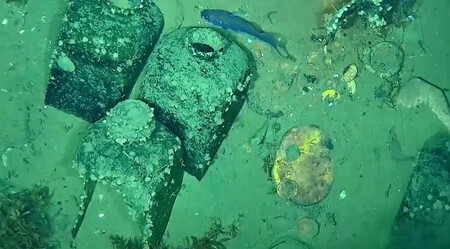
Initially, archaeologists found macuquinas, handmade coins that circulated in the Americas for over two centuries. Using high-resolution photos captured on-site — with the Colombian Institute of Anthropology and History ensuring that no objects were removed from the site — experts found that the coins averaged 32.5 mm in diameter, weighed 27 grams, and bore revealing designs.
The obverse of the coins features a variant of the Cross of Jerusalem (a large cross with four smaller crosses), alongside a shield adorned with castles and lions, symbols of Castile and León. On the reverse, the coins display the Crowned Columns of Hercules on waves, linking them to the Mint of Lima.
Deciphering Clues
These aren’t the only clues identified by the archaeologists, who have also noted a “L,” likely referencing Lima, an “8,” indicating the coin’s value, and an “H,” linked to the mark of Francisco de Hurtado, the Chief Assayer of the Indies in 1707. The center of the coins also displays the legend “PVA,” “Plus Ultra,” hinting at the maritime expansion of the Spanish monarchy.
Additional context is provided by three digits (707) located at the base of the pillars, referring to the year the coins were minted: 1707, just before the San José sank in the Caribbean.
Why Is This Important?
Because these details are essential for better understanding the wreck site and the circumstances surrounding the galleon’s demise. “Decoding the features of the coins helps determine the age and origin of the shipwreck,” states the article. “First, it establishes a timeline: the sinking likely occurred after 1707. This, along with other evidence—such as the presence of Kangxi-era Chinese porcelain and inscriptions on cannons dating back to 1665—suggests the ship sank in the early 18th century.
Confirming the Identification
The coins also provide insights into the route the sunken galleon likely traversed. “In the Viceroyalty of Peru, several gold mines were documented, mainly in Puno and Huamanga. It is probable that the raw material used for minting the coins came from these mines and was processed at the Mint of Lima, which resumed operations in 1683 and began minting gold by 1696,” experts reveal in their study.
All this evidence, combined with what historians already know about colonial history, leads to a resounding conclusion: “The accumulation of evidence corroborates the identification of the wreck as the galleon San José, a hypothesis that has been considered since its discovery in 2015.”
The Only Ship
“The discovery of macuquinas created in 1707 at the Mint of Lima indicates a vessel that navigated through the Tierra Firme route in the early 18th century. The galleon San José fits this profile perfectly,” assert the experts, who emphasize the coins’ value as “crucial artifacts” for dating and better understanding wreck sites, especially those related to shipwrecks.
These coins serve as valuable repositories of historical information, particularly when examining cases related to the Tierra Firme Fleet, which connected Spain with the Viceroyalty of Peru from the 16th to the early 18th century.
Is the Mystery Resolved?
Not quite. One of the largest uncertainties surrounding the San José wreck remains: what will its future hold? Its immense historical and cultural value has recently placed it at the center of a fierce battle over rights. Colombia has expressed interest in the wreck, while Spain has also stepped forward. Meanwhile, the company that claims to have discovered the wreck is vying for rights, alongside the Qhara Qhara indigenous community, which demands rights to the treasure, while experts call for leaving the wreck intact.
Images | Wikipedia and Presidency of the Republic of Colombia