
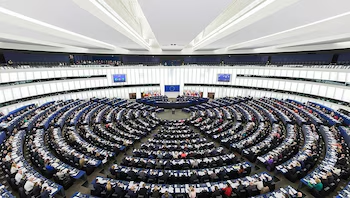
European Parliament Halts Trade Agreement Ratification
The European Parliament has made a decisive move by paralyzing the ratification of the trade agreement between the European Union and United States. This decision arises from the recent uncertainty surrounding U.S. trade policies, particularly following a ruling by the U.S. Supreme Court that deemed President Donald Trump’s tariffs as illegal.
Implications of the U.S. Supreme Court Ruling
The Supreme Court’s ruling has led to a significant shift in the dynamics of international trade relations. The decision challenges the legal foundations laid by Trump for his tariff impositions, making it clear that such policies exceed the emergency powers he invoked. This has resulted in calls for clarity about the new 15% tariffs that were recently announced, which had initially been set at 10%.
Europe’s Response to U.S. Tariffs
Teresa Ribera, the Vice President of the European Commission for a Just, Clean and Competitive Transition, has articulated that Europe “deserves respect” in light of these developments. She emphasized that the EU has no intention of escalating tensions but must defend its interests firmly. According to her statements, Europe seeks equitable treatment and compliance with existing regulations, which extend to environmental and social standards governing trade.
The Need for Mutual Respect in Trade Relations
Ribera further elaborated on the idea that the EU has always recognized the U.S. as a crucial partner in trade. However, she expressed concern over America’s current trade policies, which seem to favor domestic products at the expense of international offerings. This protectionist approach, she believes, could have adverse effects on both American citizens and businesses.
The Impact on American Businesses and Citizens
Ribera argues that the trade war doesn’t only affect European markets; it also takes a toll on American entities. The ripple effects from tariff increases can destabilize financial markets, as evidenced by previous fluctuations linked to Trump’s trade announcements.
Conclusion: A Call for Caution and Study
As the European Union contemplates its next steps, Ribera has stressed the need to study the Supreme Court’s ruling meticulously. The EU aims to defend its positions with calculated caution to ensure a balanced outlook for both domestic and international economic relations. Given the fragility of the situation, clarity from the U.S. administration becomes vital for a constructive path forward, as European governments, including Germany and Italy, are urging further discussion on the matter.
In a landscape fraught with uncertainties and evolving trade policies, the need for dialogue and mutual respect has never been more critical. The future of transatlantic trade relationships hinges on how both sides navigate these turbulent waters.