
“Wow, but if it gives me the option to pay with Bizum, how cool.” That was my expression a few months ago when an online store presented me with the option to pay directly using Bizum. No debit or credit card required, no Google Pay—just Bizum.
This instant payment system is booming in Spain, and we want it to expand further. The European banking entities share this vision, viewing a “European Bizum” as an exciting opportunity. However, a critical issue remains: who will be in control?
The European Bizum is Approaching
For the past five years, the European Central Bank (ECB) has been working on an application mirroring Bizum’s success across Europe. This has led to a significant power struggle, primarily between two factions: the Spain-Italy-Portugal consortium and the France-Germany-Belgium-Holland group, the latter proposing their version called Wero.
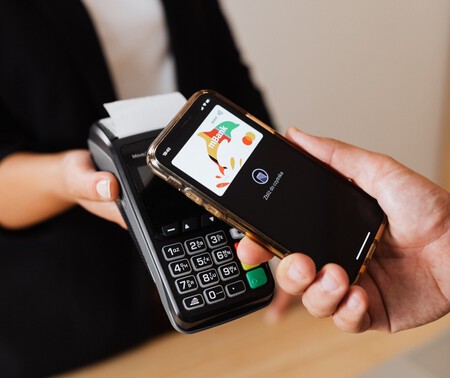
Fortunately, recent developments suggest that these factions are inching closer together, making unification appear almost certain.
Recent reports indicate that an agreement is expected to be signed in early 2026, with the European Bizum projected to start operations by the end of next year.
Interestingly, this may not be a brand-new application as envisioned by the French and German entities. Instead, it could be a system that interconnects existing applications, allowing for practical use without requiring users to switch apps. For example, a Spanish user could send a Bizum to a German user at no cost, and the German would receive funds in their Wero app seamlessly.

Participating banks in these negotiations have decided to form a new company to own this interconnection technology. Though discussions about implementing commissions arose, they were ultimately rejected in favor of creating a multilateral network.
Power Distribution
This brings us to the next challenge: who will hold power in this new framework? The question of power distribution remains a major concern with various potential outcomes. On one hand, each national platform could receive equal participation; alternatively, allocations might depend on each country’s transaction volume and then be corrected.
The Bizum model may serve as a template for this pan-European solution. Currently, 22 Spanish banks own Bizum, with varied participation levels:
- Caixabank: 25%
- Santander: 21%
- BBVA: 18%
- Sabadell: 12%
While smaller banks like Unicaja, Bankinter, or Cajamar wield lower stakes, Bizum’s rules specify that no institution can exceed 25% participation.
Do We Need a Digital Euro?
Europe has long sought a method to reduce dependence on the dominant players in electronic payments, namely Visa and Mastercard. The European Payments Initiative, established in 2020 by 16 banking entities, aims to create a competitive interbank network.
The growing popularity of Bizum—now boasting more than 30 million users in Spain—positions it as an ideal candidate for this initiative, further solidified by partnerships such as that with Revolut.
Challenges remain, such as establishing a common deposit guarantee fund to support this pan-European alternative against major U.S. entities. However, this is not anticipated to prevent the formation of a European Bizum, raising questions about the status of the digital euro.
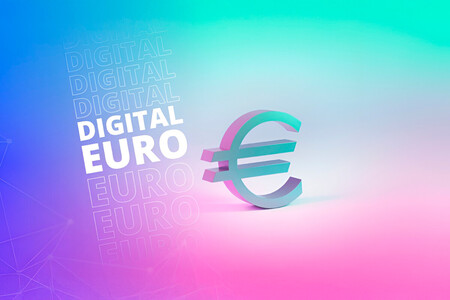
The ECB has been crafting plans for this digital asset for years, and progress has been steady. If European regulations pass in 2026, a pilot program could commence in 2027, with a potential launch for a digital euro in 2029.

This European Bizum could address facets of what the digital euro intends to achieve. Does this make sense? It likely does, especially since the digital euro will be a legal tender issued by the ECB, serving not just as a transaction method but as a digital form of official currency.
Both initiatives can coexist, and this European Bizum could serve as a platform to promote the use of the digital euro effectively.
In summary, the European Bizum aims to revolutionize how we process payments, addressing existing barriers while paving the way for innovations like the digital euro.