
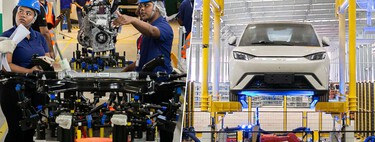
The Rise of Chinese Automotive Manufacturing in Europe
The Chinese automotive industry is making significant strides to capture the European market. This strategy includes bringing cars directly from Chinese factories, forging partnerships with European companies, and establishing manufacturing plants within Europe. While this approach effectively sidesteps tariffs, it has raised concerns within Europe regarding assembly methods, particularly the use of removable kits for vehicles.
Concerns Over Manufacturing Practices
Stéphane Séjourné, Vice President of Prosperity and Industrial Strategy at the European Commission, has voiced concerns about Chinese manufacturers, specifically those operating in Spain and Hungary. “Currently, there are manufacturers in Europe that assemble Chinese cars with Chinese components and personnel. It’s happening in Spain and Hungary, and it’s not right,” he stated. This remark underscores the growing unease about foreign manufacturing practices on European soil.
The Semi Knock Down (SKD) Method
Some Chinese companies use a strategy known as Semi Knock Down (SKD). In this approach, parts are manufactured in China and sent disassembled to Europe, where local workers reassemble them. This raises questions about whether these operations truly contribute to local economies or merely serve as assembly plants.
Assembly Plant vs. Manufacturing Plant
Valdis Dombrovskis, another EU official, has questioned the long-term value creation for the European Union through this model. “What part of know-how will be stored here? Is it a simple assembly plant or an automobile manufacturing plant? There is a substantial difference,” he remarked. This skepticism reflects a broader concern about whether these operations genuinely foster local talent and industry.
Trade Policy and Strategic Thinking
Recent tariffs on electric vehicles from China reflect Europe’s strategy to protect its automotive industry. However, Séjourné argues that tariffs alone are not the solution, believing they create trade tensions and disrupt value chains. Instead, he advocates for a more prudent approach that aligns with global standards.
Local Benefits and Job Creation
For the EU, establishing factories that create local jobs is paramount. The Chery factory in Barcelona serves as an example of how local integrations, such as collaboration with suppliers, can enhance the economic landscape. However, concerns persist about the reliance on Chinese workers for assembly, which undermines the intended local benefits.
Emerging Hybrid Threats
The EU has focused heavily on the electric vehicle market, but hybrids are showing remarkable growth, with Chinese brands occupying 5.4% of the market share as of May 2025. This surge is largely attributed to competitive pricing and appealing designs offered by brands like MG or BYD, making it increasingly challenging for European manufacturers to compete.
Future Directions for European Automotive Policy
Looking ahead, Séjourné emphasizes that Europe needs to adopt more strategic industrial policies. He suggests that a model similar to the one China employed in the past—requiring foreign companies to collaborate with local firms—could facilitate knowledge transfer and economic stability. This would enable foreign brands to better integrate into the European market while ensuring that local workers and businesses benefit from their presence.
In conclusion, the evolving landscape of the automotive industry in Europe presents both opportunities and challenges. Navigating this complex terrain will require careful policy consideration and collaboration to foster a sustainable future for all stakeholders involved.