
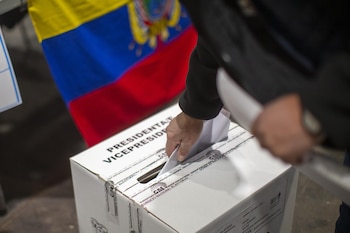
The EU’s Assessment of Ecuador’s Presidential Elections
The Electoral Observation Mission of the European Union (MOE-EU) arrived in Ecuador to monitor the presidential elections held this year, a critical moment for the nation as it determined the future leadership. The mission recently announced its findings, stating that there was no evidence of fraud in the elections that resulted in the victory of the newly re-elected president, Daniel Noboa of the ADN movement.
In a recent press conference, Europarliament member Gabriel Mato, who led the mission, emphasized that despite some imbalances, the elections were conducted in a transparent and well-organized manner. Mato said, “We reiterate that we have not found objective elements that support accusations of fraud.” This statement came as a relief to many Ecuadorians who closely followed the electoral process, which has often been clouded by allegations and controversies.
Election Transparency and Efficiency
One of the significant observations made by the MOE-EU was the efficiency of the Ecuadorian electoral authority, which had faced accusations of partiality amid a highly polarized political climate. Mato acknowledged the challenges but recognized the strides made by Ecuador’s electoral body in organizing the elections effectively.
However, it is important to note that while the elections were deemed transparent, the mission pointed out several aspects that could be improved upon to enhance the fairness of future electoral processes. These include campaign financing, the use of public media, misinformation, and the overall protection of political rights.
Recommendations for Improvement
The MOE-EU published a report containing 15 recommendations aimed at refining the electoral processes in Ecuador, aligning these suggestions with international law. Among the key recommendations was the revision of penalties for electoral infractions to prevent disproportionate restrictions on candidates and their campaigns.
Additionally, the mission called for a reevaluation of the selection and nomination process of electoral authorities to enhance impartiality. Another significant suggestion was the limitation of government activities during the electoral campaign period to ensure that no undue advantage is given to incumbents. The report also recommended a thorough review of the legal framework surrounding institutional advertising to prevent its misuse for electoral gain.
Election Results and Historical Context
In mid-April, the National Electoral Council (CNE) officially announced the results of the presidential elections, confirming Daniel Noboa’s victory in the second round. Noboa garnered over eleven percentage points more than his opponent, Luisa González, representing a critical shift in Ecuador’s political landscape. His win was described as historical, marking him as the second president since the return to democracy to achieve re-election.
The political journey to this election was riddled with challenges, particularly during the first round held on February 9, where both candidates were nearly tied. This close contest highlighted the deeply divided sentiments among Ecuadorians, making the transparency and fairness of the electoral process essential for public trust in democracy.
Public Reception and Future Outlook
The reception of the election results has been mixed. While supporters of Noboa celebrated his victory, opponents have raised concerns about the future trajectory of Ecuador’s democracy. The fact that several international observers, including the MOE-EU, found no evidence of fraud may aid in reaffirming the legitimacy of Noboa’s presidency.
However, the challenges highlighted by the mission underscore the need for ongoing vigilance in ensuring that future elections maintain a high standard of transparency and fairness. Addressing the recommendations put forth by the MOE-EU could pave the way for a more balanced political environment, ultimately leading to stronger foundations for democracy in Ecuador.
The path forward for Ecuador remains uncertain, but the commitment to address issues raised by international observers is vital. By embracing reform and prioritizing the integrity of electoral processes, Ecuador can firmly secure its democratic principles and inspire confidence in its governance.