
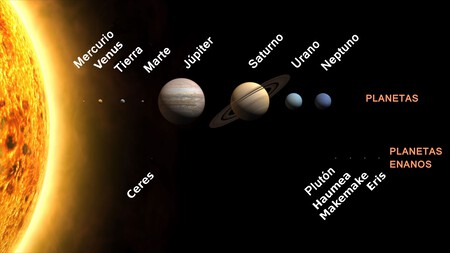
The Universe is full of unknowns for humanity. Even established information often comes under scrutiny, including data such as the distances between planets in our Solar System. An intriguing piece of knowledge is how long a day lasts on each planet. For Earth, a day is approximately 24 hours (specifically 23 hours and 56 minutes).
The Factors Influencing a Day’s Length
This 24-hour duration is determined by the time it takes our planet to complete one rotation on its axis, influenced by translation and historical factors like the Moon’s gravitational pull. Various elements—including a planet’s radius, orbit, and interactions with other celestial bodies—play crucial roles in these time estimates. The results reveal a non-intuitive pattern that defies logic.
To visualize the varying lengths of a day across the Solar System, the popular science channel The Brain Maze has created a concise video that clarifies these differences within just one minute. You can check it out here.
The Counterintuitive Patterns
Surprisingly, the largest planets tend to have shorter rotation periods. When our Solar System formed, these giants accumulated gas and dust rapidly, retaining their rotational momentum. For instance, it takes Jupiter less than 10 hours to complete a full rotation, even though it is over 300 times the mass of Earth and 11 times its size.
Saturn follows a similar pattern. However, the ice giants, Uranus and Neptune, present a complex mystery. They also rotate quickly, but their histories include more significant disturbances, including collisions that likely influenced their current rotation speeds.
The Slow Days of Mercury and Venus
In stark contrast, the rocky planets closest to the Sun experience significantly longer days due to tidal braking. Mercury, being very close to the Sun, has seen its original rotation slow over time. Observers on Mercury would see the Sun appear to stop, move backward, and then forward again due to the planet’s elliptical orbit and slow rotation. Remarkably, this creates a phenomenon known as a double dawn.
Venus also suffers from similar gravitational slowing but rotates in the opposite direction. This curious behavior leaves scientists puzzled, although there are various hypotheses. Interestingly, a day on Venus lasts longer than a year; it takes 243 Earth days to rotate once but only 225 Earth days to complete its orbit around the Sun.
The Similarity Between Earth and Mars
When it comes to Mars, the length of a day is nearly the same as that of Earth. This resemblance is largely considered a coincidence, yet it has fueled speculation for years regarding Mars as a possible candidate for hosting life.
The diverse rotation periods among the planets illustrate the complexity of our Solar System and how gravitational influences and historical events shape the characteristics of each planetary body.