
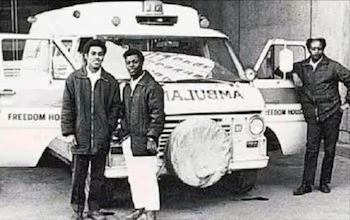
The Legacy of Freedom House Celebrated in “The Pitt”
Introduction to “The Pitt”
The TV series The Pitt stands out among countless shows portraying emergency rooms in the United States. Each episode unfolds over an hour, exploring the complex lives and pressures faced by medical professionals and their patients. Yet, one particular episode pays homage to the remarkable yet often overlooked contributions of the first paramedics: a group of young Black individuals who not only provided essential medical care but also fought against systemic discrimination.
The Pioneers of Emergency Medical Services
Freedom House, established in 1967 in Pittsburgh, was recognized as the first ambulance service staffed by trained paramedics. Historically, emergency medical care in urban environments was almost non-existent, especially for minority communities, where the lack of medical personnel often turned dire situations into tragedies. The traditional approach to emergency medical transport relied on untrained personnel, leading to significant delays and inadequate care.
The Impact of the Civil Rights Era
During the tumultuous civil rights era of the 1960s, the Black community in the Hill District suffered greatly from police neglect and systemic racism. Freedom House emerged as a community response, addressing the urgent need for accessible medical care. Founded amidst the backdrop of violence and discrimination, the organization trained Black volunteers to perform advanced medical interventions typically reserved for hospital settings, thereby empowering them to serve their community effectively.
A Glimpse into “The Pitt”
In The Pitt, this poignant history makes a dramatic appearance. In an episode that highlights the intersection of personal narratives with pressing medical emergencies, a character named Willie Alexander, an 81-year-old former volunteer for Freedom House, finds himself in a precarious medical situation. His unexpected medical knowledge astounds the hospital staff, prompting a reflection on his past and the groundbreaking service for which he once provided care.
The Role of Medical Pioneers
Dr. Nancy Caroline, the first medical director of Freedom House, played a pivotal role in training paramedics, developing a curriculum that remains influential today. This curriculum included rigorous training in advanced medical techniques and real-world applications. The success of Freedom House inspired similar initiatives across the nation, demonstrating the potential of community-driven healthcare solutions.
Legacy and Recognition
Sadly, though lauded for its innovation, Freedom House succumbed to political disputes and systemic inequities. The municipal takeover saw a significant shift in staffing practices, often favoring white personnel over the original Black paramedics who were integral to its success. Yet, The Pitt serves as a reminder of their legacy, honoring the commitment and courage of those who took to the streets to save lives despite overwhelming odds.
Conclusion
The Pitt not only dramatizes the challenges faced in emergency medicine but also highlights the rich historical tapestry of the first paramedic service, underlining the contributions of young Black leaders who stood against discrimination. By recounting this history, the series ensures that the legacies of Freedom House and its pioneering paramedics are remembered and celebrated, offering a more nuanced understanding of the healthcare system’s evolution.