
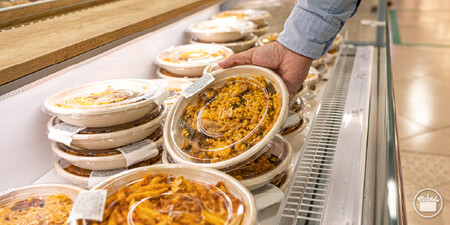
The Shift in Eating Habits: Supermarkets vs. Daily Menus
“This is more practical and faster. You eat for 6 euros, and I don’t spend 45 minutes.” These words from David, a 35-year-old gym director in Madrid, encapsulate a growing trend threatening traditional dining establishments. The realities of daily menus in bars are facing stiff competition from the ready-to-eat meals available at supermarkets like Mercadona.
The Changing Role of Supermarkets
Once mere shopping venues for groceries, supermarkets are now evolving into casual dining spots. Consumers increasingly visit chains like Mercadona, Carrefour, and Alcampo not just for basic shopping but to purchase quick meals. Many of these supermarkets boast dining areas equipped with tables, chairs, and microwaves for customers.
Success Stories from the Supermarket Dining Experience
A recent visit by El Mundo to a Mercadona revealed a bustling dining area filled with customers enjoying prepared meals. This scenario is not unique to Madrid; shoppers across various locations choose supermarket meals over traditional dining, highlighting a significant behavioral shift.
The Statistics Behind the Shift
Recent studies demonstrate a seismic change in consumer habits. According to the consultancy Circana, the retail sector now claims 23% of food spending outside the home. Moreover, supermarket-prepared meal sales are projected to grow significantly, with an 11% increase anticipated by 2025, surpassing the general growth rate of food distribution.
The Supermarket Advantage
Supermarket chains like Mercadona, Carrefour, and Lidl dominate food distribution in Spain, holding a combined market share that eclipses traditional dining venues. The figures indicate that Mercadona accounts for nearly 20% of food spending, far exceeding cafes and independent restaurants. This impressive foothold can be attributed to Mercadona’s emphasis on ready-to-eat food, available in almost 1,500 locations across Spain and Portugal.
Rising Costs for Traditional Menus
As the prepared food sector gains momentum, the traditional daily menu finds itself in a precarious situation. Data shows that daily menus have become pricier, increasing by approximately 19.5% between 2016 and 2024. This rise has made it challenging for bars and restaurants to offer competitive pricing.
Competing on Quality
Despite the price advantage supermarkets hold, many restaurant owners argue that the quality of homemade dishes remains a key selling point. As Jesús de Prada, a hotelier, remarked, “You can’t compete with those prices… but our food is homemade.” This highlights an essential question: can quality win over convenience?
Beyond Price: A Shift in Social Dynamics
The phenomenon extends beyond cost considerations. David’s remark about the practicality of supermarket dining reflects broader societal changes, including busier lifestyles and an increase in single-person households. The demand for quicker meals is not merely a convenience issue; it’s an adaptable response to modern life.
Conclusion
As supermarket dining continues to gain popularity, the traditional daily menu faces an existential crisis. The competition between ready-to-eat meals and conventional dining offers is reshaping our eating habits and the hospitality industry. Hoteliers must innovate, focusing on quality and unique offerings to compete in this evolving landscape. The question remains: will the allure of convenience ultimately redefine how we approach our daily meals?